







Why Do Ethiopia's Awash Earthquakes Matter to Coffee Exports?
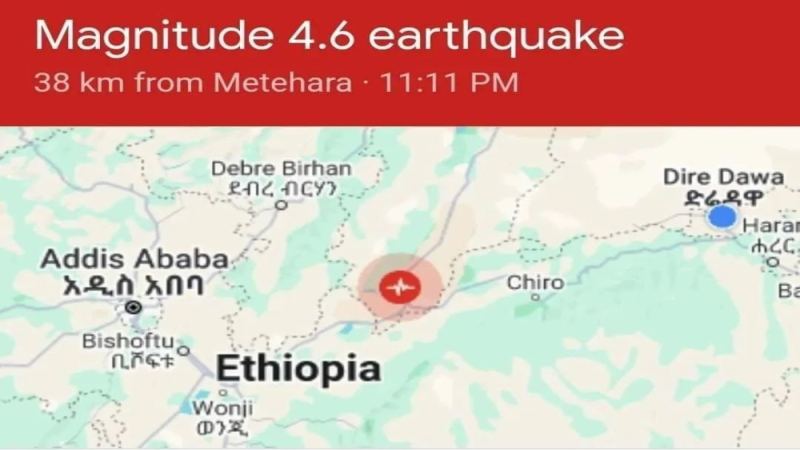
A series of earthquakes has struck the Awash Fentale area of Oromia, Ethiopia, including a magnitude 4.7 quake on October 26, with earlier tremors on October 6, 13, and 16. No casualties were reported, but the zone sits about 150 kilometers from Addis Ababa and next to the Harrar coffee region, so soil and yields could be affected.
The bigger risk is transport. Road damage, combined with port congestion tied to the Red Sea crisis, could disrupt Ethiopia's coffee export chain. Conflict in the north and continued currency depreciation add pressure, raising planting costs and lifting the price floor in this key coffee origin country.
Recently, a series of consecutive earthquakes occurred in the Awash Fentale area of Oromia State, Ethiopia, sparking concern among local residents and people in the coffee industry. This area is not only close to the capital, Addis Ababa, but also adjacent to the important coffee-producing region of Harrar, and the earthquakes could affect the soil and coffee yields. At the same time, the risk of damage to road infrastructure, combined with port congestion caused by the Red Sea crisis, may further disrupt Ethiopia's coffee export transportation. In addition, the conflict in the north and the continued depreciation of the exchange rate remain major challenges facing the country's coffee industry, with planting costs constantly rising and the coffee price floor being raised once again. This article will review the earthquake developments and their potential impact on the coffee supply chain.
According to reports from local Ethiopian media, Semera University announced that on October 26, a magnitude 4.7 earthquake on the Richter scale was recorded in the Awash Fentale district of Oromia State. A geology professor from the university said that from around 11 a.m. on the 26th until after 9 p.m., the area experienced multiple seismic events of varying intensity, but fortunately no casualties were caused.
Local residents reported that the earthquake on the 26th was felt more strongly than several previous ones, and they also confirmed that no one was injured. However, this was not the first time the Awash Fentale area had experienced earthquakes. In fact, since October of this year, the area has had multiple seismic events, with the earliest occurring on the night of October 6, followed by several more earthquakes in the same area on October 13 and 16, although none of these caused casualties.
Because the area is only about 150 kilometers from Ethiopia's capital, Addis Ababa, the earthquake was felt in multiple parts of the capital. According to the head of the science department at the capital's University of Geophysics and Space Science, the earthquakes felt in different parts of the capital were all triggered by seismic activity in the Awash Fentale area.
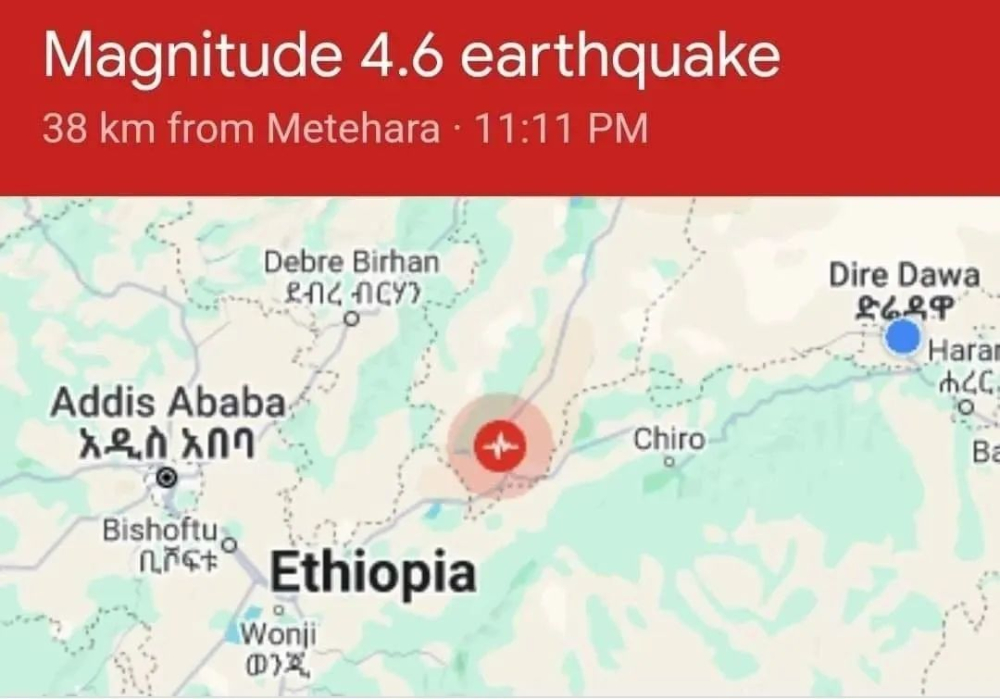
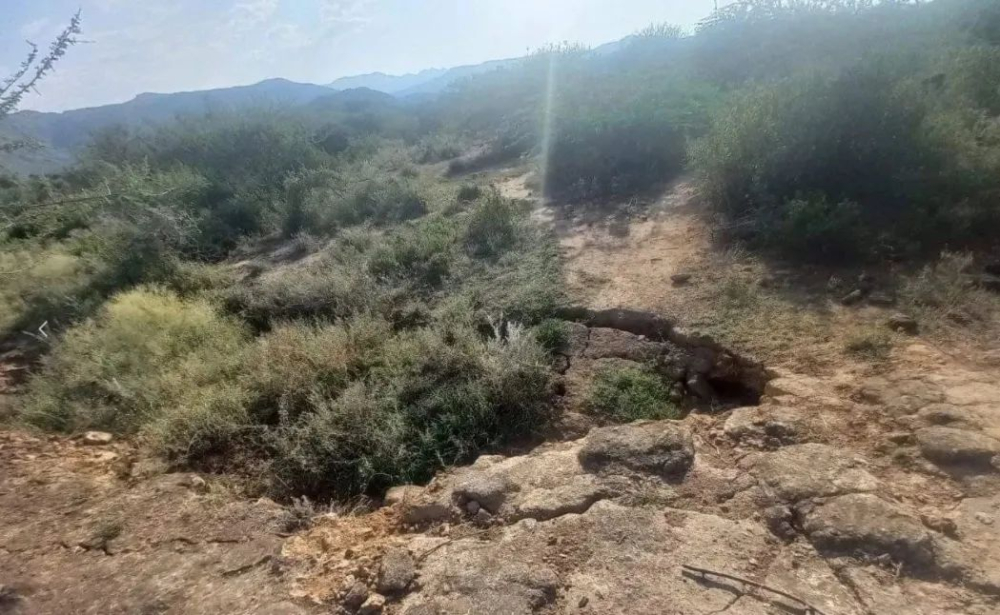
He further pointed out that recent seismic activity in the area has been relatively frequent and has not yet subsided. The earthquakes are caused by magma intruding underground and will not pose a serious threat to the capital for the time being. However, since the epicenter is located in the East African Rift Valley, he reminded residents living in the rift area and along its lines to remain alert, as similar earthquakes may occur again.
However, the frequent earthquakes have also raised concerns, especially among people in the coffee industry and transportation sector. It is understood that the areas affected by the earthquakes are not only close to the capital, but also very close to the Harrar coffee-producing region, and the earthquakes may damage the soil structure in these areas, thereby affecting coffee yields.
In addition, repeated earthquakes may lead to problems such as road foundation subsidence, road surface cracking, and road collapse, and some earthquakes occurred in mountainous areas, making landslides likely and potentially affecting normal road traffic. Ethiopia is a landlocked country, and both imports and exports depend on the port in neighboring Djibouti. The Awash area is one of the main transportation routes to the port of Djibouti, so the earthquakes may cause some disruption to the export of coffee and other products or the transportation of imported goods.
Moreover, as the Red Sea crisis continues to intensify, shipping at the port of Djibouti, located at the southern entrance to the Red Sea, has been severely affected, causing Ethiopian coffee to pile up at the port of Djibouti. If current road transportation is further delayed, this may further worsen the accumulation and delays of goods.
However, for Ethiopia's coffee industry, the biggest difficulties at present are still regional security and the exchange rate. At present, the conflict in northern Ethiopia has still not been effectively resolved, and it has recently worsened. Government forces have even used heavy weapons such as drones and combat helicopters to launch multiple attacks, but the situation has still shown no results.
Affected by the conflict and exchange rate problems, local prices in Ethiopia are currently rising sharply. Although Ethiopia previously issued new regulations limiting the spread between the buying and selling prices of foreign exchange transactions to within 2%, the exchange rate is still continuing to fall, and many people believe that the Ethiopian birr has still not stabilized and will depreciate further. As a result, local prices only rise and do not fall, causing coffee planting costs to keep climbing. According to the latest minimum coffee price issued by the Ethiopian Coffee and Tea Authority, coffee prices across the board were raised by 0.5%.
To learn more information about coffee origins, please scan the QR code to follow: Coffee Review
Long-press the QR code to follow:
The above content is compiled by CoffeeHunters, a coffee news website.


