







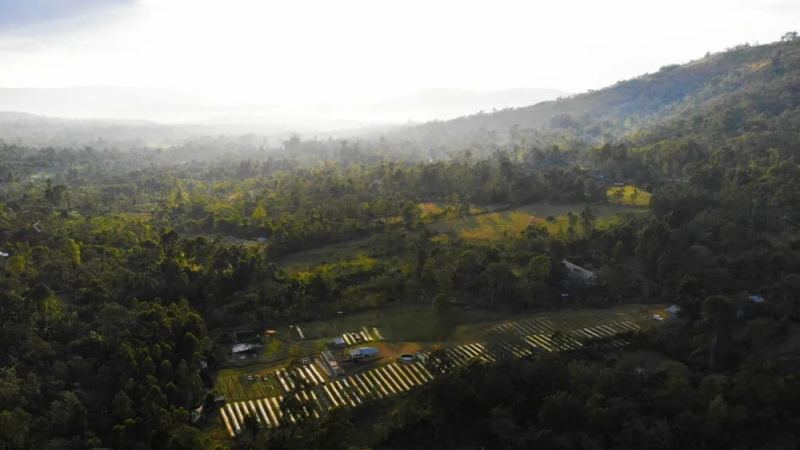
What Is the Chaka Lot in Gesha Green Coffee?
The Chaka lot is the Geisha blend released by Gesha Village Coffee Estate in the Bench Maji region of Ethiopia. It mixes three varieties: Gesha 1931, Gori Gesha, and Illubabor 1974, and makes up around 70 percent of the estate's yearly production. It sells for less than the Gold and Red lots while keeping a steady, large supply.
Gesha Village covers 500 hectares and runs its own processing plant and laboratory. Its five-lot grading system follows well-known Panamanian estates: Auction, Gold, Red, Green, and Chaka. Only about 10 percent of Ethiopian coffee comes from estates, so this gesha green coffee stands out from the country's typical smallholder forest and garden plots.
Ethiopia is the birthplace of coffee, and coffee is also an important source of foreign exchange for the country. More than 4 million farmers nationwide grow coffee using forest coffee and garden coffee models, with only about 10% being estates. Among the many estates, the most well-known is Gesha Village Coffee Estate in the Bench Maji region. It covers 500 hectares and has its own processing plant and laboratory, mainly growing and exporting the Geisha variety. The estate draws on the grading system of famous Panamanian estates, dividing its coffee into five lots: Auction, Gold, Red, Green, and Chaka. Among these, the Chaka lot is known for its high cost-effectiveness and stable, large-volume supply. It is the Geisha blend launched by Gesha Village, mixing three varieties—Gesha 1931, Gori Gesha, and Illubabor 1974—and accounts for 70% of the annual production. Front Street Coffee will also guide you through the unique charm of this lot.
Ethiopia is widely recognized as the birthplace of coffee, and coffee is also a major source of foreign exchange income for the country. In Ethiopia, more than 4 million farmers are engaged in coffee production, with forest coffee and garden coffee (homestead coffee) as the main cultivation models, and only about 10% are coffee estates.
When it comes to coffee estates in Ethiopia, the most famous is undoubtedly Gesha Village Coffee Estate, located in the Bench Maji region in the west. Unlike most farms in Ethiopia, it is not a small farm but a large farm covering 500 hectares, equipped with its own coffee processing plant and laboratory, mainly cultivating and exporting the Geisha variety.
In addition, Gesha Village's grading method differs from Ethiopia's traditional grading. It references the grading systems of some well-known Panamanian estates and is divided into five grades: Auction lot, Gold lot, Red lot, Green lot, and Chaka lot. Among these lots, the Gold and Red lots are the most well-known and relatively higher in price, while the most cost-effective is the Chaka lot. What makes this lot so special?
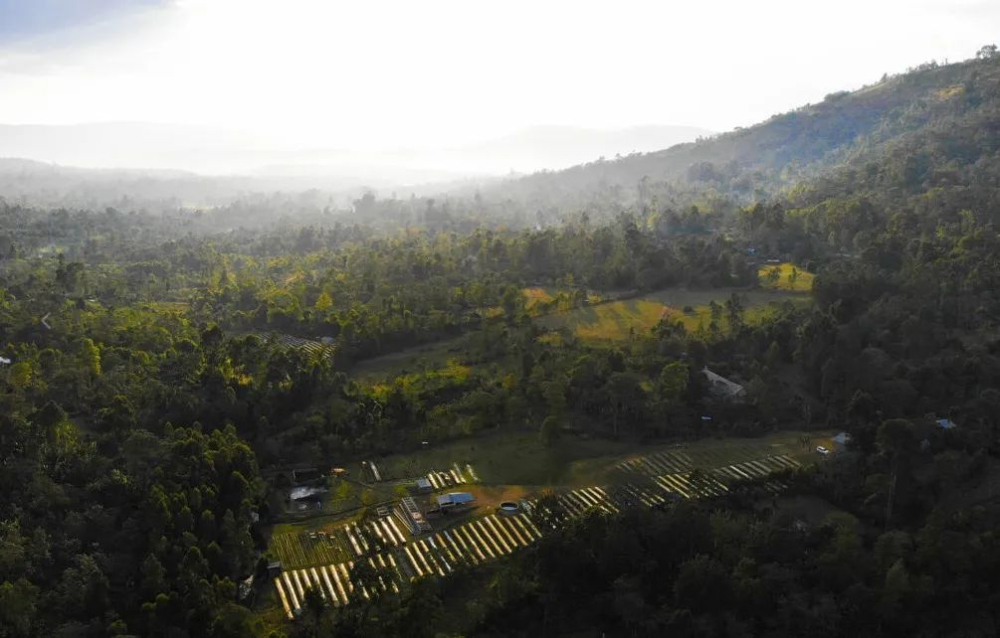
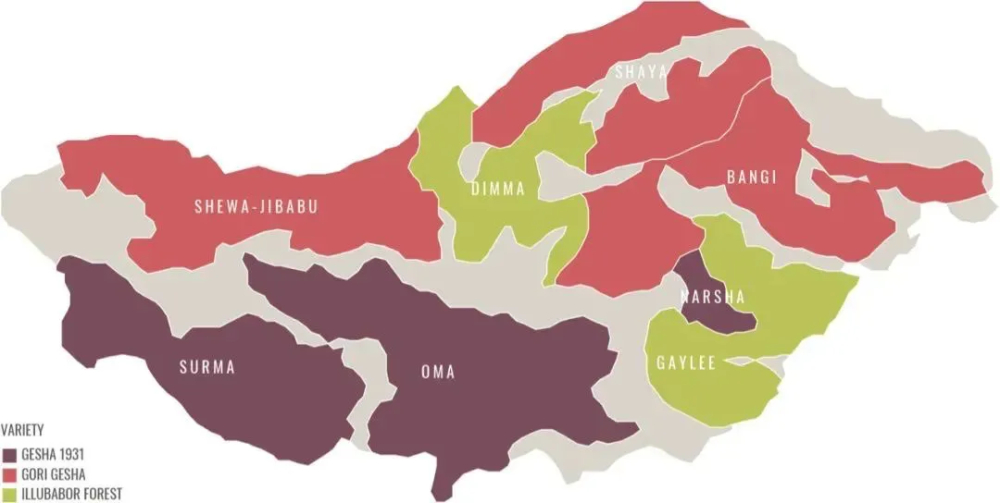
Currently, Gesha Village Coffee Estate has 8 major blocks, cultivating three coffee varieties: Gesha 1931, Gori Gesha, and Illubabor Forest 1974.
Among them, the Gesha 1931 variety was discovered when estate owner Adam Overton and his wife came to a place called Gesha Village in Bench Maji during the early days of establishing Gesha Village Coffee Estate. In plant appearance, cup profile, and genetic comparison, this variety is very close to the Panamanian Geisha variety, so it was named "Gesha 1931" (the Geisha variety was first discovered in 1931).
After Gesha Village was established, the estate owner discovered a coffee variety very similar to Geisha in a place called Gori Forest, 12 miles away from the estate. He brought it back to the estate to cultivate and named it "Gori Gesha."
The Illubabor Forest 1974 variety was discovered by the Ethiopian Coffee Research Center during an expedition in the Illubabor Forest in 1974. It is a resistant variety and is currently grown only at Gesha Village Coffee Estate.
In Gesha Village's grading, the Auction lot, Gold lot, Red lot, and Green lot are all harvested from a single variety in a single block and have detailed traceability information. The Chaka lot, however, is the Geisha blend launched by Gesha Village.
It comes from all blocks across the entire estate and is a blend of three varieties: Gesha 1931, Gori Gesha, and Illubabor 1974, accounting for 70% of the estate's annual coffee production. It can be said that the Chaka lot is a high-quality lot from Gesha Village that does not emphasize subdivision, offers high cost-effectiveness, and can be supplied in large, stable quantities.
"Chaka" means "forest" in an ancient Ethiopian language. Since Gesha Village Coffee Estate itself is also established on the edge of the primitive forest of the Ethiopian Highlands, this implies that the lot is taken from the forest of the entire Gesha Village Coffee Estate.
To learn more information about coffee origins, please scan the QR code to follow: Coffee Review
Long-press the QR code to follow:
TRANSLATE with
x
English
Arabic Hebrew Polish Bulgarian Hindi Portuguese Catalan Hmong Daw Romanian Chinese Simplified Hungarian Russian Chinese Traditional Indonesian Slovak Czech Italian Slovenian Danish Japanese Spanish Dutch Klingon Swedish English Korean Thai Estonian Latvian Turkish Finnish Lithuanian Ukrainian French Malay Urdu German Maltese Vietnamese Greek Norwegian Welsh Haitian Creole Persian
TRANSLATE with
COPY THE URL BELOW
Back
EMBED THE SNIPPET BELOW IN YOUR SITE Bing Webmaster Portal
Back
The above content is compiled by CoffeeHunters, a coffee news website.


