







What Drove the October Record in Brazil Coffee Production?
Brazil exported 4.926 million bags of coffee beans in October, a monthly record and an 11.6% rise over October 2023, according to the Brazil Coffee Exporters Council. Total export value reached US$1.393 billion, or about US$282.8 per bag, up 62.6% year on year. The figure topped the previous monthly peak of 4.77 million bags set in November 2020.
Logistics remain strained: roughly 2.1 million bags were stuck at ports at the end of September, and exporters have begun using dry bulk vessels to meet delivery commitments. Germany took 6.64 million bags in the first ten months, 23.9% of exports. Port congestion, ship delays, drought, fires and a weaker real still weigh on the coffee industry and the coming crop season.
The latest report from the Brazil Coffee Exporters Council shows that although about 2.1 million bags of coffee beans were stranded at ports due to logistics problems at the end of September, Brazil's coffee exports in October still bucked the trend and set a record monthly high of 4.926 million bags, up 11.6% year on year, with total export value reaching US$1.393 billion. Germany became the largest importer of Brazilian coffee beans in the first 10 months of this year, importing a total of 6.64 million bags, accounting for 23.9%. However, multiple factors such as port congestion, ship delays, historic drought and forest fires, and the depreciation of the real are still constraining the subsequent development of Brazil's coffee industry, and the production and export outlook for the new crop season faces uncertainty.
According to a report recently released by the Brazil Coffee Exporters Council (Cecafé), despite the persistence of logistics bottlenecks, with about 2.1 million bags (60 kg/bag) of coffee beans failing to be shipped on schedule as of the end of September, Brazil's coffee exports in October still set a new monthly record.
Data shows that in October Brazil exported a total of 4.926 million bags of coffee beans, an increase of 11.6% compared with the same period in 2023, while also surpassing the monthly peak of 4.77 million bags set in November 2020, an increase of 3.27%.
That month, Brazil's total coffee export value reached US$1.393 billion, equivalent to an export price of about US$282.8 per bag, with a year-on-year increase of as high as 62.6%. In terms of destinations, Germany imported a cumulative 6.64 million bags of Brazilian coffee beans from January to October, accounting for 23.9% of Brazil's total exports, up 77% from the first 10 months of last year, making it the largest buyer of Brazilian coffee beans.
The president of the Brazil Coffee Exporters Council pointed out that October's strong export performance is a major boon for Brazil's coffee trade. The logistics team actively sought alternative shipping solutions, for example recently beginning to use dry bulk vessels for export shipments, in order to honor delivery commitments to customers in various countries.
However, although export pressure has eased somewhat, a large number of bags of coffee are still piled up at ports waiting to be shipped. The rate of delays in ship arrivals and berthing remains persistently high, and exporters still bear enormous logistics pressure in shipping coffee abroad.
In addition to coffee, Brazil's exports of products such as sugar and cotton have also risen sharply recently, and these cargoes have strong demand for containers. However, port infrastructure is insufficient to cope with the growth in container shipment volume, and in addition policy adjustments by Brazil's federal government triggered strikes by port workers and tax auditors, leading to persistently high ship delays and rollover rates, with both port gate management and terminal yard capacity affected.
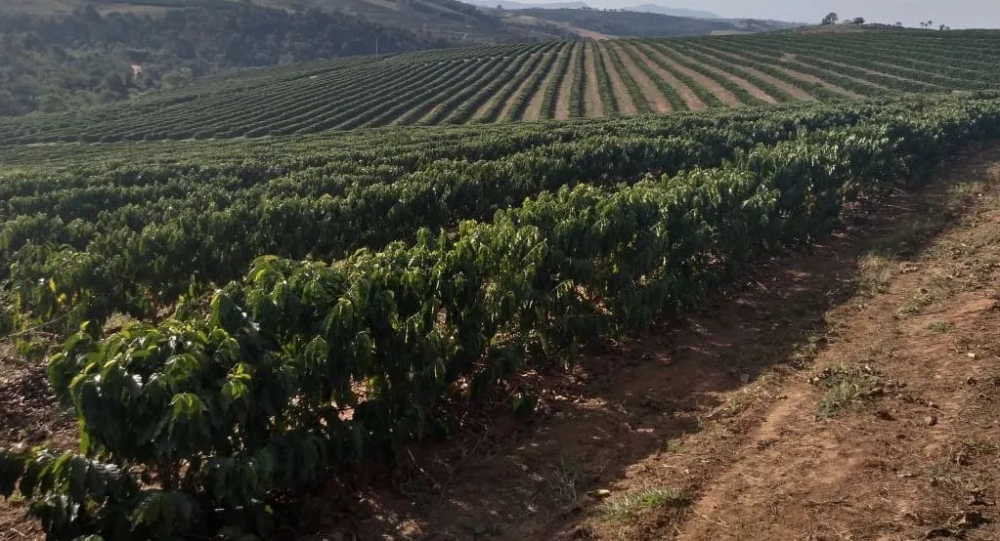
Although coffee export volumes are growing, the industry still faces multiple challenges. In addition to port delays, climate and exchange rates are currently the two most influential factors. In terms of climate, Brazil previously experienced its most severe drought since 1981, which triggered large-scale forest fires. According to reports, about 2,238 hectares of forest land were damaged, including coffee and sugarcane plantations. This has led to reduced coffee production in the new season and has also weakened the planting conditions and production potential for the 2025/26 new crop season.
Although rainfall has recently returned in Brazil, the precipitation is mainly concentrated in the southern states of São Paulo, Paraná, and Santa Catarina. Minas Gerais, the largest coffee-producing state, has also received rainfall, but the amount is relatively low and still below the historical average. Many experts believe that the current rainfall can help severely water-deficient soil recover moisture and ease pressure on coffee tree roots, but it cannot make up for the damage caused to some coffee trees by the previous drought and fires. Therefore, coffee production in more severely affected areas may decrease by 20% to 30%, and Brazil's total coffee production may fall by more than 6.8%.
In addition, the exchange rate of the Brazilian real against the US dollar has recently continued to decline, due to uncertainty in Brazil's fiscal policy and US political factors. The depreciation of the real gives Brazilian coffee a greater price advantage in the international market, but it also pushes up domestic planting costs. Port delays cause coffee to be stranded and incur additional storage and other costs, ultimately leading to reduced income and higher operational risks, which is not conducive to the healthy development of the industry. Combined with reduced production in the new crop season, Brazil's coffee exports may show a slowing trend in the future.
To learn more about coffee origin news and information, please scan the QR code to follow: Caping
Long-press the QR code to follow:
The above content is compiled by CoffeeHunters, a coffee news website.


