







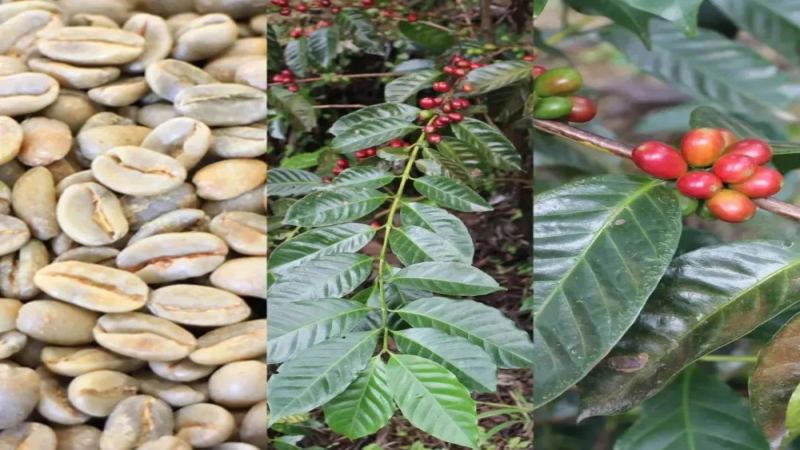
Where Did Panama Geisha Coffee Actually Come From?
Panama Geisha did not originate in Panama. Its genetic roots lie in the forests of southwestern Ethiopia, where British colonial explorers recorded the variety around 1930 in the Gesha area near the Kaffa forest. A name miscommunication turned Gesha into Geisha. It then moved through Kenya and Tanzania before reaching Costa Rica in 1953.
At CATIE in Costa Rica it was registered as Geisha T2722 and later distributed to Panama in the 1970s after showing leaf rust resistance. Farmers there paid it little attention until Hacienda La Esmeralda cupped a distinctive lot, and its 2004 BOP win and record auction price turned geisha coffee into one of the most sought-after varieties worldwide.
Geisha is often mistakenly believed to originate in Panama, but in fact its genetic roots lie in the forests of southwestern Ethiopia. This variety was first recorded as Geisha, then traveled through Kenya, Tanzania, and Costa Rica, before finally being discovered in Panama's Hacienda La Esmeralda, where its astonishing flavors were revealed. Its victory in the 2004 BOP competition and record-breaking auction price catapulted Geisha to become one of the world's most sought-after coffee varieties. This article will trace Geisha's complete path from a local variety to a global star, and explain the origin of its name, flavor differences, and information on Panama Geisha products currently available at Front Street Coffee.
Panama is renowned on the international coffee stage. Although its total production is not particularly large, it has gained widespread attention for producing Geisha with delicate floral, jasmine, and peach notes. Geisha is now also one of the most sought-after varieties worldwide, repeatedly commanding astonishing prices at coffee auctions.
Because of this, many people mistakenly assume that Panama is the birthplace of Geisha. To be precise, Panama's coffee producers were the first to unlock Geisha's potential, but Panama was merely the stage on which it rose to fame; Geisha's true origin is Ethiopia, where it is a local landrace variety.
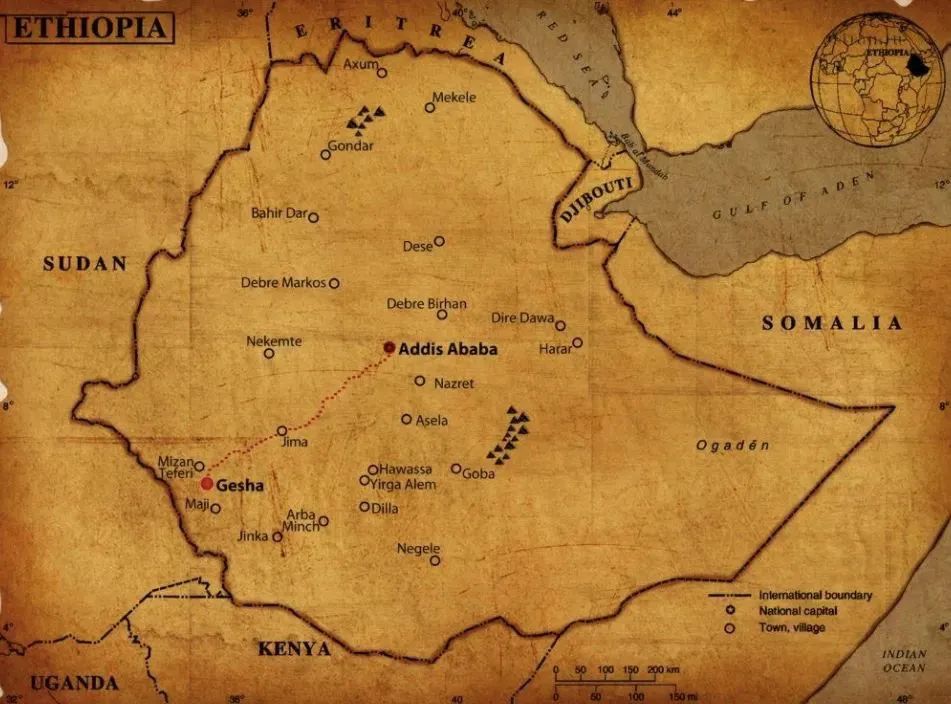
Around 1930, British colonial explorers discovered this variety in the Gesha area near the Kaffa forest in southwestern Ethiopia, and named it Gesha; due to linguistic miscommunication, the name was recorded as Geisha.
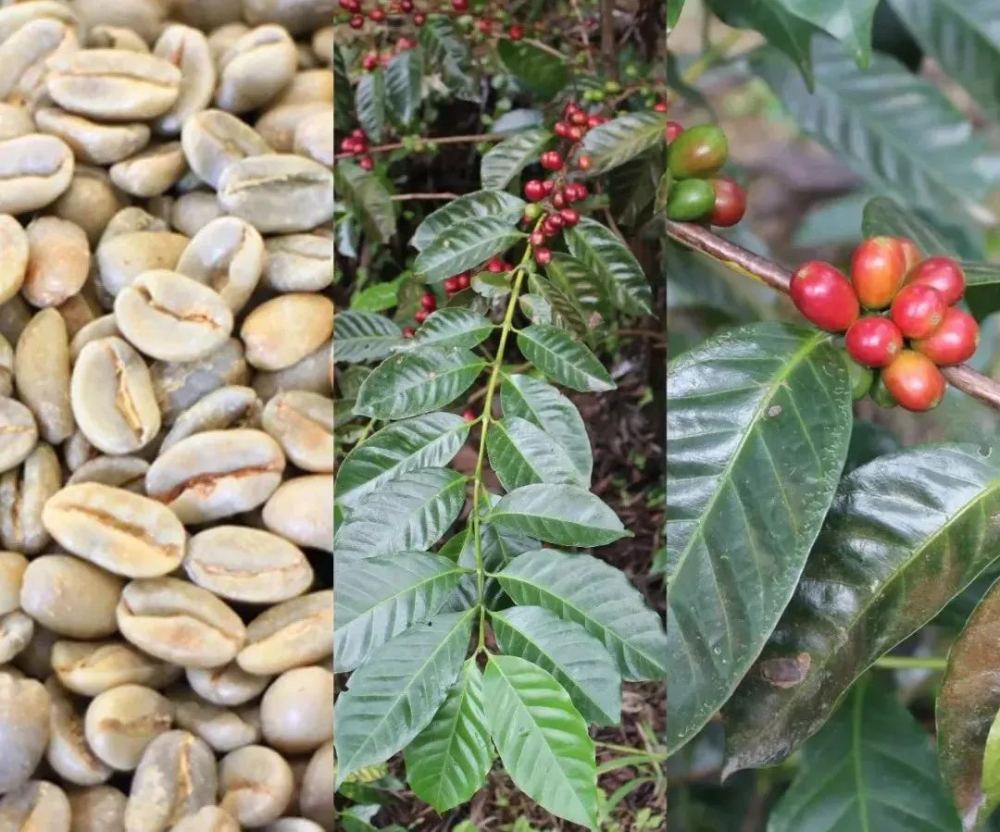
The variety was subsequently sent to research stations in Kenya and Tanzania, and in 1953 was introduced to CATIE (Center for Tropical Agricultural Research and Higher Education) in Costa Rica, where it was registered as Geisha T2722, with T standing for Turrialba, the Costa Rican city where the center is located.
It was later discovered that Geisha had resistance to leaf rust, so it was distributed to Panama for planting in the 1970s. However, Geisha plants are relatively delicate, and local farmers were not optimistic about them, so they were not planted on a large scale; nevertheless, because of their tall tree shape, some estates still used them as windbreaks.
It was not until Hacienda La Esmeralda discovered during a post-harvest cupping that one of its coffee lots exhibited very distinctive citrus fruit notes and floral aromas that they began to separate and process it independently.
In 2004, Hacienda La Esmeralda entered Geisha in the annual Best of Panama (BOP) competition. Geisha received extremely high praise and won first place with a very high score, achieving overnight fame. Subsequently, this champion Geisha lot sold at auction for $21 per pound, setting a new record at the time.
After that, Geisha's fame grew steadily. More and more coffee estates in Panama began to cultivate Geisha to raise their profiles, such as Elida Estate and Finca Auromar. Meanwhile, other coffee-producing countries also introduced Geisha; however, due to differences in geography, climate conditions, and processing methods, Geisha grown in different countries and on different estates has varying flavors.
In addition, the first Asians to encounter coffee were the Japanese. When the Japanese came across the Geisha variety, the pronunciation of Gesha was similar to the Japanese words for "geisha" (芸者/芸妓), so they called Geisha coffee beans "geisha." Later, when Taiwan encountered Geisha through Japan, it also adopted the "geisha" naming; only afterward did domestic green bean traders in China officially name Gesha as "瑰夏."
Currently at Front Street Coffee, there are several Panama Geisha coffee beans available, including the Green Label Geisha and Red Label Geisha from Hacienda La Esmeralda, as well as a Panama Boquete Geisha coffee bean from the same producing region as Hacienda La Esmeralda. This Boquete Geisha is washed and medium-roasted. When brewed, it offers jasmine floral aromas, with lemon-like acidity on the palate, accompanied by bergamot and honey flavors, and a green tea-like mouthfeel—overall refreshing.
To learn more about coffee origin information, please scan the QR code to follow: Coffee Review
Long-press the QR code to follow:
TRANSLATE with
x
English
TRANSLATE with
COPY THE URL BELOW
Back
EMBED THE SNIPPET BELOW IN YOUR SITE Bing Webmaster Portal
Back
The above content is compiled by CoffeeHunters, a coffee news website.


