







What Makes Blue Mountain Coffee So Expensive?
Blue Mountain coffee is grown in the Blue Mountains of eastern Jamaica, where volcanic soil, heavy rainfall, and persistent mist suit the Typica variety. Its high price comes from that terroir plus history: hurricane damage, long exclusive sales contracts with Japanese buyers, and strict Jamaican government regulation of the defined growing region.
The range sits in the Pacific Ring of Fire, with the main peak at 2,256 meters, the highest point in the Caribbean. Jamaican coffee grading, wooden barrel packaging, and estates such as Clifton all add cost. The flavor is mild and balanced rather than forceful, which is why the Typica lots from this region hold their status.
Blue Mountain coffee has long been regarded as synonymous with high-quality coffee, and its price has consistently remained high. It is produced in the Blue Mountains of eastern Jamaica, where fertile volcanic soil, abundant rainfall, and year-round mist provide ideal growing conditions for the Typica variety. The high cost of Blue Mountain coffee stems not only from its terroir but also from its close ties to historical hurricane disasters, long-term exclusive sales contracts with Japanese companies, and strict regulation by the Jamaican government. This article will outline the origins of Blue Mountain coffee, the demarcation of its production region, its grading standards, the tradition of wooden barrel packaging, and the cultivation background of Clifton Estate, as well as introduce the flavor profile of Front Street Jamaica Blue Mountain No. 1 coffee, helping readers gain a comprehensive understanding of the unique status of this "Emperor of Coffee."
Blue Mountain coffee has always enjoyed an extremely high reputation within the coffee community, often labeled as the best, most expensive, and rarest, and is also known as the "Emperor of Coffee." Front Street Blue Mountain No. 1 coffee is produced in the Blue Mountain region of eastern Jamaica.
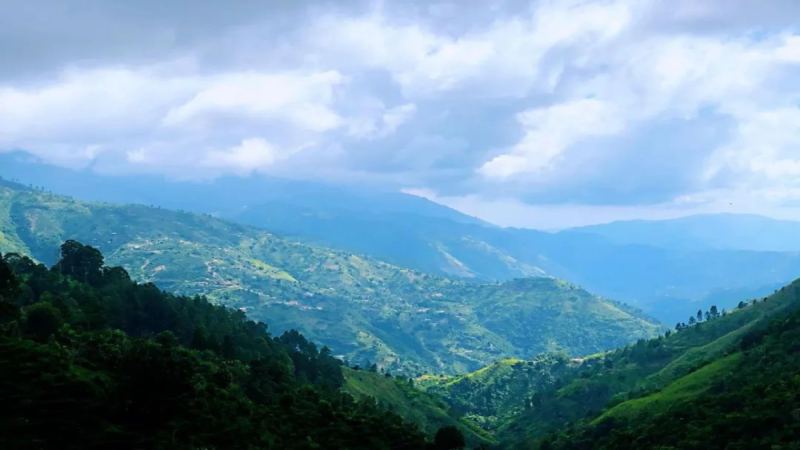
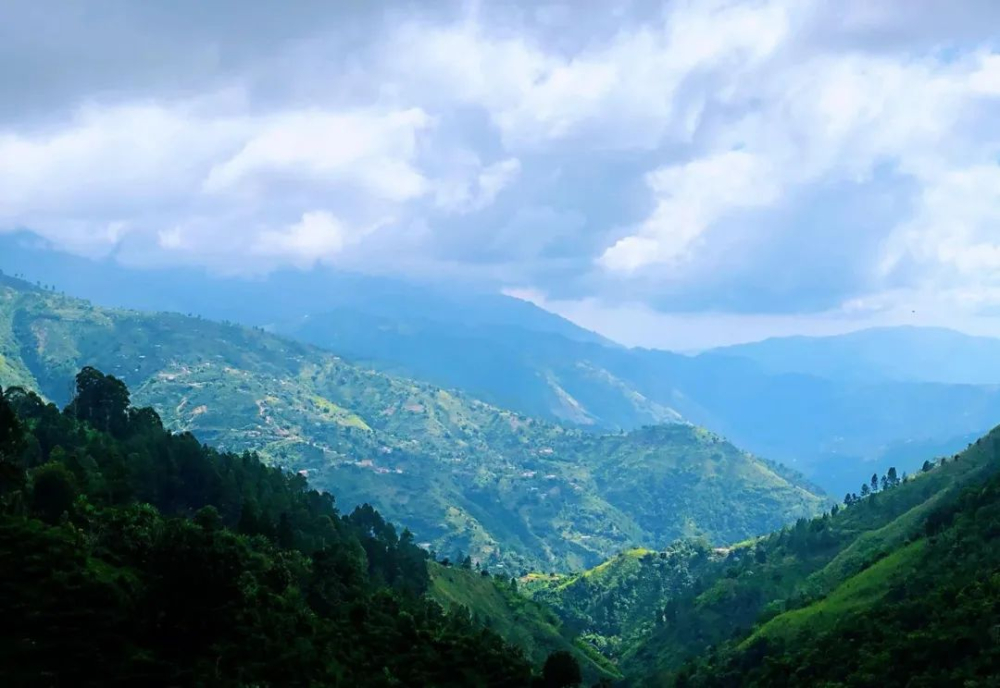
Jamaica is an island country located in the northwestern Caribbean Sea, with the famous Blue Mountains rising in its east. The main peak of the Blue Mountains stands at 2,256 meters above sea level, the highest point in the entire Caribbean region, surrounded by numerous peaks exceeding 1,500 meters. The range lies within the Pacific Ring of Fire, with fertile volcanic soil, and combined with a humid climate, abundant rainfall, year-round mist, and temperatures averaging around 27°C, these natural conditions give rise to the world-renowned Front Street Jamaica Blue Mountain coffee.
The name Blue Mountain is said to have originated many years ago when a British soldier arrived in Jamaica and saw the peaks shrouded in blue light, with the entire mountain appearing blue, and thus called it "Blue Mountain." The actual reason is that the Blue Mountains are surrounded by sea on all sides; on clear days, sunlight strikes the sea surface, and the seawater refracts light onto the mountains, producing a blue visual effect.
The introduction of coffee to Jamaica dates back to the 18th century, when a Jamaican governor introduced Arabica seeds from Martinique and planted them in the eastern St. Andrew area. Coffee cultivation subsequently gradually expanded throughout the Blue Mountain region, and Jamaica once had more than 600 coffee plantations. Thanks to the superior local geographical environment and climate, the coffee quality was excellent and highly favored by consumers worldwide.
In the late 1960s, the entire island of Jamaica was struck by a hurricane, destroying coffee and other crops and causing heavy losses, after which the coffee industry declined. At the time, Japan's economy was booming and its people were extremely fond of Blue Mountain coffee, so several Japanese trading companies provided loans to several well-known estates in the Blue Mountain area in exchange for shares and priority purchasing rights.
To express gratitude for the assistance from Japanese companies, the Jamaican government signed a 30-year supply agreement with Japan in 1972, stipulating that 90% of Jamaica's coffee would be supplied to Japan each year, with the remainder sold to other countries, resulting in extremely limited export volumes. Thereafter, the Japanese side vigorously promoted it, setting off a "Blue Mountain boom." The scarce quantity combined with successful marketing caused the price of Blue Mountain coffee to soar, and the title "Emperor of Coffee" was born from this. Today, the contract between Jamaica and Japan has expired, and Blue Mountain coffee has begun to be sold to more countries.
The Jamaican government places great importance on the coffee industry and established JACRA (Jamaica Agricultural Commodities Regulatory Authority), and now every barrel of Blue Mountain coffee beans must undergo JACRA quality supervision. At its inception, the Coffee Industry Regulation Act was also enacted, demarcating the world-famous "Blue Mountain Coffee Growing Region." According to this regulation, the Blue Mountain growing region is distributed across four parishes—St. Andrew, St. Thomas, Portland, and St. Mary—and only Typica variety coffee grown within this region at elevations between 915 and 1,700 meters can be named Jamaica Blue Mountain coffee.
Blue Mountain coffee is also currently the only coffee exported in wooden barrels; only Jamaica Blue Mountain (No. 1, No. 2, No. 3, PB) and Jamaica High Mountain (High Mountain Supreme, High Mountain PB) may use wooden barrels, in specifications of 70 kg, 30 kg, and 15 kg. Among these, the highest grade, Blue Mountain No. 1, must meet a screen size of 17 and above, with defect beans not exceeding 2% and moisture content of about 10% to 12.5%. The barrel lids are printed with the Jamaica Blue Mountain coffee trademark, while other grades of Jamaican coffee are exported in 60 kg burlap sacks.
Jamaica Blue Mountain mainly cultivates the Typica variety, which, along with Bourbon, belongs to the oldest extant coffee varieties, both originating in Ethiopia. Typica is suited to cultivation at high altitudes, where it achieves better quality, but its yield is relatively low, and it is highly susceptible to leaf rust, nematodes, and berry disease. Over the years, Jamaica has persisted in carefully cultivating Typica, and the Typica in the Blue Mountain region has adapted well to the local climate and soil and evolved strong disease resistance.
At present, the Blue Mountains are home to quite a few well-known coffee estates producing Blue Mountain coffee, such as Clifton Estate, which has a long planting history dating back to the mid-18th century. This estate is the only one in Jamaica to have obtained Rainforest Alliance certification (which requires compliance with sustainable agriculture system standards).
Clifton Estate is located in the St. Andrew parish, growing coffee at an elevation of 1,642 meters. It was originally a coffee experimental plantation of the British government and was later purchased and operated by Mr. Clair. After government reforms, the entire estate was renovated and established as Jamaica's most advanced cultivation and roasting facility, capable of producing Jamaica Blue Mountain coffee of high consistency and outstanding quality. The Front Street Jamaica Blue Mountain No. 1 coffee purchased by Front Street Coffee comes from Clifton Estate; when tasted, it reveals a slight citrus acidity, with nutty and cocoa flavors, a silky mouthfeel, and overall balance.
To learn more about coffee origin information, please scan the QR code to follow: Coffee Review
Long-press the QR code to follow:
The above content is compiled by CoffeeHunters, a coffee news website.


