







How Did Finca Las Lajas Change Coffee Cultivation?
Finca Las Lajas in Costa Rica's Central Valley was the country's first estate to earn organic certification, and it became a pioneer in systematic honey and natural processing. Planted at 1,300 to 1,650 meters on the slopes of Poas Volcano, its coffee trees grow in mineral-rich volcanic ash soil with a clear wet and dry season.
Alajuela is one of three Central Valley sub-regions, with rainy season rainfall reaching about 3,000 mm and average temperatures near 20 degrees Celsius. The estate moved from chemical agriculture to natural farming and uses Brix meter screening to time harvests, aiming for sweeter, more layered coffee cultivation results.
Although coffee production in Central America is not particularly high, Costa Rica occupies an important place in the global specialty coffee landscape thanks to its exceptional natural environment and innovative spirit. Beyond the well-known Tarrazu region, the Central Valley also nurtures coffee estates of outstanding quality. Among them, Finca Las Lajas, as Costa Rica's first estate to obtain organic certification, is not only known for its eco-friendly cultivation philosophy but also a pioneer in the systematic study of natural and honey processing. Front Street Coffee takes you deep into this legendary estate at the foot of Poas Volcano, exploring its transition from chemical agriculture to natural farming, and how it continuously improves coffee flavor performance through means such as Brix meter screening and variety introduction.
The total coffee production of Central American countries does not stand out in global terms, yet several countries have earned a reputation in the international market through their excellent quality. Costa Rica is a representative example: the country not only has abundant natural resources suitable for growing high-quality coffee, but also pioneered the honey processing method, giving coffee beans a rich sweetness and complex layers.
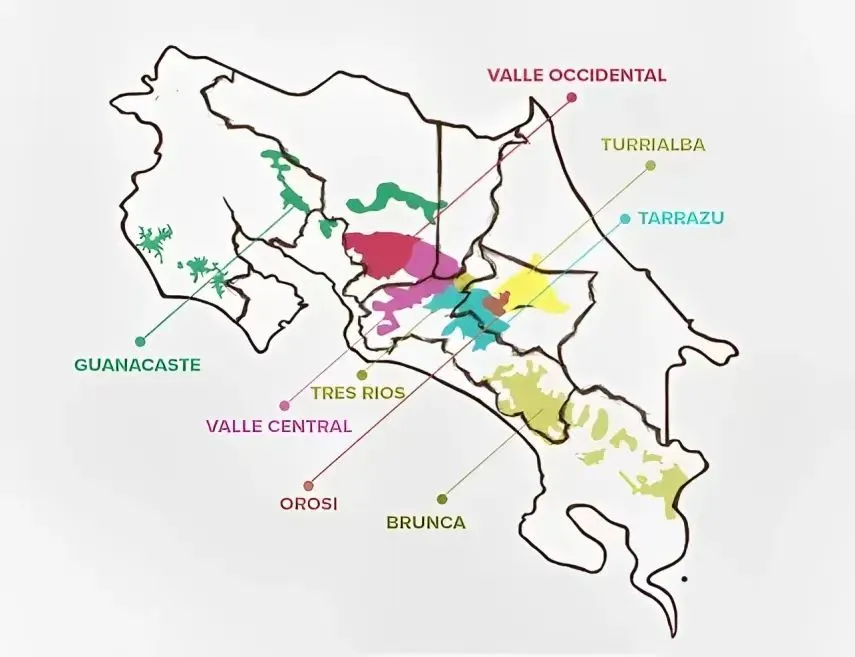
For this reason, many renowned coffee estates have emerged in Costa Rica, such as Hacienda San Isidro Labrador and Mirazu. Most of these estates are located in Tarrazu, the country's largest and most famous producing region. However, other regions, though slightly less famous, can also produce high-quality coffee beans and have nurtured excellent estates. Finca Las Lajas in the Central Valle region is one of them.
Finca Las Lajas is located in the Sabanilla area of Alajuela, just a short distance from the capital, with coffee planted at 1,300 to 1,650 meters above sea level on the slopes of Poas Volcano. Alajuela is one of the three sub-regions of the Central Valley; volcanic ash coverage makes the soil extremely fertile and rich in minerals, providing an ideal growing environment for coffee trees.
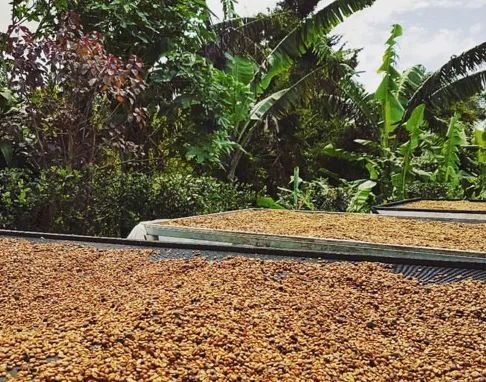
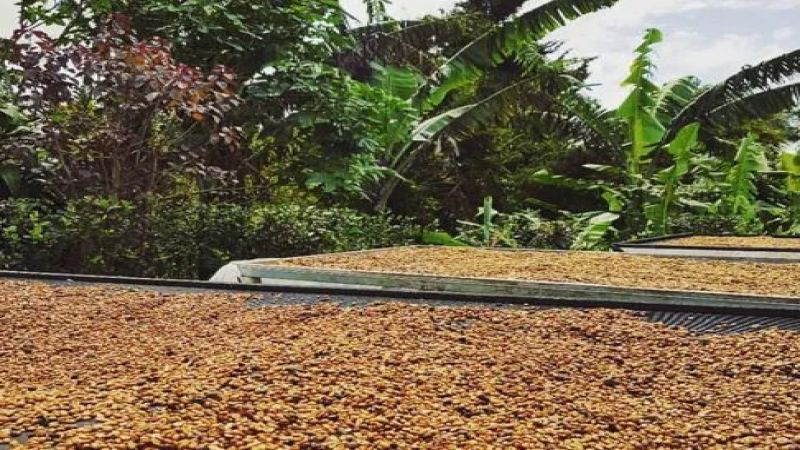
In addition, this is arguably the region of Costa Rica with the most unique climate, with pleasant spring-like temperatures year-round and a clear distinction between rainy and dry seasons. Total rainfall in the rainy season can reach 3,000 mm, the average temperature is about 20ºC, and sunshine hours are also quite ample.
Coffee cultivation at Finca Las Lajas spans over 80 years, and it is currently managed by the third-generation couple Francisca and Oscar Chacón. In 1995, Oscar's father, the estate owner, passed away from cancer, and the family suspected this was related to long-term contact with and use of chemical fertilizers and pesticides on the farm. After that, they resolved to stop using chemical fertilizers and instead adopted natural homemade fertilizers, growing coffee under native forest shade and practicing eco-friendly natural farming. After 5 years of organic farming, in 2000 Finca Las Lajas became the first estate in Costa Rica to obtain organic certification, and today it also holds multiple organic certifications including Japan's JAS, and the US USDA and NOP.
The couple has always been committed to improving the flavor standards of the estate's coffee. In the early days, Costa Rican coffee beans were mostly washed, and they were among the first to study and modify the estate's various facilities to meet the production needs of natural and honey-processed coffee. As a result, Finca Las Lajas became one of the earliest estates to conduct systematic research and application of natural and honey processing.
In addition, the estate owners introduced the Brix meter commonly used in the wine industry to screen coffee cherries that meet the standard, determine the best harvest timing and processing method based on Brix sugar content, and built their own processing plant to comprehensively improve the estate's coffee quality.
At present, Finca Las Lajas cultivates several coffee varieties, including Caturra, Catuai, and Villa Sarchi, and has also introduced varieties such as SL28 and Obata. The estate always upholds the principles of environmental protection and sustainable production, using different processing methods to promote Costa Rican coffee and enhance its international influence.
To learn more about coffee origin information, please scan the QR code to follow: CoffeeReview
Long-press the QR code to follow:
The above content is compiled by CoffeeHunters, a coffee news website.


