







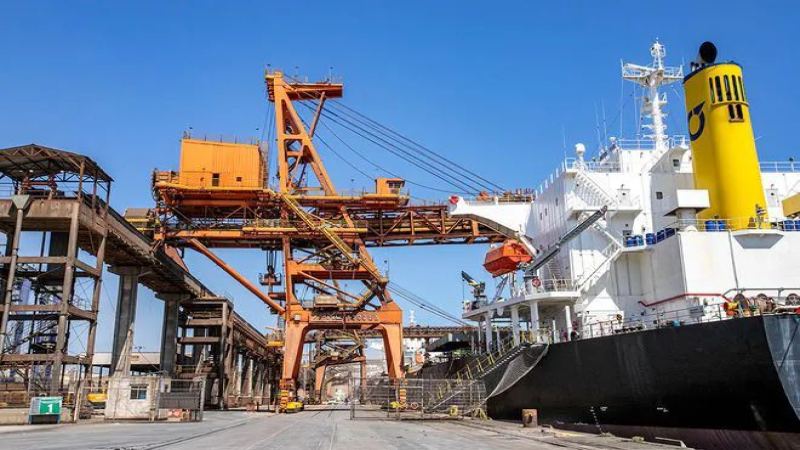
Why is global coffee exports facing a double squeeze?
On October 22, about 60,000 port workers across Brazil held a 12-hour strike against amendments to the Port Law, disrupting loading and unloading nationwide. Around 2.15 million bags of coffee were already stranded at the docks from earlier delays, and the strike threatens to deepen the backlog during a critical export period.
The amendment would end night-shift and port risk bonuses and allow outsourcing of services such as port security. Brazil's coffee-growing regions also entered the rainy season after severe drought, leaving coffee trees damaged and next season's production outlook weak, so supply pressure may continue well beyond the strike itself.
On October 22, port workers across Brazil launched a 12-hour strike to protest the government's amendments to the Port Law, with about 60,000 employees participating, disrupting loading and unloading at ports throughout the country. The strike occurred during a critical period for coffee exports. Earlier, about 2.15 million bags of coffee had already been stranded at docks due to port delays, and the strike could make the situation even worse. Meanwhile, Brazil's coffee-growing regions have entered the rainy season after experiencing severe drought, but the coffee trees have been badly damaged, and production expectations for the next crop season are not optimistic. With port transportation and climate problems striking from both sides, the global coffee supply chain is facing challenges.
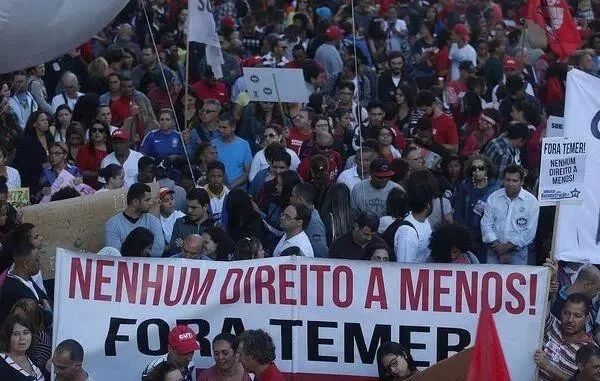
According to Brazilian media reports, on October 22, workers at multiple Brazilian ports launched a strike lasting 12 hours. The strike was jointly organized by the National Confederation of Dock Workers, the National Confederation of Port and Terminal Handling Workers, and the Union of Shipworkers, Ship Repairers, Stevedores and Mooring Workers, involving nearly 60,000 workers at major Brazilian ports.
The trigger for the strike was the government's amendment to the Port Law (Decree No. 12.815/2013). The amendment proposes eliminating night-shift bonuses and port risk bonuses, and allowing services such as port security to be outsourced. This would weaken some labor rights of temporary workers and dockworkers, while also abolishing the public dock in Santos, dealing a blow to port employees' benefits. As a result, port workers expressed their protest through a strike. Because the action covered the entire country, loading and unloading operations at all Brazilian ports were affected.
That day, the draft amendment was submitted to the Chamber of Deputies. The government said the revision aims to promote industry modernization, update outdated rules, reduce bureaucratic procedures, simplify port operations and delegate management authority, thereby attracting more investment. Representatives of port and dock workers planned to hold a demonstration outside the Chamber of Deputies in the capital, Brasilia, on the day the bill was submitted.
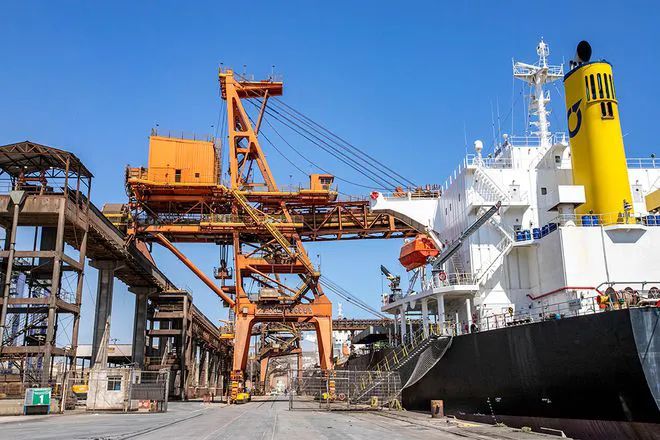
Although the strike did not last long, it has already had a certain impact on Brazil's import and export trade, with industries such as coffee and other agricultural products likely to be hit more significantly. Previously, on October 16, the Brazil Coffee Exporters Council (Cecafe) pointed out in its coffee export report that due to persistently high port delay rates and frequent changes in shipping schedules, about 2.15 million bags (6,529 containers) of coffee products were stranded at ports and had still not been exported. The current shortage of dock labor and the strike may further worsen this predicament.
The report shows that in September, 69% of ships were delayed at Brazil's main ports, with Santos Port being the most serious, where the container ship delay rate reached 84%, with 108 of 129 ships delayed. These delays and stranded coffee products may cause the country to lose 3.217 billion reais (about US$580 million) in foreign exchange earnings. In addition, detention and extra storage costs have already forced exporters to bear about 5.938 million reais in additional expenses.
However, the privatization of Brazilian ports is accelerating. The government announced plans to auction 35 terminals, mainly including the new terminal in Itaguai and the container terminal at Santos Port. Last month, CMA CGM acquired 48% of Opportunity's shares, which held 48% of terminal operator Santos Brasil. Recently, Mediterranean Shipping Company (MSC) also completed its acquisition of the Wilson Sons group, a move involving the world's second-largest container shipping operator and Brazil's largest terminal operator.
The Brazilian government believes that port privatization will help improve management efficiency, ease fiscal pressure, improve service quality and enhance competitiveness, which is also the reason for promoting the revision of the Port Law. But the revision touched the interests and employment of port workers, ultimately triggering this strike and affecting the global supply chain.
For Brazil's coffee industry, in addition to port transportation problems, climate issues remain severe. According to media reports, after experiencing severe drought, Brazil's coffee-growing regions have entered the rainy season, but it is unlikely that the coffee trees will recover to maximum production.
Fundacao Procafe, a coffee research institution in Minas Gerais, said that the soil moisture deficit in the coffee-growing region in the south of the state is 250 millimeters below the ideal level, the second-largest moisture deficit on record. Even if rainfall recently resumed, the amount is still below the historical average, causing coffee trees to miss the optimal flowering period, and some trees are unable to bloom. Many farmers choose to prune because of the poor condition of the trees, but pruned trees will not bear fruit and will need to wait until 2026 to resume production. Therefore, production in the next crop season is expected to be low, and losses are already foreseeable. At present, production has declined in many countries due to severe weather, and coffee prices have already been pushed up. If Brazil's next crop season continues to reduce output, global coffee supply will tighten further.
To learn more about coffee origin news, please scan the QR code to follow: Caping
Long-press the QR code to follow:
TRANSLATE with
x
English
Arabic Hebrew Polish Bulgarian Hindi Portuguese Catalan Hmong Daw Romanian Chinese Simplified Hungarian Russian Chinese Traditional Indonesian Slovak Czech Italian Slovenian Danish Japanese Spanish Dutch Klingon Swedish English Korean Thai Estonian Latvian Turkish Finnish Lithuanian Ukrainian French Malay Urdu German Maltese Vietnamese Greek Norwegian Welsh Haitian Creole Persian
TRANSLATE with
COPY THE URL BELOW
Back
EMBED THE SNIPPET BELOW IN YOUR SITE Bing Webmaster Portal
Back
The above content is compiled by CoffeeHunters, a coffee news website.


