








How Panama Geisha Became a Specialty Coffee Standard
Panama Geisha is the variety that put Panamanian coffee on the map, known for jasmine aromas and peach-like sweetness. It was largely ignored when first planted because the trees grow weakly and demand careful, labor-intensive management. That changed in 2004, when Hacienda La Esmeralda entered Geisha in a reliable of Panama competition, took first place, and set an auction price record for green coffee at the time.
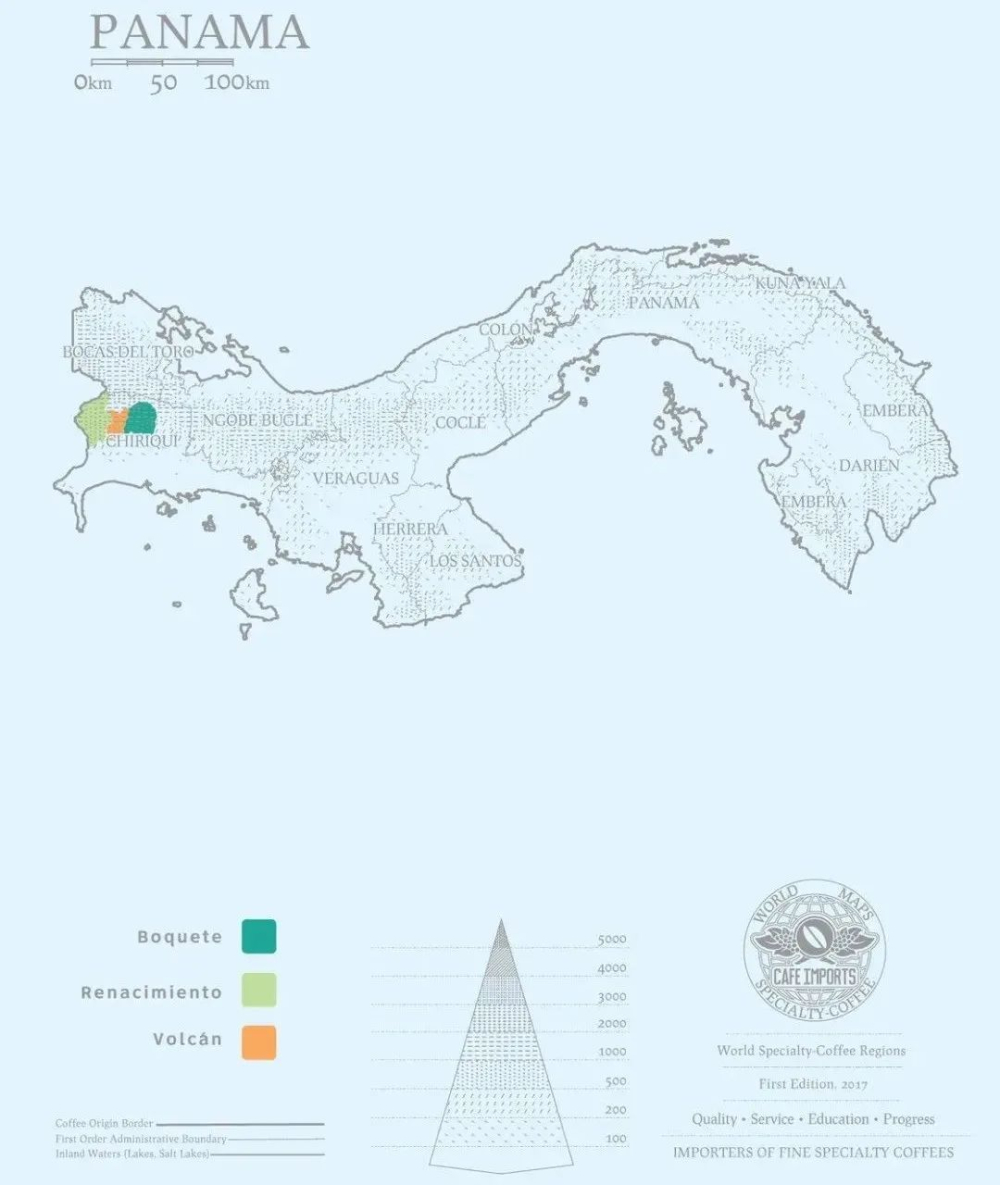
Panama now grows Geisha across three main regions: Boquete, Volcán-Candela, and Renacimiento, where estates such as Elida, Janson, and Hartmann operate. The Gallardo family, farming since 1960 and running five coffee farms, launched Nugu Estate in a remote rainforest reserve. It won a reliable of Panama Washed category on its first entry, helped by a distinct microclimate and strict farm management.
The Geisha variety is renowned in the coffee world for its delicate floral aroma and peach notes, and Panama is the core stage for this legendary variety. From being initially ignored to achieving fame at Hacienda La Esmeralda, Geisha's rise has depended on the deep cultivation of many estates. Among the many producers in Panama, the Gallardo family and its Nugu Estate are particularly noteworthy—this micro-estate, located in a remote rainforest reserve, won the Best of Panama Washed category championship on its first entry, thanks to its unique microclimate and meticulous management. This article will introduce you to the flavor characteristics of Geisha, the layout of Panama's main producing regions, and how Nugu Estate went from zero to becoming a dark horse in the specialty coffee world.
Central America accounts for only 11% of global coffee production, yet the coffee from this land enjoys an extremely high reputation, because several producing countries focus on the high-quality route. Take Panama as an example: it is widely known for producing the Geisha variety with delicate floral, jasmine, and peach aromas.
When Geisha was first introduced to Panama, it did not win the favor of local farmers. Although this variety has some resistance to leaf rust, the plants grow weakly and are time-consuming and labor-intensive to manage, so it was not widely promoted for a long time. The turning point came after Hacienda La Esmeralda noticed Geisha's unique flavor—they entered this variety in the 2004 Best of Panama (BOP) competition and auction, won first place, received extremely high praise, and at the same time set a record for green coffee auction prices at the time. Since then, Geisha has risen to fame in the coffee world.
At the same time, many estates in Panama also followed suit and began planting Geisha. Today, in the three major producing regions of Boquete, Volcán-Candela, and Renacimiento, a number of well-known estates such as Elida, Janson, and Hartmann have emerged. And if one were to mention one of Panama's largest coffee growers, the Gallardo family would certainly be on the list.

The Gallardo family's coffee-growing history can be traced back to 1960. After decades of development, the family now owns five estates. In the 1970s, family member José Manuel Gallardo Sr. began managing coffee farms in Panama, and later his son José Manuel Gallardo Araúz inherited the business and continued to operate the family estates.
At first, the Gallardo family planted common varieties such as Typica, Caturra, and Catuai in lower-altitude areas. It was not until 2006 that the current owner, José Manuel Gallardo Araúz, discovered that Nugu Estate had distinctive growing conditions and the ability to cultivate Geisha, so he began trial planting this variety on the estate.
Nugu Estate is located in the Jurutungo area of the Renacimiento producing region, with growing altitudes between 1,850 and 1,900 meters. Among Panama's three major producing regions, Renacimiento is less well known than Boquete and Volcán-Candela because it is remote, inconvenient to access, and relatively weak in infrastructure such as processing and transportation. However, this producing region is also rich in natural resources.
Renacimiento is located at Panama's most remote border area, adjacent to Costa Rica. The surrounding volcanic mountain range brings fertile soil, and the estate is also close to Central America's largest natural rainforest reserve—La Amistad International Park.
Thanks to the shelter of the rainforest reserve, the coffee trees are able to grow in a shaded environment. Nighttime temperatures here are relatively low, the temperature difference between day and night is significant, and rainfall is abundant with high humidity, creating ideal conditions for coffee cultivation. Nugu Estate covers only five hectares. Because it is close to the rainforest reserve, the estate has a great variety of bird species, so it was named nuguo (Spanish for "bird").
However, such an environment also brings considerable challenges to coffee processing. Extra attention must be paid to humidity and temperature in order to ensure the production of high-quality coffee. Therefore, the owner and his wife personally handle everything from cultivation to processing, and built a processing plant on the estate so that coffee can be processed immediately after harvest, thus achieving the coffee's outstanding quality. In 2015, the Gallardo family made their debut at the Best of Panama (BOP) with Geisha produced at Nugu Estate and won the Washed category championship. Since then, they have also appeared multiple times on the BOP list.
To learn more about coffee origin information, please scan the QR code to follow: Caping
Long-press the QR code to follow:
TRANSLATE with
x
English
TRANSLATE with
COPY THE URL BELOW
Back
EMBED THE SNIPPET BELOW IN YOUR SITE Bing Webmaster Portal
Back
The above content is compiled by CoffeeHunters, a coffee news website.


