








How Did Honey Process Coffee Cultivation Develop in Costa Rica?
The honey process sits between natural and washed processing, retaining sugars in the mucilage while controlling fermentation to give coffee a caramel-like sweetness and smooth body. Costa Rica is regarded as its birthplace, and the country's prominent sweetness is closely tied to how widely the method is used there.
Its predecessor is Brazil's pulped natural method, which emerged to cut water use in production. Drawing on it, Costa Rican coffee cultivation built a graded system of black, red, yellow and white honey; the raisin honey style has gained ground more recently. From about 1997 to 2000, low international prices pushed farmers to process and sell on their own, opening room to experiment.
Costa Rican coffee is famous for its prominent sweetness, which is closely related to its widespread use of the honey process. The honey process sits between natural and washed processing, allowing it to retain the sugars in the mucilage while controlling fermentation, bringing a caramel-like sweet and smooth mouthfeel. This article reviews the origin and evolution of the honey process: from Brazil's pulped natural approach of saving water, to Costa Rica's development of black honey, red honey, yellow honey, and white honey grades under the backdrop of its terrain and disasters, and then to the raisin honey process that has become popular in recent years. The article also uses Front Street Coffee's Mirazu Estate Strawberry Candy to illustrate the flavor performance of the raisin honey process.

When it comes to coffee with a sweeter flavor profile, Costa Rica is often the first association for many people. One reason is that a considerable proportion of the country's coffee uses the honey process. This processing method sits between natural and washed processing, and can enhance coffee's sweetness while giving it a caramel-like mouthfeel.
The English term for honey process is Honey Process, also written as Miel Proces. The "honey" here corresponds to the Spanish word "Miel," meaning honey. This name for the honey process originated in Costa Rica, where locals customarily call the sticky mucilage layer inside the fruit "Miel."
Although Costa Rica is regarded as the birthplace of the honey process, its predecessor was actually Brazil's pulped natural method. Pulped natural initially emerged to reduce water use in production. After drawing on this method, Costa Rica gradually formed its honey process system by combining it with its own geographical conditions.
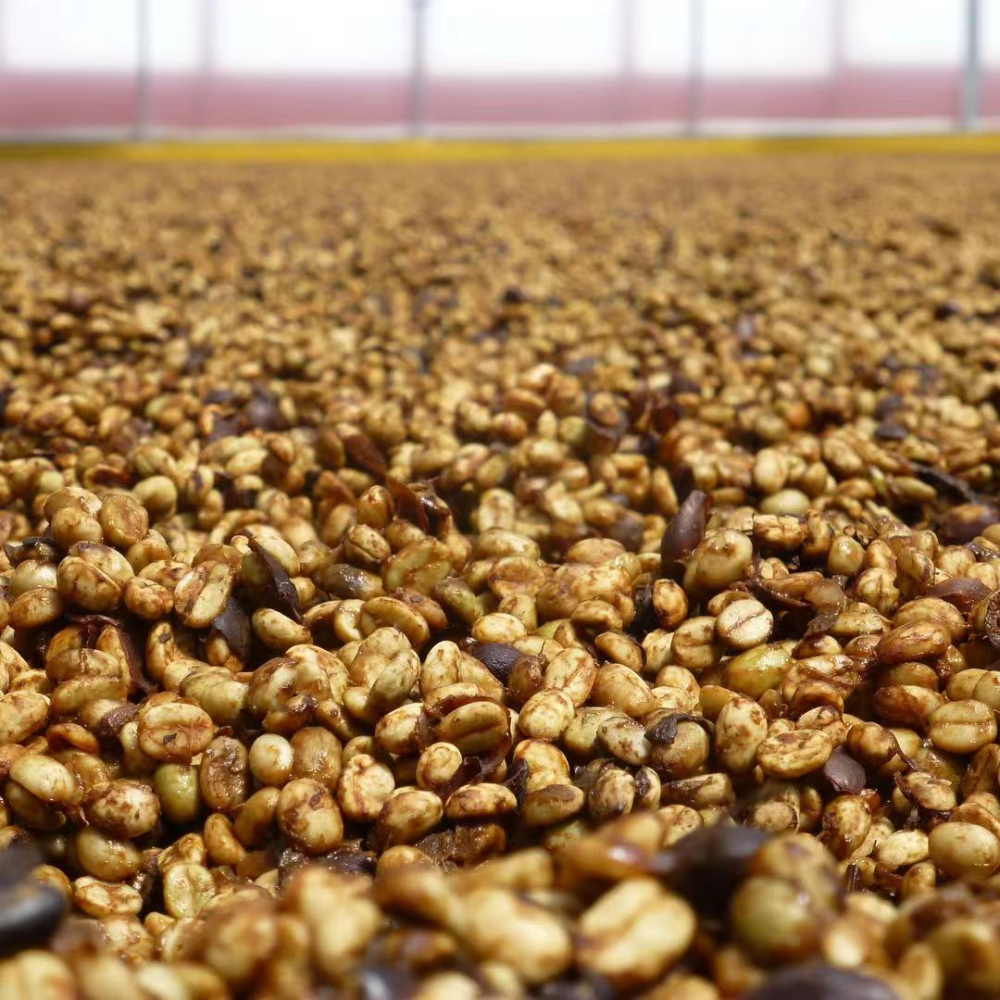
From about 1997 to 2000, international coffee prices remained persistently low. In order to increase income and maintain their livelihoods, many coffee farmers stopped selling coffee cherries to large processing stations and instead shifted to producing and selling on their own. After mastering processing techniques, farmers had more room to experiment, and at this time Brazil's pulped natural method was introduced to Costa Rica because of its water-saving characteristics.
In addition, central Costa Rica is crossed by the Cordillera mountains, forming numerous mountain ranges, basins, and volcanoes. The country's seven coffee-producing regions are therefore all distributed across the central mountain range, with coffee cultivation mostly at altitudes between 1,200 and 1,650 meters. However, because it lies in the Circum-Pacific seismic belt, Costa Rica experiences frequent earthquakes, and in 2008 it suffered a major earthquake.
The earthquake caused severe power outages and water shortages in many places. In addition, because the main producing regions are located in high mountain areas, storing water itself is difficult and cannot support water-intensive washed processing; at the same time, the area also lacks the long sunshine conditions of African countries, making natural processing riskier. As a result, local coffee farmers began to turn to this "water-saving" processing method.
At first, some believed that drying the beans together with the fruit pulp and mucilage could easily lead to uncontrolled fermentation. But after experimentation, many farms achieved positive results and also greatly reduced water consumption. Thereafter, through continuous improvement, the honey process gradually matured and gave rise to multiple types that shape different flavors by controlling the degree of mucilage fermentation.
In the improved honey process, after harvesting the coffee cherries, a depulper is used to remove the skin and part of the mucilage, and then, without adding extra water, the beans are spread directly on raised drying beds to dry. By precisely controlling the thickness of the mucilage and the drying time, it can be subdivided into black honey, red honey, yellow honey, and white honey.
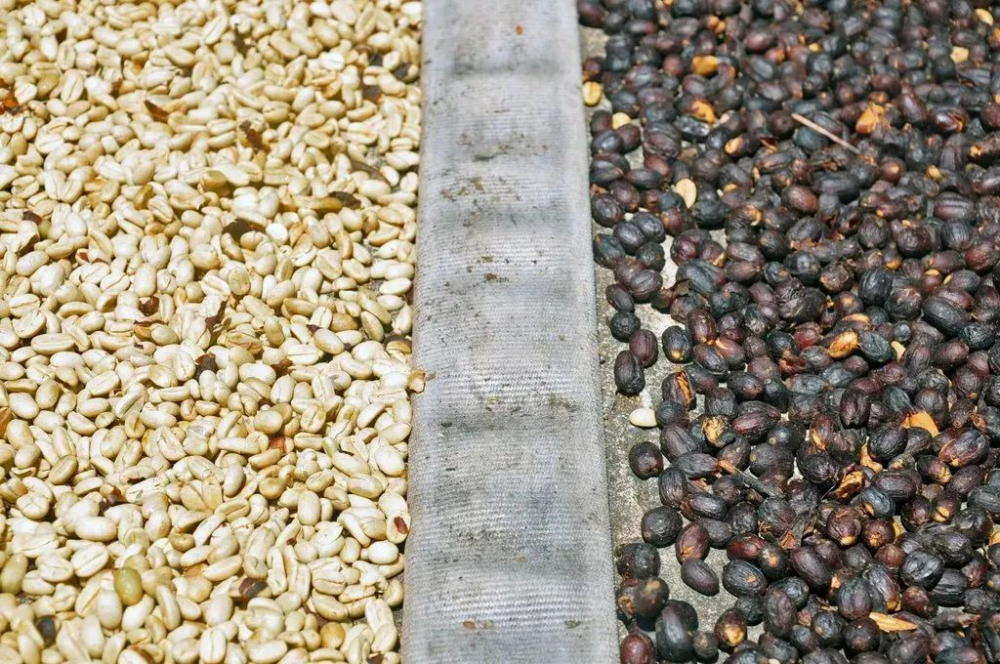
The mucilage contains a large amount of sugar, and green beans that retain mucilage undergo oxidation after contact with air. The surface of the beans changes from the initial yellow-white to golden yellow, and as fermentation time lengthens, it may turn deep red or even black-purple, until the entire drying process is completed.
Red honey processing retains about 80% of the mucilage and is sun-dried for 12 days, with the bean surface appearing reddish-brown. Yellow honey processing retains about 40% to 60% of the mucilage layer and is sun-dried for about 8 days; because the mucilage layer is thinner, the bean surface appears yellowish-brown. White honey retains less than 40% of the mucilage layer and has a shorter drying time, so the beans are lighter in color. Black honey processing removes almost no mucilage, drying lasts more than 14 days, and the bean surface tends toward black-purple.
At present, Costa Rica also has a newer and more complex processing method gaining popularity—raisin honey. In this method, after harvesting the coffee cherries, fully ripe red cherries are first selected through flotation, then spread directly to dry; after the skin wrinkles and the cherries resemble raisins, the skin and pulp are removed, and the semi-dry mucilage is retained for further drying until the entire drying process is completed.
This method requires almost no water and retains 100% of the mucilage, providing more sugar to the coffee beans and presenting the highest sweetness. However, this processing method is demanding and carries a high risk of spoilage, requiring more effort to look after the green coffee beans during processing.
At Front Street Coffee, there is a Front Street Mirazu Estate Strawberry Candy from Costa Rica's Tarrazu region that uses the raisin honey process. When brewed and tasted, it has strawberry and raisin flavors on the entry, with candy and nut flavors in the finish, as well as a creamy, honey-like mouthfeel.
The above content is compiled by CoffeeHunters, a coffee news website.


