







Why Do Arabica Beans Need Climate-Resistant Hybrids?
Starbucks will invest in a new farm in Costa Rica and another in Guatemala to keep its coffee supply chain stable as climate change worsens. The company buys about 3 percent of the world's coffee beans, and frost and drought in Brazil have pushed green Arabica bean prices to their highest level since 2011. US data show coffee consumer prices rose a cumulative 18 percent over five years.
The farms will research high-yield, disease-resistant hybrid varieties suited to different altitudes and soils, addressing drought and coffee leaf rust in coffee cultivation. Drones and mechanized technology will also be introduced to ease labor shortages in Latin America. Starbucks plans to keep expanding its agricultural footprint in Africa and Asia, according to vice president of global coffee agronomy Roberto Vega.
In the face of the ongoing impact of rising global temperatures and frequent extreme weather on coffee cultivation, Starbucks has announced that it will invest in a new farm each in Costa Rica and Guatemala to strengthen the climate adaptability of its coffee supply chain. In recent years, frost and drought in Brazil have caused Arabica bean prices to soar, and coffee consumer prices have risen 18% within five years. As a purchaser of about 3% of the world's coffee beans, Starbucks is using its own farms to research high-yield, disease-resistant hybrid varieties adapted to different altitudes and soils. The new farms will also introduce drones and mechanized technology to address labor shortages in Latin America, and the company plans to continue expanding its agricultural footprint in Africa and Asia in the future.
▲
Click to follow | Daily specialty coffee culture magazine Coffee Workshop
Starbucks recently announced publicly that the company plans to invest in a new farm in Costa Rica and another in Guatemala, with the aim of keeping its coffee supply chain stable against the backdrop of increasingly severe climate change while further solidifying its global coffee supply network.
In recent years, global temperatures have continued to rise, producing regions such as Brazil have suffered severe frosts, and the La Niña phenomenon for three consecutive years has led to frequent extreme weather, causing significant losses to coffee production and increasing pressure on the supply chain. Rising temperatures bring problems such as drought and coffee leaf rust to the cultivation stage, all of which affect coffee supply, quality, and flavor while also threatening growers' livelihoods.
This year in particular, improving the climate adaptability of the coffee industry chain has become even more urgent, because extreme drought in Brazil pushed the price of green Arabica beans in September to its highest level since 2011. Data from the U.S. Bureau of Labor Statistics show that as of August this year, coffee consumer prices had risen by a cumulative 18% over the past five years.
For Starbucks, which purchases about 3% of the world's coffee beans, a decline in production not only means it must quickly find alternative raw materials, but may also face pressure to raise prices on subsequent products.
Roberto Vega, Starbucks' vice president of global coffee agronomy, research and development, and sustainability, said that frost in Brazil has already affected as much as 50% of the company's sales, dealing a heavy blow to product supply, and that such extreme weather is becoming increasingly common in the coffee-growing belt. "If we do not improve the resistance of crops, coffee supply will definitely continue to decline."
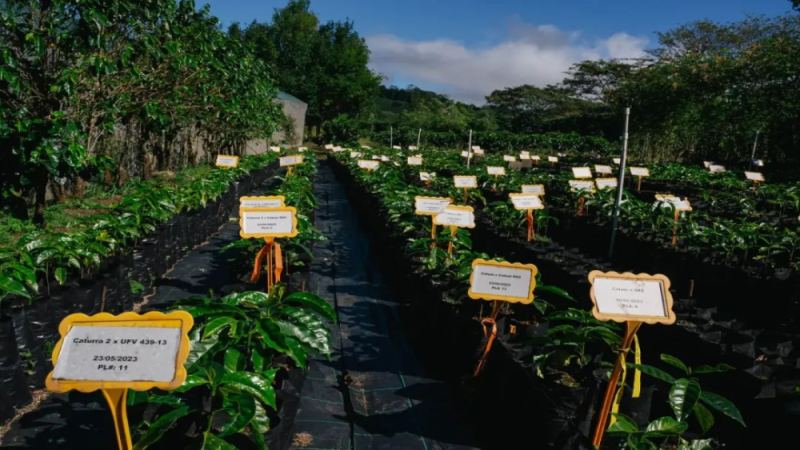
To address this challenge, Starbucks will focus on observing how hybrid coffee varieties perform under different altitudes and soil environments on these two new farms. In addition to higher yields, these hybrid varieties also have stronger resistance to diseases such as coffee leaf rust.
In fact, Starbucks bought its first company-owned coffee farm, Costa Rica Hacienda Alsacia, as early as 2013 to research disease-resistant and climate-change-resistant coffee varieties. Located on the slopes of the Poás Volcano in Costa Rica, the estate covers 2.4 square kilometers and is now the headquarters of Starbucks' global agronomy center.
Information on Starbucks' official website shows that the new farm in Costa Rica is adjacent to Hacienda Alsacia and is intended to introduce mechanization, drones, and other technological means to help Latin American farmers cope with the current problem of labor shortages.
As for the other farm in the Americas, Starbucks chose the highlands of Antigua in Guatemala, and its operation method is very close to the most common local smallholder model, so as to gain an in-depth understanding of the actual conditions of soil and productivity recovery.
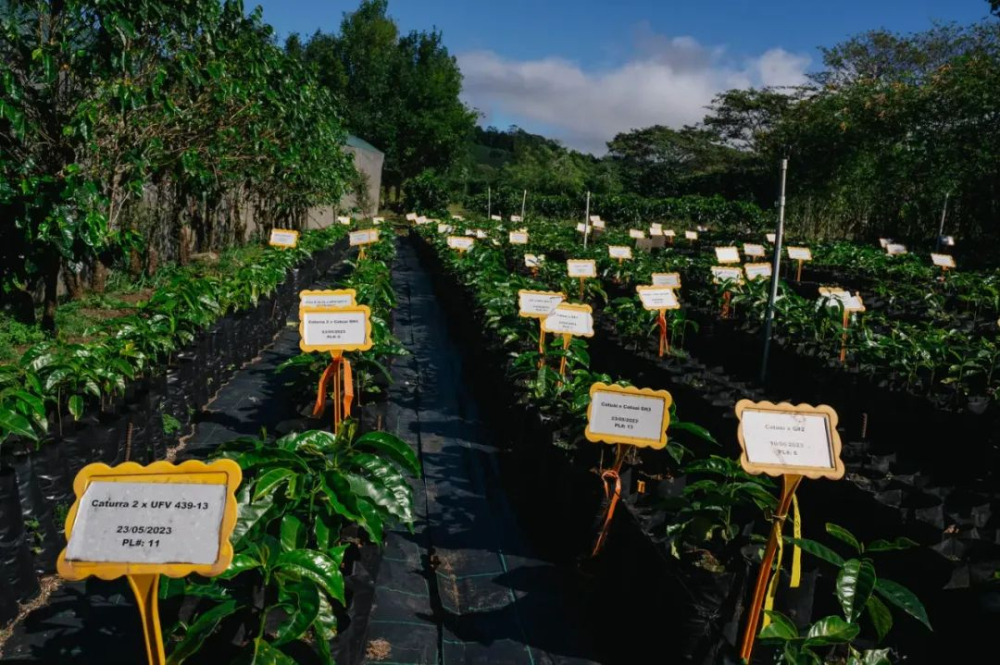
Starbucks also said that in the future it will purchase two more farms in Africa and Asia, extending its agricultural investment portfolio across the entire coffee-growing belt. Through research and practice on the new farms, Starbucks hopes to cultivate coffee varieties that are more adaptable to climate change, higher-yielding, and better in quality, while helping farmers improve efficiency and reduce costs, thereby promoting the sustainable development of agriculture.
Image source: stories.starbucks
Disclaimer: Some images in this article are from the internet. For some content on the website, such as images, we will respect the original author's copyright and indicate the source. However, due to the large quantity, there may be individual images or texts for which no source has yet been indicated. Please understand. If the original author has any dispute, they may contact the website for handling. Once verified, we will correct it immediately. Compiled and edited by "Coffee Workshop." Please indicate the source when reprinting. If there is infringement, please inform us for deletion. Thank you~!
The above content is compiled by CoffeeHunters, a coffee news website.


