







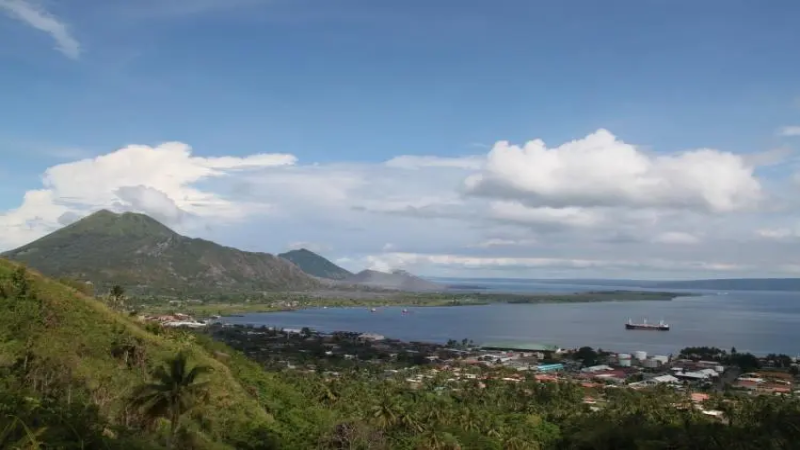
Why is Papua New Guinea coffee called Little Blue Mountain?
Papua New Guinea coffee is nicknamed Little Blue Mountain because its growing environment, climate and varieties closely resemble those behind Jamaican blue mountain coffee. Oceania is largely volcanic islands, but only Papua New Guinea and Hawaii grow coffee commercially. Cultivation is concentrated in the central highlands rather than the coastal lowlands.
The country occupies the eastern half of the island of New Guinea plus more than 600 surrounding islands, with the western half belonging to Indonesia. Above 1,000 meters the highlands give a mountain climate with average temperatures around 16–27°C. Estates such as Sigri, also called Bird of Paradise, are known for caramel, cocoa and almond notes, and Papua New Guinea sits among the main coffee producing countries of the region.
Jamaican Blue Mountain coffee earned the title of "Coffee Emperor" as early as the last century thanks to its exceptional quality and unique flavor. In Oceania, however, there is a country whose coffee-growing environment, climate conditions, and varietals are remarkably similar to Blue Mountain, earning it the nickname "Little Blue Mountain" — this is Papua New Guinea. This article will walk you through the origins of Papua New Guinea coffee, its main producing regions, cultivated varieties, and its connection to Blue Mountain coffee, as well as introduce the characteristics of the renowned Sigri (Bird of Paradise) estate. We will also share Front Street Coffee's recommended Bird of Paradise coffee beans from the Western Highlands Province of Papua New Guinea, and let you experience the charm of its caramel, cocoa, and almond flavors.
The reputation of Jamaican Blue Mountain coffee has endured for decades, and its outstanding quality and flavor earned it the title of "Coffee Emperor" back in the last century. In Oceania, there is a country whose natural conditions, geographical environment, climate, and coffee varieties are all extremely close to Jamaican Blue Mountain, and the coffee it produces has therefore been dubbed "Little Blue Mountain" — that country is Papua New Guinea.
Oceania is mainly composed of the Australian continent and roughly ten thousand islands scattered across the Pacific Ocean. Most of these islands are of volcanic origin, making volcanic landforms very common. Although many Oceanian countries are predominantly agricultural, only a few actually grow coffee — just Papua New Guinea and the U.S. state of Hawaii.
The territory of Papua New Guinea lies mostly on the island of New Guinea. The island is divided by a straight boundary line into east and west halves, with the western half belonging to Indonesia and the eastern half to Papua New Guinea. The country consists of the island of New Guinea and over 600 surrounding islands. The northern and southern sides of the island are coastal lowlands, so coffee cultivation is concentrated in the central New Guinea Highlands, also known as the Central Range or Central Cordillera, which is made up of a series of mountain ranges, volcanoes, and intermontane river valleys.
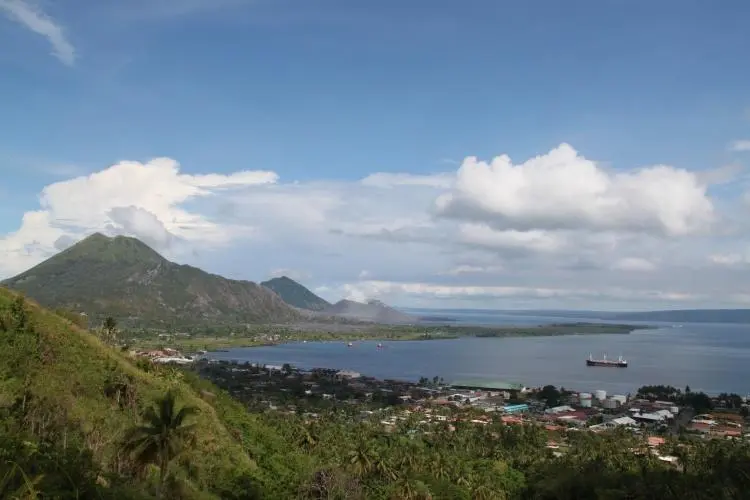
In Papua New Guinea, areas above 1,000 meters in elevation have a mountain climate, with average temperatures of about 16–27°C and average annual rainfall of 2,500 mm. The high-altitude mountains, fertile soil enriched by volcanic ash, rich natural ecology, and suitable climate and rainfall provide ideal growing conditions for coffee and other crops, giving rise to many agricultural production areas in the central river valleys.
Coffee was first introduced to Papua New Guinea by Dutch sailors in the late eighteenth century, and gradually spread in the Rigo area during the nineteenth century. By the twentieth century, coffee had become a major commercial product of Papua New Guinea, with the country's coffee planting area reaching 180 acres.
In the early twentieth century, Papua New Guinea was administered by Australia, while Jamaica was a British colony. At the time, Australia had close ties with Britain, so the Typica variety was introduced from Jamaica to Papua New Guinea for cultivation, sharing the same lineage as the famous Blue Mountain coffee. In addition, Papua New Guinea's growing environment is very similar to Jamaica's, with comparable altitude and climate types, so Typica quickly adapted to the local environment after being introduced and became the country's main cultivated variety. The Typica coffee produced in Papua New Guinea also closely resembles Blue Mountain coffee in flavor, thus earning the nickname "Little Blue Mountain." However, because Papua New Guinea is closer to the equator and slightly warmer, there are still some subtle differences upon closer examination.
In Papua New Guinea, coffee cultivation is mainly concentrated in four highland provinces: Western Highlands, Eastern Highlands, Chimbu, and Jiwaka Province. Local production is dominated by smallholder farmers, with about 75% of coffee products coming from small local farms, but there are also some large estates, the most famous of which is Sigri Estate.
Sigri Estate is located in the Western Highlands Province, the country's largest coffee-producing region. The province sits in the Wahgi Valley, near the famous extinct volcano Mount Hagen, which provides fertile volcanic soil. Combined with a suitable climate and ample rainfall, local agriculture is highly developed.
Sigri Estate was founded in 1950 and was a pioneer of coffee cultivation in the region. The estate prints Papua New Guinea's national bird, the bird of paradise, on the burlap bags of its exported coffee, which is why many people also call it Bird of Paradise Estate.
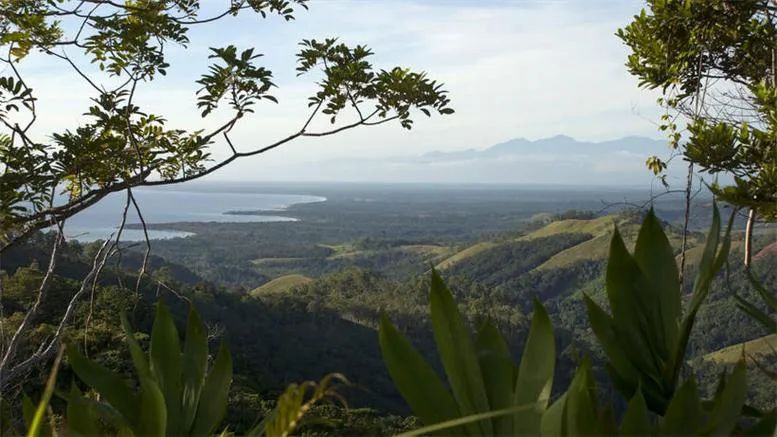
Sigri Estate's parent company is WR Carpenter company-PNG, which owns about 1,000 hectares of coffee plantations in Papua New Guinea and is the country's largest coffee exporter, accounting for about 80% of the country's coffee bean and tea exports. The estate places great emphasis on ecological conservation, refusing to use pesticides and insecticides in order to protect water sources and soil. Over the years, the estate has consistently adhered to high standards of cultivation and processing, providing customers with coffee of consistent quality.
At FrontStreet Coffee, we also carry the Sigri Bird of Paradise coffee beans from the well-known Western Highlands Province of Papua New Guinea. Made from Typica and processed using the washed method, it delivers caramel, cocoa, and almond flavors when brewed, with a slight acidity when cooled, a full body, and an overall balanced profile.
To learn more about coffee origins and news, please scan the QR code to follow: Coffee Review
Long-press the QR code to follow:
TRANSLATE with
x
English
Arabic Hebrew Polish Bulgarian Hindi Portuguese Catalan Hmong Daw Romanian Chinese Simplified Hungarian Russian Chinese Traditional Indonesian Slovak Czech Italian Slovenian Danish Japanese Spanish Dutch Klingon Swedish English Korean Thai Estonian Latvian Turkish Finnish Lithuanian Ukrainian French Malay Urdu German Maltese Vietnamese Greek Norwegian Welsh Haitian Creole Persian
TRANSLATE with
COPY THE URL BELOW
Back
EMBED THE SNIPPET BELOW IN YOUR SITE Bing Webmaster Portal
Back
The above content is compiled by CoffeeHunters, a coffee news website.


