








How Would Daylight Saving Time Affect Coffee Production in Brazil?
Brazil's Minister of Mines and Energy said the country may reinstate daylight saving time by the end of this year, possibly as early as November, if severe drought conditions do not improve. The coffee industry sees the move as helpful because longer natural daylight hours would cut electricity costs and indirectly ease pressure on coffee production costs.
The measure comes as drought and fires push reservoir levels down and hydropower capacity lower. Data from Brazil's monitoring agency show 1,188 cities went 90 consecutive days without significant rainfall, 600 cities exceeded 130 days, and some reached 178 days. The industry argues the government should prioritize the water shortage first.
Brazil has recently suffered severe drought and fires, causing reservoir levels to plummet and hydropower capacity to drop sharply, and the government is evaluating the reinstatement of daylight saving time to conserve electricity. The coffee industry has expressed concern about this, believing that daylight saving time helps extend natural daylight hours and reduce electricity costs, thereby indirectly easing pressure on coffee production costs. However, the industry also emphasizes that the government should prioritize solving the water shortage problem, otherwise coffee flowering and yields in the new season will still face severe challenges. This article will provide a detailed interpretation of the background of Brazil's daylight saving time restoration, its impact, and the opportunities and risks facing the coffee industry.
According to Brazilian media reports, the Minister of Mines and Energy of Brazil revealed at a recent press conference that Brazil may reinstate daylight saving time by the end of this year. The government has not yet made a final decision, but if the current severe drought conditions do not improve in the coming days, the government will activate the system, possibly as early as November.
Recently, Brazil has been continuously plagued by fires. Earlier reports showed that about 5 million square kilometers were affected, accounting for sixty percent of the country's territory. Even now, fires are still occurring in some areas. According to reports, a forest fire recently broke out in the MACICO DA TIJUCA area of Rio de Janeiro State, forcing some highways in the state to be closed to traffic.
Affected by the dry weather, Brazil has recently seen no significant rainfall. According to data from Brazil's National Center for Monitoring and Early Warning of Natural Disasters, 1,188 cities across the country have gone 90 consecutive days without significant rainfall, 600 cities have gone more than 130 consecutive days without significant rainfall, and the highest record in some cities has even reached 178 days without rain.

Due to severe drought and fire problems, major reservoirs across Brazil are at extremely low levels, many rivers have shrunk sharply with large areas of riverbed exposed, shipping on some inland rivers has been hindered, and surrounding lakes have dried up severely with their surfaces greatly reduced.
The most serious situation is in the Amazon River basin. In Manaus, the capital of Amazonas State, the Rio Negro was measured at a low of 12.68 meters, breaking the record of 12.7 meters set on October 26 last year and reaching the lowest level in 122 years. The Rio Negro is the largest tributary on the north bank of the Amazon River, with a basin area of more than 1,300 square kilometers within Brazil, making it a very important river in the country. At present, this historic drought has affected the lives of 747,600 residents across the state, and all cities in the state are in a state of emergency.
At the same time, Brazil's hydropower generation has dropped sharply and may be unable to meet the electricity demand during the annual summer peak, so the government recently raised the country's electricity surcharge. According to Brazil's National Center for Monitoring and Early Warning of Natural Disasters, Brazil is experiencing its largest hydropower crisis in 74 years, with reservoir storage at major hydropower plants at the lowest level since records began in 1950.
Therefore, in September this year, the Brazilian government began evaluating alternative plans for conserving electricity under severe drought conditions, and the main power-saving plan is daylight saving time. It is understood that Brazil's daylight saving time system is a system of artificially adjusting time in order to save energy.
The time adopted during the implementation of this system is called "daylight saving time." Generally, during summers with long daylight hours, time is artificially advanced by one hour. That is, Brazil is in the UTC-3 time zone, and during daylight saving time, the time is adjusted to UTC-2. This system can encourage people to sleep and rise earlier, effectively reducing lighting use, making full use of daylight resources, and saving electricity for lighting. Previously, Brazil's daylight saving time ran from November each year to February of the following year, but in 2019 the Brazilian government abolished the system, and only recently has it planned to restart it.
Regarding this system, some people in the coffee industry have expressed support, since the current drought and other conditions have raised costs in the coffee industry, and the coffee industry is highly dependent on electricity, so rising electricity prices have also driven up costs. Because daylight saving time extends daytime hours, farmers and workers have more natural daylight time to work, which helps improve work efficiency and production progress. Second, daylight saving time has a certain impact on coffee market trade, because it saves energy to a certain extent and is beneficial to the sustainable development of Brazil's coffee industry, especially against the backdrop of drought and high temperatures affecting coffee yields, where saving energy can ease the pressure of rising costs. Since it can indirectly reduce production costs, it may have a positive impact on coffee prices and enhance the competitiveness of Brazilian coffee in the global market.
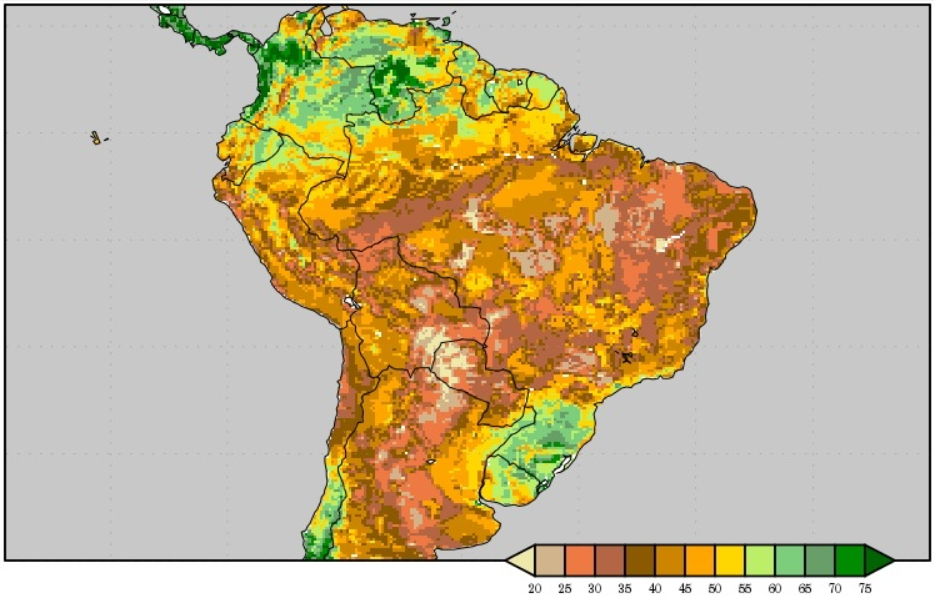
However, people in the coffee industry believe that government authorities should prioritize solving the water resource problem. Under Brazil's current conditions of drought, fires, and lack of rainfall and water resources, the impact on the flowering period of the new coffee season is very serious. Coffee production is already expected to decline by 6.8%, and if there is no improvement by the end of the year, production will continue to fall.
To learn more about coffee origin news and information, please scan the QR code to follow: Coffee Review
Long-press the QR code to follow:
TRANSLATE with
x
English
Arabic Hebrew Polish Bulgarian Hindi Portuguese Catalan Hmong Daw Romanian Chinese Simplified Hungarian Russian Chinese Traditional Indonesian Slovak Czech Italian Slovenian Danish Japanese Spanish Dutch Klingon Swedish English Korean Thai Estonian Latvian Turkish Finnish Lithuanian Ukrainian French Malay Urdu German Maltese Vietnamese Greek Norwegian Welsh Haitian Creole Persian
TRANSLATE with
COPY THE URL BELOW
Back
EMBED THE SNIPPET BELOW IN YOUR SITE Bing Webmaster Portal
Back
The above content is compiled by CoffeeHunters, a coffee news website.


