







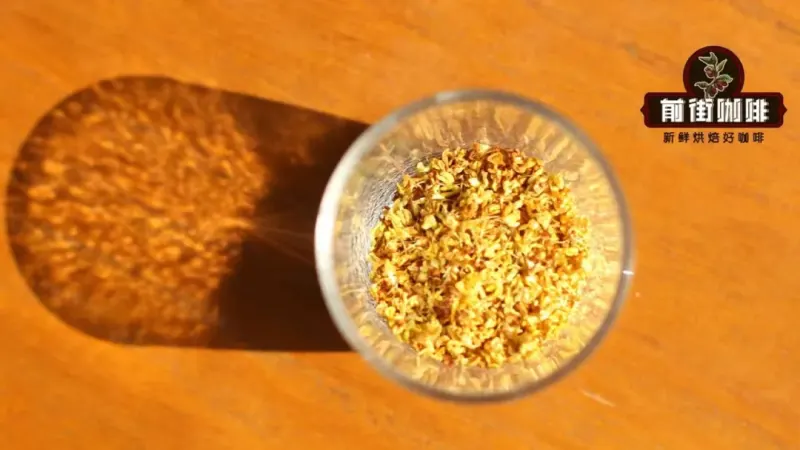
How Do You Make Osmanthus Coffee at Home?
Osmanthus coffee works as an autumn seasonal drink in three forms: osmanthus cold brew, osmanthus americano and osmanthus latte. Each recipe keeps the coffee's own flavor in front and uses osmanthus mainly for aroma. Cold brew steeps the flowers together with the grounds, while the americano and latte add osmanthus at the assembly stage. The guide covers ingredient ratios, bean selection and the flavor each version delivers.
Bean choice matters most for the cold brew, since osmanthus has a full but gentle aroma that pairs better with some coffees than others. The recipes also compare syrup versions with sugar-free versions, so drinkers can decide how much sweetness to add. Autumn is the season when osmanthus blooms, which is why the flower fits the drinks; the article notes that the coffee should stay the star rather than the added flavor.
Once Start of Autumn passes, the feel of autumn quietly seeps into daily life. Just as summer belongs to coconut coffee, autumn has its own signature flavor—osmanthus. This time Front Street Coffee is bringing out all its treasured osmanthus coffee recipes, including three special creations: osmanthus cold brew, osmanthus americano, and osmanthus latte. The approach is to preserve the coffee's original character as much as possible while using osmanthus to add a sense of the season. The article will explain in detail the ingredient ratios, bean selection logic, steps, and flavor performance of each method, while also comparing the differences between syrup and sugar-free versions, helping you make aromatic, well-layered autumn coffee at home.
On August 7th, the calendar turns to the page marked "Start of Autumn," and autumn has officially arrived. Just as the coconut coffee series shone brightly in summer, autumn also calls for a seasonal special. So Front Street Coffee is once again digging out its treasured techniques to talk with everyone about a few coffees suitable for making in autumn.
Though we call them special creations, they are really just basic coffee with a touch of something that represents autumn. Ultimately, the coffee's flavor is still the star, so Front Street Coffee keeps things restrained and tries not to interfere with the original taste. The ingredient used this time is still the "osmanthus" that has appeared repeatedly in Front Street Coffee articles.
Autumn happens to be the season when osmanthus blooms, making it the perfect symbol of the season. The aroma of osmanthus naturally complements coffee with no sense of conflict, and adding it to coffee feels tailor-made. Without further ado, let's dive straight into the osmanthus coffee recipes.
Contestant No. 1: Osmanthus Cold Brew
Although autumn has begun, everyone knows Guangdong's weather is still brutally hot. So cold brew coffee remains many people's first choice. And once osmanthus is added, it takes on a completely different kind of deliciousness. Therefore, the first contestant Front Street Coffee is introducing today is "Osmanthus Cold Brew."
The method is extremely simple—just add some osmanthus to the original cold brew ingredients and steep together. But one thing must be noted: the choice of beans.
Osmanthus has a rich but not harsh aroma, making it better suited to coffee beans with low acidity and a steady aroma. So medium roast and dark roast are the primary criteria for bean selection. This time Front Street Coffee used Honduras Sherry; Sherry itself has a very strong wine-like aroma, and after adding osmanthus, it forms an aroma similar to osmanthus wine. The extraction parameters are as follows: 25g grounds (one cup's worth), 1:10 coffee-to-water ratio, 2g osmanthus, refrigerate for 8 hours.
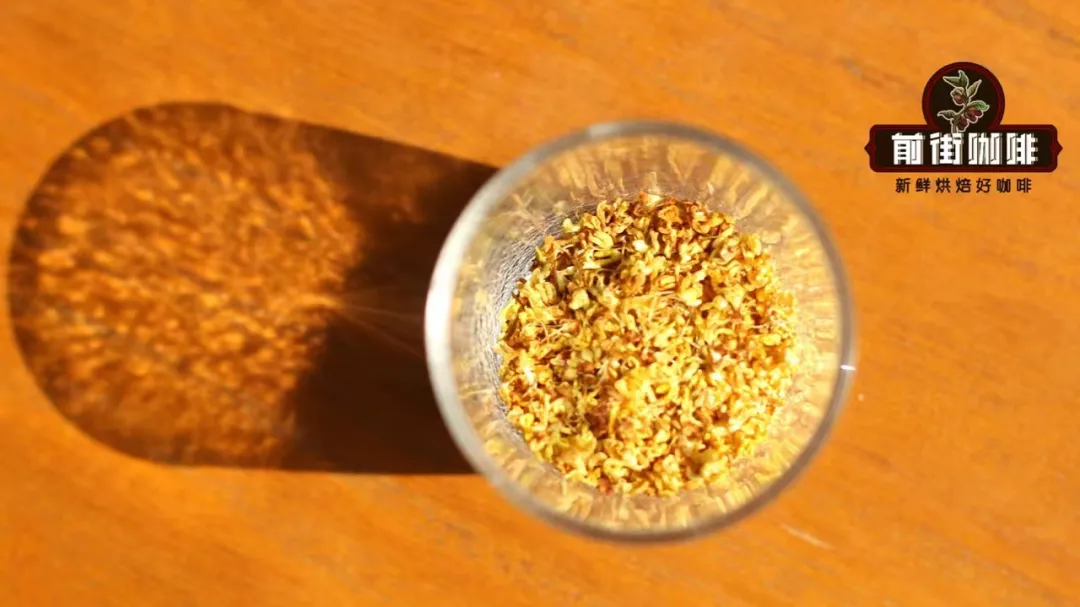
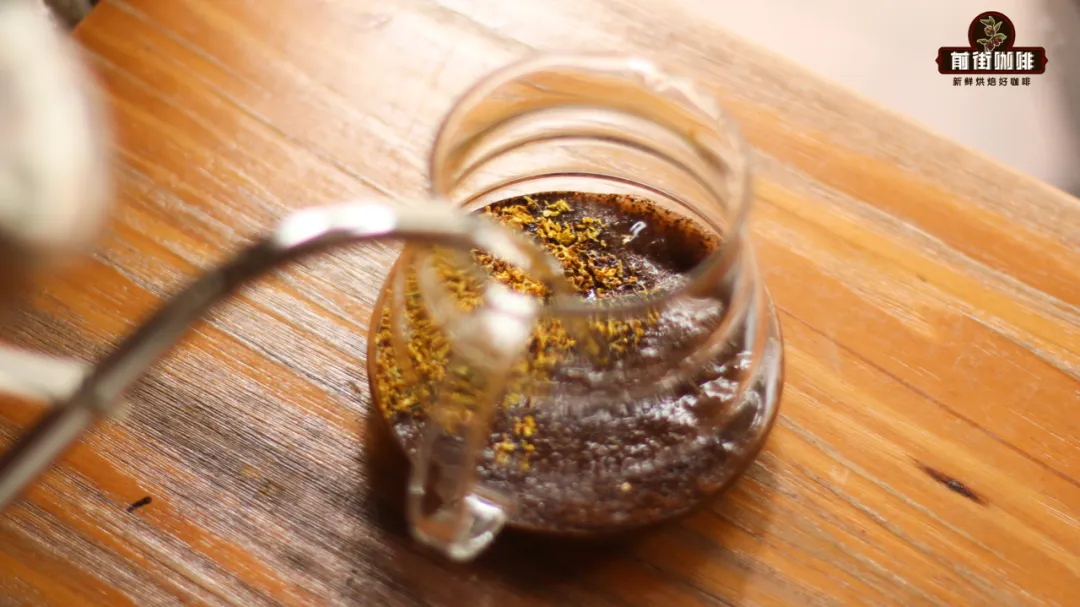
The process is simply to find an airtight container, put the ingredients in one by one, seal it, and place it in the refrigerator. When the time is up, take it out and filter.
The filtered osmanthus cold brew has a very rich aroma, with both the whisky-like notes and the fragrance of osmanthus. Because the ratio is on the strong side, it needs to be diluted with ice cubes, so you can add ice according to your own taste. As the ice dilutes it, the coffee's flavor gradually unfolds, accompanied by the osmanthus aroma—remarkably evocative.
Contestant No. 2: Osmanthus Americano
An americano is simply espresso with water added, so there's no risk of masking the coffee's flavor. That gives us two ways to make it. One is simpler: just spread osmanthus on top of the coffee puck and extract together.
The advantage of this method is that it's "simple and convenient," and the espresso comes out directly infused with osmanthus aroma. The downside is that it easily causes channeling, and while the espresso may have osmanthus aroma, it may not necessarily taste good (a matter of probability).
The other method is to first extract the espresso, then steep osmanthus in that espresso for one minute, and then filter. The advantage is that it won't cause extraction inconsistencies, but the downsides are also obvious: first, the process is more laborious, and second, some of the coffee's flavor is lost.
So which to choose is entirely a personal decision. Once the osmanthus espresso is ready, pour in hot water at a certain ratio to make an americano. Front Street Coffee prefers the americano to maintain a certain strength, so a 1:4 ratio is used—40ml espresso with 160ml hot water, stirred well and ready to drink.
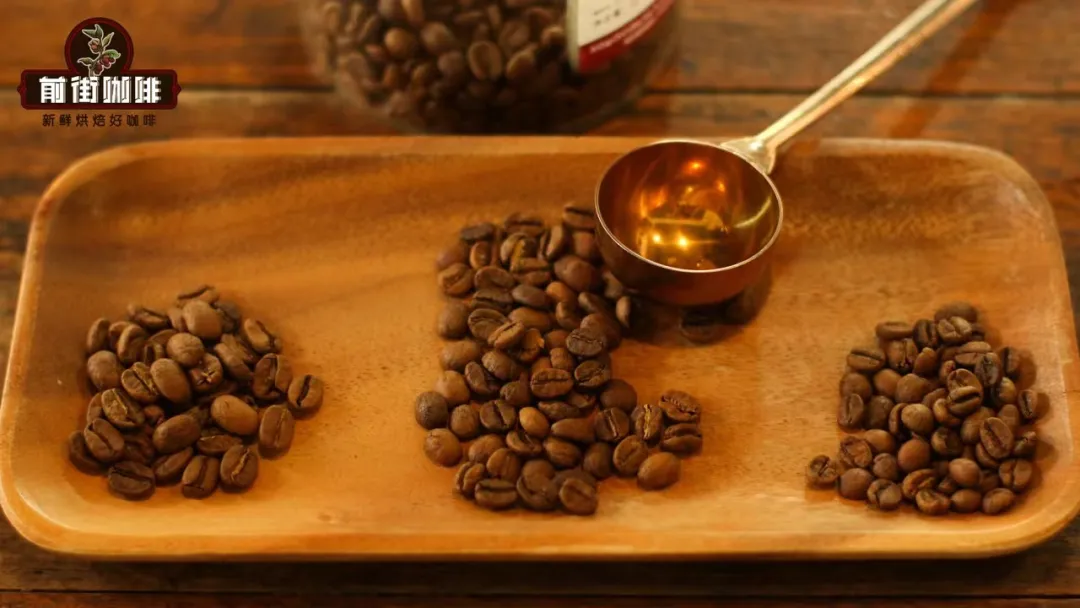
The beans Front Street Coffee used for the espresso are the Warm Sun blend, so this americano presents whisky-like notes, butter cookie, plus interwoven osmanthus aroma—very pleasant.
Contestant No. 3: Osmanthus Latte
If you make a latte with osmanthus-steeped espresso like the americano, the milk's flavor will easily overpower the osmanthus aroma. So we need a different approach—infusing the osmanthus flavor into the latte through other means. After testing, Front Street Coffee has found two directions for making osmanthus latte: one with syrup, and one sugar-free version without syrup.
First, the sugar-free version. The sugar-free method is to "cold-steep" osmanthus and milk, letting the osmanthus flavor infuse into the milk, so there's no worry about the aroma being masked. Front Street Coffee uses a 100:1 ratio—1g osmanthus per 100ml milk—mixed and refrigerated for two hours (any longer and it turns bitter).
Once steeping is complete, take it out and filter, then you can make the latte. The ratio and method are the same as a regular latte; Front Street Coffee uses a 1:5 ratio (hot latte). Here the espresso extracted is 40ml, so 200ml of osmanthus milk is used. The process: first extract the espresso, then steam the milk, then combine, and pour the art! Finally, Front Street Coffee suggests sprinkling a little osmanthus at the center of the latte's surface to boost the osmanthus aroma when drinking, making the experience even richer.
Next is the syrup version. This is actually very simple—just add 10ml osmanthus syrup to the original latte-making process. Also sprinkle a little osmanthus on top after finishing to enhance the aroma.
Compared with the sugar-free version, this latte with osmanthus syrup is sweeter and has a more pronounced aroma. The only downside is that it's not suitable for those who dislike sugar, and it lacks a bit of naturalness in flavor.
That's everything for this time. If you have other special coffees suitable for autumn, feel free to share them in the comments.
The above content is compiled by CoffeeHunters, a coffee news website.


