







What Challenges Face the Kenya Coffee Industry?
Kenya's Export Promotion and Branding Agency and the Agriculture and Food Authority are jointly planning a unified national coffee brand to consolidate marketing and raise the country's profile in the international market. The effort runs alongside falling production, unstable exports since 2016, shrinking cultivation area, rising costs, price swings and unpredictable weather. The EU Deforestation Regulation, delayed by a year, still leaves traders and African producers under pressure.
Government reforms use the Nairobi Coffee Exchange's Direct Settlement System to cut out middlemen and pass international price changes more directly to farmers. But tighter processing licenses have closed large processing plants, leaving raw materials piled up and even rotting at small factories. Add the Red Sea crisis, port congestion and rising domestic consumption, and Kenyan coffee practitioners are looking to policy for relief.
The Kenya Export Promotion and Branding Agency and the Agriculture and Food Authority are joining forces to plan and build a unified national coffee brand, aiming to consolidate global marketing resources and enhance Kenya's coffee influence in the international market. However, in recent years, the country's coffee production has continued to decline, and export performance has been fluctuating since 2016. Shrinking cultivation area, rising production costs, price volatility, and unpredictable weather conditions are all constraining industry development. Although the government has pushed reforms to reduce intermediary links through the direct settlement system of the Nairobi Coffee Exchange, tightened processing licenses have led to the closure of large processing plants, with raw materials piling up and even rotting at small factories. Meanwhile, although the EU Deforestation Regulation has been delayed by one year, it still leaves traders and African producing countries under considerable pressure. New variables such as the Red Sea crisis, port congestion, and rising domestic consumption have also led Kenyan coffee practitioners to place more expectations on policy.
According to local Kenyan media reports, the Kenya Export Promotion and Branding Agency (Keproba) and the Agriculture and Food Authority (Afa) are jointly planning to formulate a unified national brand to boost the country's coffee export growth, and hope to strengthen Kenya's influence in the international coffee market by integrating global marketing and promotion efforts.
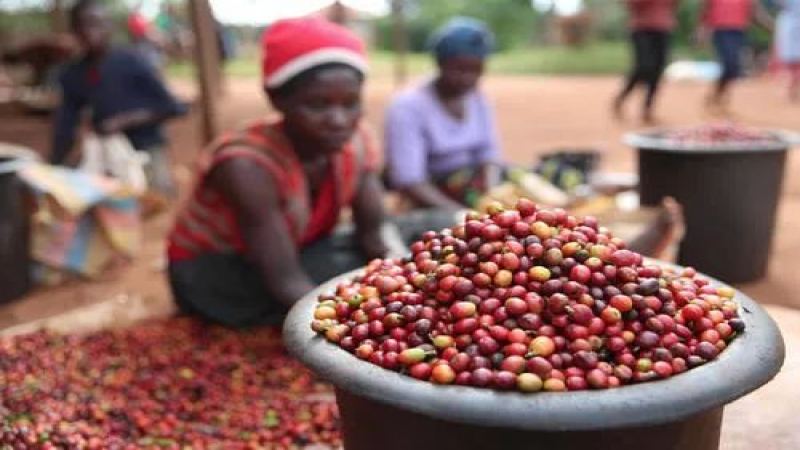
However, in recent years, Kenya's coffee production has shown a continuous downward trend, and since 2016, the country's coffee exports have been unstable. The coffee industry has consistently been plagued by multiple factors such as shrinking cultivation area, rising production costs, price fluctuations, and unpredictable weather conditions.
In recent years, the Kenyan government has continuously advanced coffee industry reforms, using the Direct Settlement System (DSS) of the Nairobi Coffee Exchange to eliminate middlemen, thereby increasing coffee farmers' income and allowing changes in international coffee prices to be transmitted more directly to local crop production.
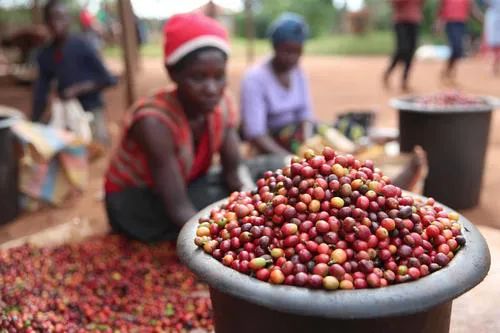
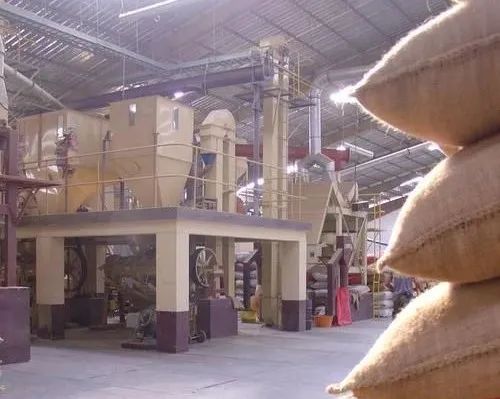
Although this approach helps farmers obtain higher profits when exporting coffee, it has also produced some negative effects. While removing middlemen, coffee processing plants set up in Kenya by some well-known international trading companies failed to obtain licenses, forcing these large processing plants to close. In addition, current regulations require processing to be carried out only at government-designated processing plants with multiple business licenses. This situation has caused orders at some small processing plants to surge, but with insufficient capacity and manpower, coffee cherries awaiting processing have piled up severely and then rotted, leading to declines in both yield and quality.
Earlier, the Nairobi Coffee Exchange (NCE) reported that in the first half of 2024, a total of 29,000 tons of coffee were auctioned, with an average price of 140.5 shillings. Compared with the same period last year, export volume increased by 40% and the unit price rose by 9%.
The reason the number of transactions at the Nairobi coffee auction center has continued to grow is that Kenya had previously suspended coffee ranking due to coffee industry reforms, and the restart of auction trading has now driven up transaction volumes. In addition, rising international coffee prices have also provided a stimulus. At the same time, Kenya is a major source of supply for EU countries such as Germany and France, and the EU accounts for 21% of Kenya's total coffee exports. EU traders, worried about the impact of the EU Deforestation Regulation (EUDR) taking effect on December 30, 2024, have been increasing purchases to ensure sufficient coffee inventory after the regulation takes effect.
However, recently the European Commission stated that, in view of feedback from many international partners, it is necessary to delay the implementation of the EU Deforestation Regulation (EUDR) by one year, namely applying from December 30, 2025 to large companies in the EU and from June 30, 2026 to small businesses. The proposal is currently awaiting approval by the European Parliament and the Council. But since all implementation tools are technically ready, the additional 12 months can serve as a phased implementation period to ensure the regulation is implemented correctly and effectively.
Even if the EU Deforestation Regulation (EUDR) is delayed by one year, traders are still concerned about less developed coffee-producing countries such as Ethiopia and Kenya, because these countries find it difficult to meet the standards stipulated by the EU Deforestation Regulation (EUDR). According to a report by the British think tank ODI, for these African countries to meet the requirements of the EU Deforestation Regulation (EUDR), costs may increase by 10%.
But although Kenyan coffee prices have risen recently, its coffee production costs are also climbing. It is reported that due to limited funding for the Kenya Coffee Research Institute (CRI), there has long been a shortage of certified planting materials, hindering the establishment of new coffee plantations. Farmers have limited access to inputs and extension support, which affects coffee production. In addition, the Kenyan government has been trying to raise funds through additional taxes to continue paying interest on its high sovereign debt. Although the earlier finance bill sparked public discontent and clashes, the government still intends to continue increasing some taxes, which will undoubtedly push up some local prices.
At present, Kenya's tourism sector has surged after reopening following the pandemic, domestic coffee consumption has risen, and the amount of coffee available for export has decreased. The Red Sea crisis has caused congestion at Kenyan ports, and the shortage of containers has blocked exports of products such as coffee. Many difficulties remain, so local coffee practitioners hope the government's new policies will help the industry develop.
To learn more information about coffee origins, please scan the QR code to follow: Coffee Review
Long-press the QR code to follow:
TRANSLATE with
x
English
Arabic Hebrew Polish Bulgarian Hindi Portuguese Catalan Hmong Daw Romanian Chinese Simplified Hungarian Russian Chinese Traditional Indonesian Slovak Czech Italian Slovenian Danish Japanese Spanish Dutch Klingon Swedish English Korean Thai Estonian Latvian Turkish Finnish Lithuanian Ukrainian French Malay Urdu German Maltese Vietnamese Greek Norwegian Welsh Haitian Creole Persian
TRANSLATE with
COPY THE URL BELOW
Back
EMBED THE SNIPPET BELOW IN YOUR SITE Bing Webmaster Portal
Back
The above content is compiled by CoffeeHunters, a coffee news website.


