







Why Does Hurricane Damage in the Coffee Belt Matter for Prices?
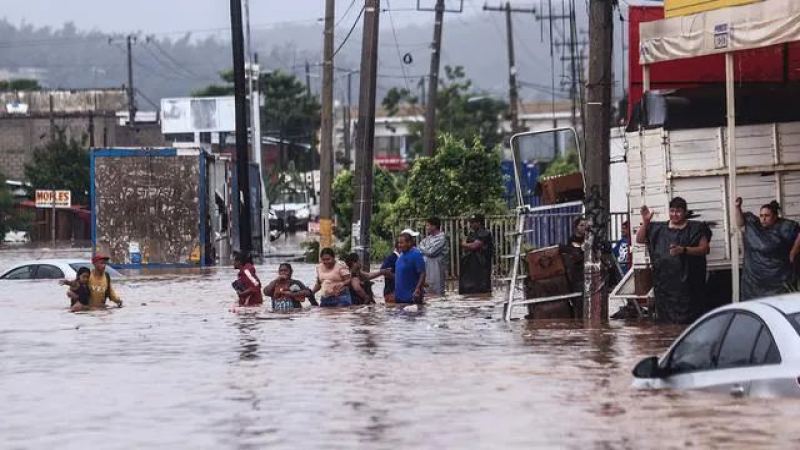
Hurricane John made landfall in southern Mexico, killing at least 16 people, damaging more than 700 homes, and cutting power to about 100,000 users, with Guerrero and Oaxaca hardest hit. Because 95% of Mexico's coffee production sits in the south and the crop is fruiting, heavy rain knocked fruit from trees, flooded plants, and raised landslide risk.
Mexico's expected 2024/25 production increase may now be revised downward. Coffee farms in the region face both storm losses and ongoing global price pressure, since output from Brazil and Vietnam is already reduced. Forecasters note that John reorganized offshore in the Pacific, so further wind and rain remain possible for southwestern Mexico.
Hurricane "John" made landfall in southern Mexico, causing at least 16 deaths, damaging more than 700 homes, and cutting power to about 100,000 users, with Guerrero and Oaxaca states hit especially hard. More critically, 95% of Mexico's coffee production is concentrated in the south, and the crop is currently in its fruiting stage. Torrential rain has knocked fruit from the trees, flooded coffee plants, and added the risk of landslides, putting the expected 2024/25 production increase at risk of being revised downward. At the same time, global coffee prices are already high due to reduced output in Brazil, Vietnam and other places, and with Mexico now hit by another climate shock, prices are unlikely to fall in the short term.
Local Mexican media reports show that Hurricane "John" made landfall along Mexico's coast on the night of the 23rd, causing severe damage in many parts of the country, with the affected areas concentrated in the south. According to a notice released on the 27th by the local government of Guerrero in southwestern Mexico, 5 people died in that state alone on the day the hurricane made landfall.
The death toll then continued to rise. So far, "John" has caused 16 deaths, 13 of them in Guerrero and 3 in neighboring Oaxaca. In addition, more than about 700 homes were damaged, large numbers of trees were toppled by fierce winds, and landslides, flooding and mudslides occurred in many places. Flash floods also struck the local power transmission system, cutting electricity to about 100,000 users.
According to reports, "John" made landfall in Mexico as a Category 3 hurricane, and it will still bring strong winds and heavy rain to western and southern Mexico, while the coast will also face huge waves. Many places have declared a state of emergency. Mexico's national meteorological service pointed out that coastal gusts reached 80 to 100 kilometers per hour, with wave heights and spray reaching 3 to 5 meters. Port operations in the southwest were therefore suspended, and airports in the south also halted incoming and outgoing flights.
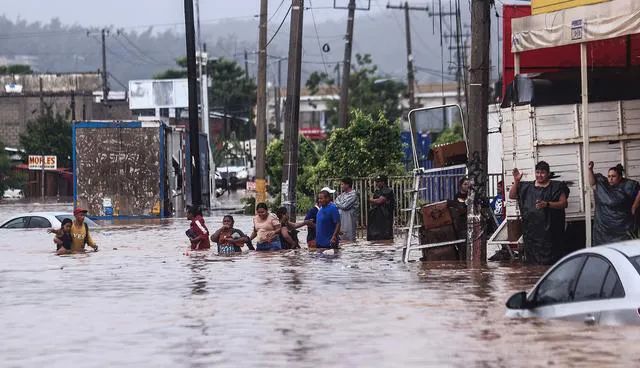
Local governments said rescue forces have now been organized and sent to the scene. But meteorologists at global forecasting company AccuWeather judge that "John" was once a Category 3 hurricane and, although it weakened for a time, has already reorganized offshore in the Pacific and will affect southwestern Mexico again.
During the first round of "John's" onslaught, rainfall in southwestern Mexico reached about 431 millimeters, and in some areas it was as high as 533 millimeters. Although the second strike will move northeastward, it will still affect the southwestern region hit in the first round. After the two rounds of rain combine, cumulative rainfall in some areas could reach an astonishing 1,270 millimeters, with the areas where old and new rain zones overlap facing the highest risk of flash floods and mudslides. Even areas not yet covered by rainfall will face a serious flood threat, and rain is expected to continue into next week.
The current situation will bring a significant shock to Mexico's coffee industry, because the country's coffee-growing areas are almost entirely in the south, accounting for 95% of national coffee production, and the affected area is wide. Mexico's coffee harvest season usually runs from November to March of the following year, and the crop is now in the fruiting stage. Heavy rain will knock down fruit that is about to ripen, and coffee trees may also be flooded, disrupting normal growth and development and inevitably reducing yields. At the same time, coffee farms are mostly located in higher-altitude mountainous areas, making them more vulnerable to landslides.
Previously, the 2024/25 production report released by Mexico's coffee industry had estimated that the country's coffee output would reach 3.35 million bags, slightly higher than in 2023/24. However, because the crop is now in a critical fruiting period, the annual production forecast is expected to be revised downward.
In fact, Mexico's coffee industry has continued to develop in recent years, and coffee exports grew markedly in 2023. Mexican coffee has medium body, a slight nutty aftertaste, and is relatively inexpensive, making it suitable for blending. Previously, drought in Vietnam and reduced production in Indonesia drove robusta prices soaring, and many traders turned to cheaper arabica beans. Mexico benefited as a result, with exports increasing, and it became North America's largest coffee producer, with an annual growth rate of 2.6%.
At present, South America, the world's largest coffee-producing region, is suffering from drought and wildfire threats, and the coffee industries of Brazil, Colombia, Peru and other countries have been damaged, with output declining; Vietnam, Indonesia and other countries in Asia also suffered production cuts earlier due to severe weather and have still not recovered. As a result, global coffee prices have continued to rise and once hit record highs. Combined with Mexico's current climate shock, prices are expected to remain high in the short term.
To learn more news and information about coffee origins, please scan the QR code to follow: Coffee Review
Long-press the QR code to follow:
The above content is compiled by CoffeeHunters, a coffee news website.


