







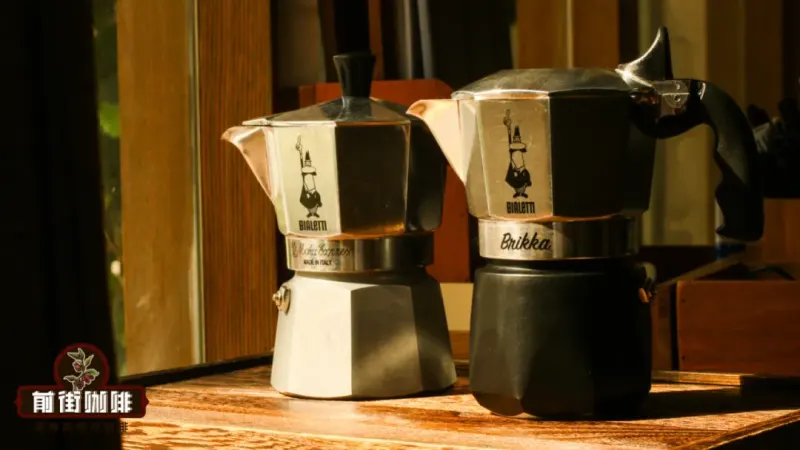
Does a dual-valve moka pot really make stronger coffee?
A dual-valve moka pot adds a pressure valve at the spout on top of the standard steam-driven design, and that single part changes what comes out of the pot. The extra valve holds pressure longer before release, so the brew finishes at higher pressure than a single-valve model. The practical payoff is a denser, more concentrated cup that sits closer to espresso, which matters when the coffee is used as the base for a latte.
Both single-valve and dual-valve moka pots work the same way underneath: water in the bottom chamber boils into steam, the expanding steam pushes hot water up through the coffee grounds in the filter basket, and the liquid exits from the top outlet. The dual-valve version simply interrupts that path with a pressure valve. Because the extracted coffee is stronger, milk in a latte is less likely to mask the coffee's original flavor.
When faced with the choice between single-valve and dual-valve moka pots on the market, many coffee enthusiasts often find themselves indecisive, unclear about the differences between the two and unsure whether it's worth spending extra on a dual-valve model. From the perspective of Front Street, this article first breaks down the basic structure of the moka pot and the principle of steam extraction, then explains the pressure changes brought by the dual-valve version's added pressure valve at the spout, and how these changes affect coffee strength and extraction efficiency. After reading, you'll understand: the dual valve is not a gimmick; it genuinely brings the output closer to espresso, and when making lattes, the milk flavor doesn't easily overpower the coffee's true taste.
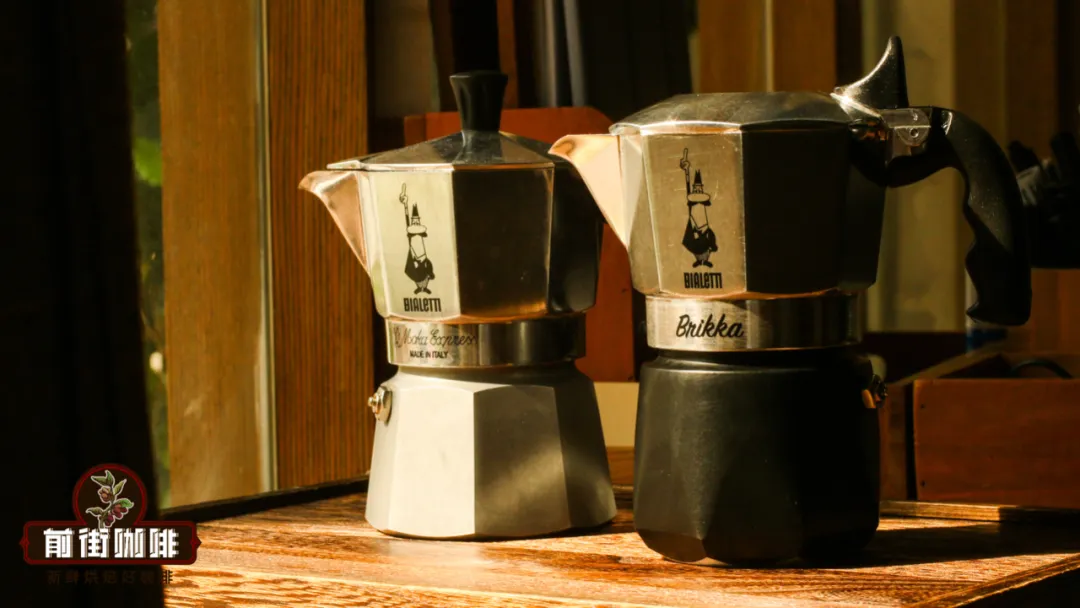
"What exactly is the difference between single-valve and dual-valve?" Many friends hesitate to take the plunge precisely because they can't figure this out. So today, Front Street will discuss the differences between single-valve and dual-valve moka pots.
To understand the differences between the two, you first need to grasp the working mechanism of the moka pot, because the dual-valve essentially adds a "special component" to the original structure.
The principle of the moka pot
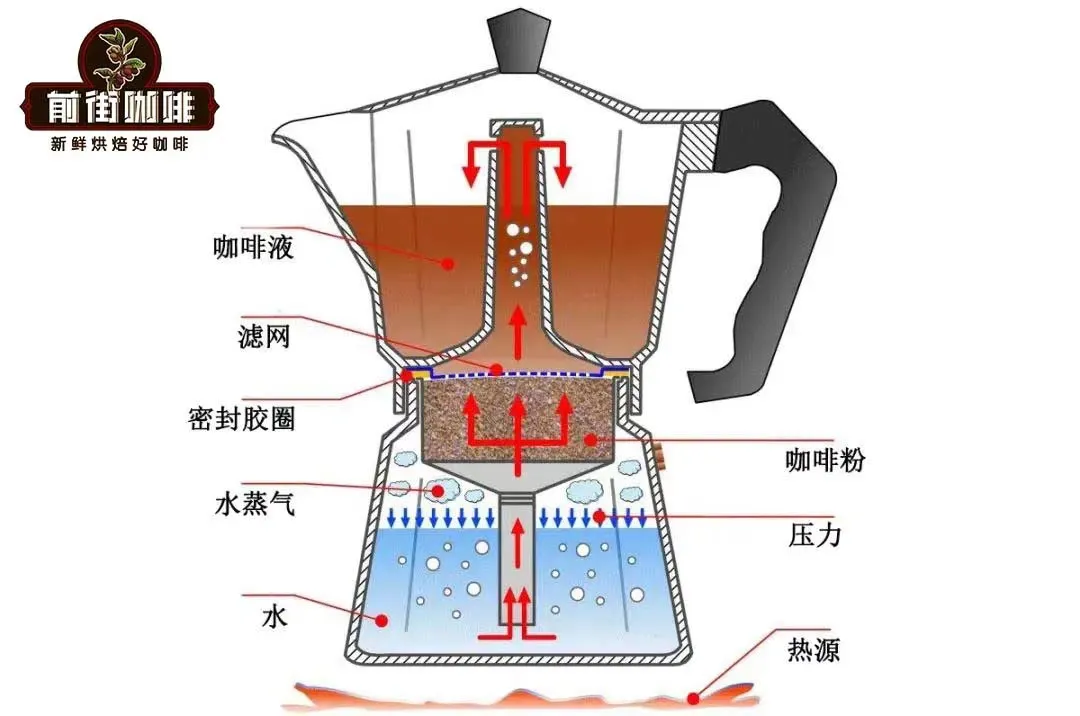
Still this diagram; from it, you can intuitively see the structure and operation of the moka pot. It mainly consists of three parts: the bottom chamber for holding hot water, the middle filter basket for coffee grounds, and the top chamber with a filter screen.
The operating logic of the moka pot is not complicated; it relies on steam pressure to push hot water through for extraction. After heating the bottom chamber, the water inside reaches boiling point and turns into steam. The steam continuously expands, squeezing the space inside the pot, leaving the hot water no other path but to go up through the tube. On the way, it passes through the coffee grounds to complete extraction, and finally, the coffee liquid flows out from the top outlet. (Friends who want to learn the specific usage of the moka pot can refer to this article "The Nanny-Level Moka Pot Usage Tutorial" )
The above is the principle of coffee extraction with a moka pot, and it is also the working method of our most common single-valve moka pot.
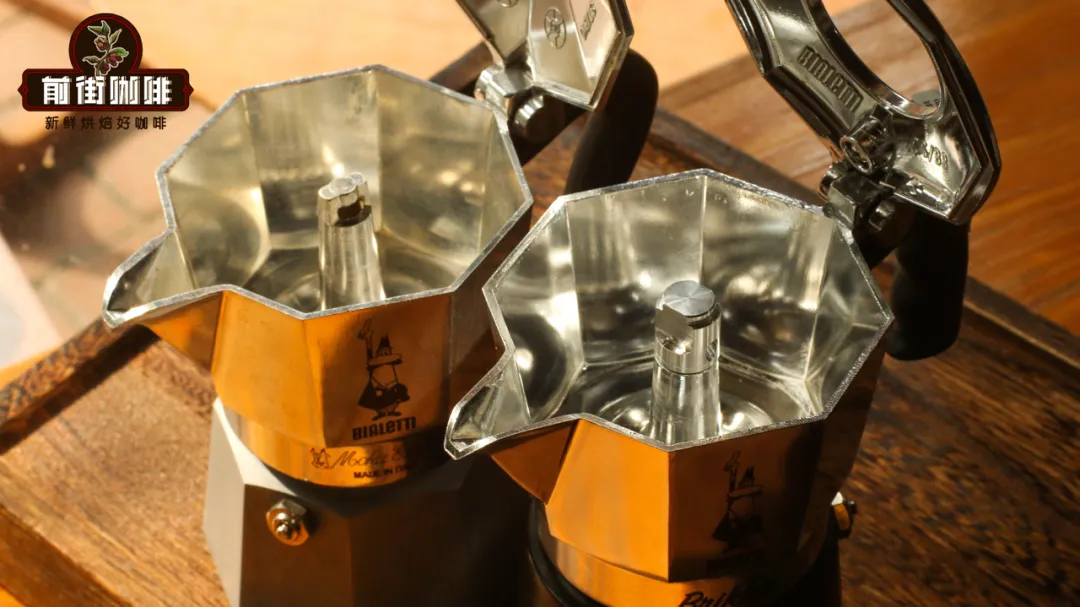
The dual-valve, on this basis, adds a pressure valve, which is the device at the spout. (Left is single-valve, right is dual-valve)
The pressure valve, as the name suggests, functions to increase pressure.
This valve deliberately makes the gap small, narrowing the channel for the coffee liquid to flow out. When the coffee liquid cannot seep out smoothly due to the narrow gap, it accumulates inside and forms a blockage, causing the pressure to rise.
Pressure is a crucial parameter in pressurized extraction methods like moka pots and espresso machines. The greater the pressure, the higher the extraction efficiency. Since the pressure valve allows the moka pot to achieve more pressure, it means we can extract coffee with higher efficiency. Under the same extraction conditions, coffee made with a dual-valve moka pot is closer to espresso in strength and extraction yield. When using it to make a latte, you don't have to worry about insufficient strength leading to a watery taste, nor fear that the coffee flavor will be masked by the milk.
The above content is compiled by CoffeeHunters, a coffee news website.


