







How Does Sun Dried Coffee Beans Shape a Colombia Geisha?
Cafe Granja La Esperanza is a Colombian group of farms that has collected more than 60 awards at coffee competitions in about a decade, including success at the Panama BOP. It began when Blanca Ligia Correa and Juan Antonio Herrera bought Potosi Farm, and later expanded to five estates, with a natural Geisha from Margarita showing blackcurrant, blueberry and red wine notes.
After Potosi, which grew mainly Typica, the couple bought nearby land in 1945 to plant Yellow Bourbon, Red Bourbon, Caturra and Typica. Cauca Department terroir and careful harvesting support coffee cultivation there, and sun dried coffee beans let the fruit character carry through to the cup.
In the past decade, a coffee estate in Colombia has won more than 60 awards at major coffee competitions around the world, and is known among insiders as the "rising star" of the coffee world—it is Cafe Granja La Esperanza. From a couple acquiring Potosi Farm as a start, to the family gradually expanding to five estates, and then to leasing Panama's La Carreta Farm in 2007 and winning the BOP championship, the rise of Cafe Granja La Esperanza has been full of legendary color. This article will take you through the history of Cafe Granja La Esperanza, the terroir advantages of Cauca Department, and a tasting of a natural Geisha from Margarita Estate, to experience the charm of flavors interwoven with blackcurrant, blueberry, and red wine.
Over nearly ten years, a coffee estate in Colombia has accumulated more than 60 awards at major coffee competitions around the world. It has not only made gains in world-class competitions with many strong contenders, but also in green bean competitions such as those in Colombia and Panama BOP. For this reason, insiders have given this estate a nickname: the "rising star" of the coffee world. It is the protagonist of this article by Front Street Coffee—Cafe Granja La Esperanza!
Cafe Granja La Esperanza
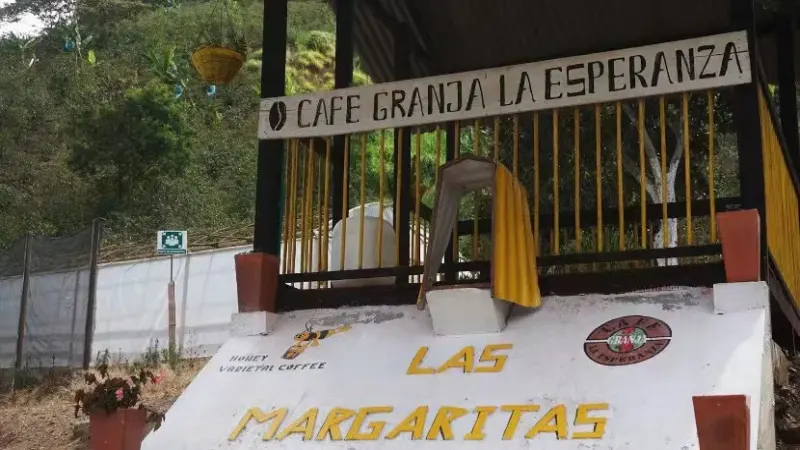
Before going deeper into Cafe Granja La Esperanza, one point needs to be clarified first: although Cafe Granja La Esperanza is also the name of an estate, when we see it in a certain competition or ranking, it does not refer to just one estate. At that time, it is a collective of several farms, participating in competitions and selling externally under the name Cafe Granja La Esperanza.
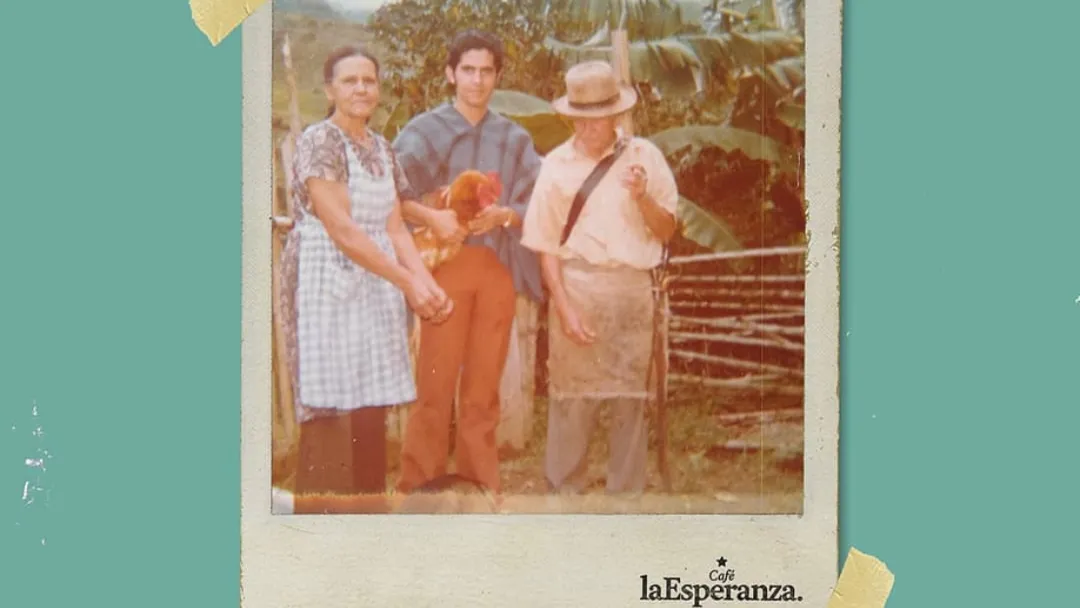
Speaking of this, one cannot fail to mention a couple in Colombia—Blanca Ligia Correa and Juan Antonio Herrera. In their early years, they experienced several years of assigned labor, when the couple was arranged to work on a farm called Potosi, and began a completely new life there.
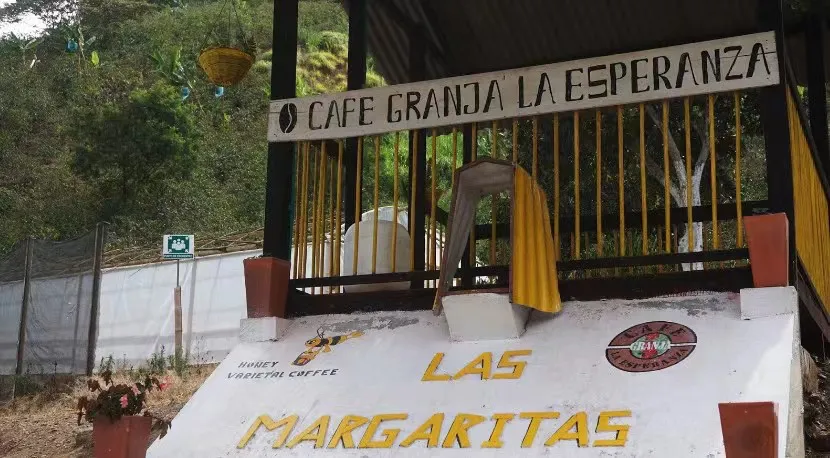
After working there for several years, the couple gradually became fascinated with the coffee industry, so they simply bought Potosi Farm and ran it themselves. This was their first estate.
Because Potosi Farm mainly grew Typica, and Mr. Juan Antonio Herrera hoped to cultivate more possibilities, by 1945 the couple bought a brand-new piece of land near the farm, specifically to grow specially introduced Yellow Bourbon, Red Bourbon, Caturra, and Typica. This estate was named Cafe Granja La Esperanza, implying that it could have more possibilities.
Afterward, during the period from their marriage to running the estate, the couple had 14 children in total, which can be said to have strengthened the entire family through the efforts of just the two of them. Two of the children, named Rigoberto and Luis, developed a great interest in coffee cultivation, and they continued to deepen their work and keep learning. Later, under their leadership, the family successively purchased another three estates: Margarita, Cerro Azul, and Hawaii.
The five estates have a total area of 150 hectares, with varying altitudes, but generally all between 1,400 and 1,800 meters. Except for Hawaii Estate, which is located in Cundinamarca Department, all the other estates are situated in Cauca Department, Colombia.
Cauca Department is located in southwestern Colombia, with an average altitude of about 1,758 meters, reaching up to 2,100 meters at its highest. Because the average altitude of the Cauca production area is relatively high, the temperature difference between day and night is large, and the growth rhythm of coffee planted here slows down, so the coffee beans can absorb more nutrients and develop better sweetness and flavor. At the same time, this region has very abundant rainfall, suitable temperatures, and fertile volcanic soil, so it is also a "paradise" suitable for coffee growth.
And speaking of 150 hectares, with such a large area, it is probably not hard to imagine how productive Cafe Granja La Esperanza must be, and that is indeed the case. But at that time they had not yet caused much of a stir; they were merely one of the households growing coffee in Colombia.
It was not until 2007, because of a feat by Mr. Rigoberto, that Cafe Granja La Esperanza was able to rise to a completely new level.
In 2007, Mr. Rigoberto leased a coffee farm in Panama called La Carreta, and under his management, he directly won the Panama BOP championship the following year. Winning the award made him realize the importance of variety genetics. So soon after, he brought Geisha back to Colombia and carried out more planting experiments with different varieties, officially opening the door for the later explosive popularity of Cafe Granja La Esperanza.
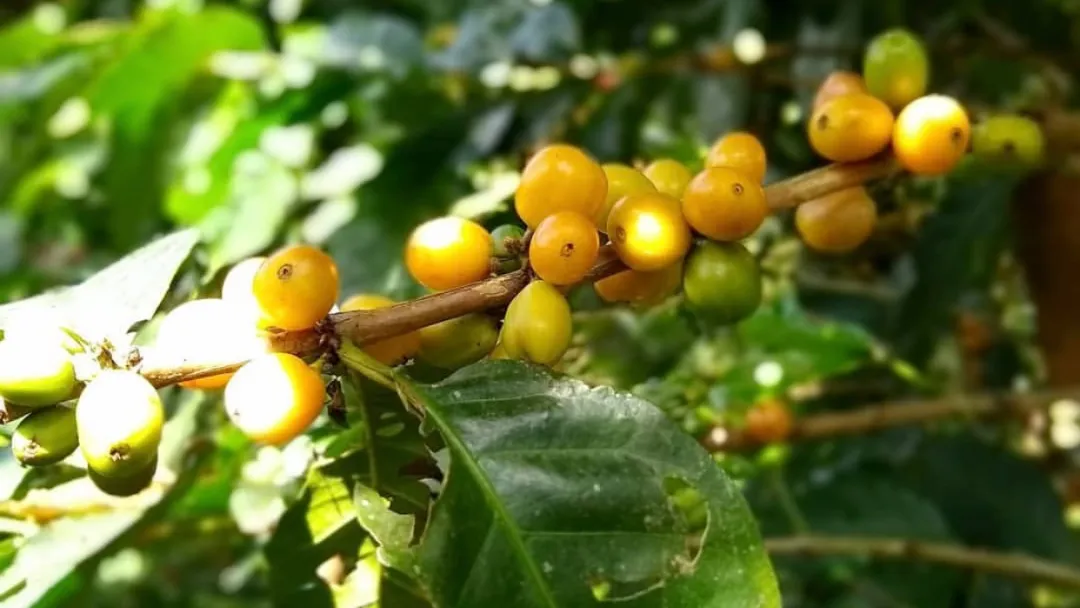
Then, just as we saw at the beginning, in the time that followed, Cafe Granja La Esperanza repeatedly won awards and took championships many times, becoming the rising star of the coffee world.
Very good, Front Street Coffee immediately got hold of a bag of beans from Cafe Granja La Esperanza to savor the deliciousness.
And this coffee comes from a natural Geisha produced by Margarita Estate under Cafe Granja La Esperanza. Because it was grown at a relatively high altitude, Front Street Coffee appropriately extended the roasting profile during roasting, ensuring that the beans could fully release their flavor while avoiding the occurrence of underdeveloped beans.
FrontStreet Coffee: Colombia · Cafe Granja La Esperanza Geisha Country: Colombia Region: Cauca Department Altitude: 1,850 meters Variety: Geisha Processing Method: Natural Flavor: Blackcurrant juice, blueberry, orange, smoked plum, red wine
The above content is compiled by CoffeeHunters, a coffee news website.


