







What Does Bright Acidity Mean in Coffee Processing?
Washed coffees often read as more acidic and natural ones as sweeter, but that claim is only half right. Acidity and sweetness also depend on variety, origin terroir, fruit maturity, freshness, roasting curve and extraction. Limiting the comparison to processing, the clearer gap lies in aroma character rather than in acidity alone.
Natural and washed are the two most common ways of handling green beans. The key split is whether skin and pulp are removed before drying, which is why washed processing is called Washed Process. Blind tastings of Panama Butterfly in both versions show how much difference in aroma and fragrance in coffee comes from the method.
Natural and washed are the two most mainstream processing methods in the coffee industry, but for most enthusiasts, it is hard to tell which one a cup of coffee belongs to simply by its name. Some say natural coffees are sweeter and washed coffees are more acidic—is that actually true? This article will analyze the processing steps, the origins of flavor, the English terminology, and other angles, and with the help of Front Street Coffee's Panama Butterfly natural and washed versions, conduct a blind tasting comparison to help readers clarify the core differences between the two processing methods and their respective charms.
In the coffee industry, natural and washed are the two most common ways of processing green beans, and they are also the first two technical terms that newcomers to specialty coffee encounter.
For coffee enthusiasts who are not industry professionals, although they can roughly tell from the names that the two represent different processing paths with different steps and procedures, when it comes to tasting, it is not easy to judge accurately from just a small sip whether a coffee is natural or washed like a professional barista. So, is there any trick to it?
A reader once left a message in the background asking: natural coffee tends to be sweeter and washed coffee tends to be more acidic—is this saying reliable?
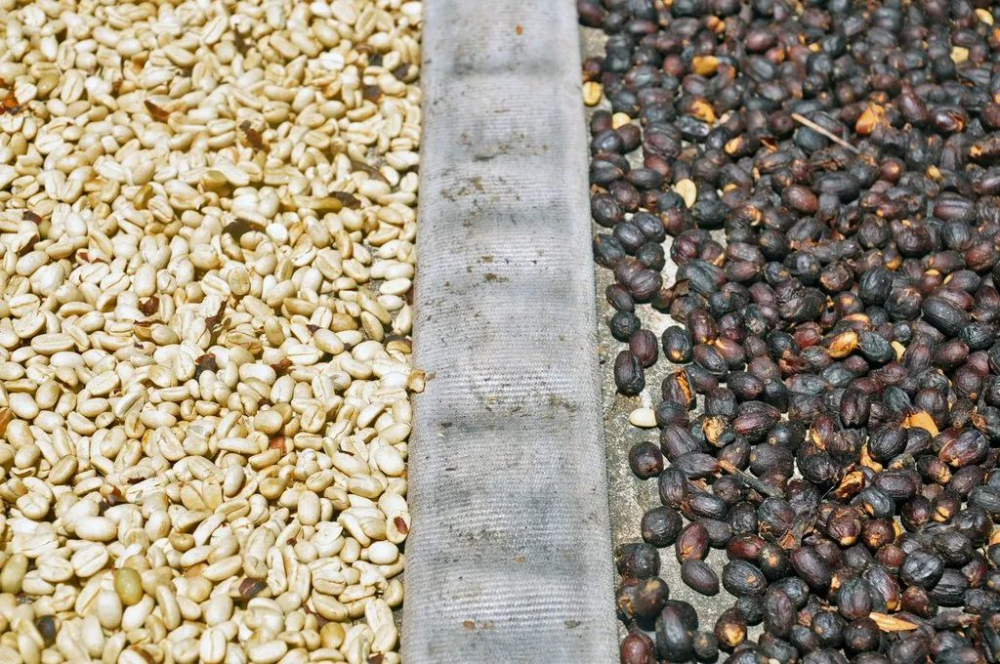
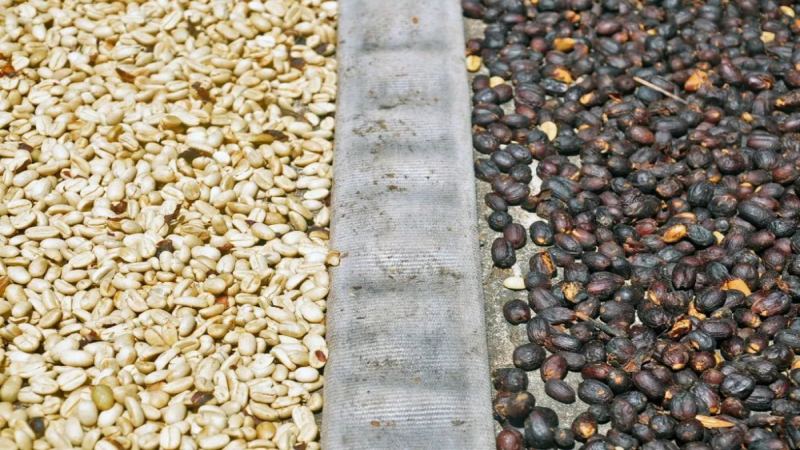
In Front Street Coffee's view, this statement is half right, but not entirely accurate. Whether a cup of coffee ultimately tastes acidic or sweet is influenced not only by the processing method, but also by many factors such as variety, origin terroir, fruit maturity, freshness, roasting curve, and extraction parameters. The processing method is only one part of it. But if we limit the discussion to the processing method itself, we will find that the difference between natural and washed is reflected not so much in acidity and sweetness as in their respective aroma characteristics and overall character.
First, let us briefly sort out the operational flow of washed and natural processing.
Regardless of which processing method is used, the core goal is to extract the desired green beans from the coffee fruit. The most fundamental point of divergence between natural and washed is whether the outer skin and pulp have been removed before drying.
The washed method, in English Washed Process, also called washed processing, is a traditional processing method that uses water to handle coffee fruit. Generally speaking, the washed process includes flotation, mechanical depulping, soaking and fermentation to break down mucilage, washing or continued soaking, drying, and finally hulling to obtain the target coffee beans.
Compared with natural processing, growers using the washed method need to be equipped with depulping equipment and build washing channels, and they also need a continuous supply of running water. Therefore, not all producing regions are equipped for it. It is usually more common in places such as Colombia, Costa Rica, Panama, and Kenya. However, the advantages of the washed method are also quite obvious: first, it can reduce the proportion of defects in green beans and ensure stable quality; second, it greatly shortens the time required for drying and improves production efficiency; and of course, the point this article focuses on—it gives coffee its signature "washed flavor."
The natural method, in English Natural, means a natural, non-artificially intervened processing method. Since humans discovered coffee in Ethiopia in the sixth century AD, natural processing has been the only processing technique used when coffee circulated in the Arab world.
The traditional natural method uses no water throughout the entire process, and extracting the seed is also quite direct: first dry the whole coffee fruit until it is completely dry, then hull it by machine rolling to obtain the green beans inside. It can be completed as long as there is sunlight and a drying area. However, the shortcomings of natural coffee are also very prominent—it is extremely sensitive to weather conditions and requires a drying cycle of about one month. During this period, if wind or rain comes, all the effort may be lost. Therefore, this ancient processing method is often concentrated in tropical countries with distinct dry and wet seasons.
Next, let us sort out the flavor performance of natural and washed.
During natural processing, the whole seed is wrapped in the skin and pulp and dries slowly. The temperature brought by direct sunlight creates favorable fermentation conditions for the sugars in the pulp. The fruit acids and natural sugars produced during fermentation gradually penetrate into the seed, so the finished coffee often presents layered fruit flavors and has a slight body and fermented quality. Common flavor descriptions include tropical fruit, fermented aroma, brown sugar, and so on.

Washed is different. Before drying, the green beans have already had their outer skin and pulp removed by machine, leaving only the endosperm and a layer of mucilage. They are then placed in a water tank to ferment, using the acids produced to break down the mucilage. Soaking coffee beans in water for a long time triggers a series of internal chemical changes. Monosaccharides (fructose and glucose) are consumed in large amounts, so the sugar content decreases, while the content of various organic acids rises. Therefore, washed coffee usually better preserves the bean's own aroma and shows bright fruit acidity, cleanliness, and freshness.
Can a "blind tasting" distinguish washed from natural?
For a side-by-side comparison, Front Street Coffee selected the natural and washed versions of Panama Butterfly, brewed them separately with the same pot of hot water, and invited two audience members on site to conduct a blind tasting. Considering that brewing two pots of coffee at the same time makes it difficult to precisely control the pouring points, Front Street Coffee divided the total water volume into four pours for extraction, keeping the other parameters as consistent as possible.
Dose: 16 g Coffee-to-water ratio: 1:15 Grind size: EK43s setting 10 Water temperature: 92℃ Dripper: V60
Pouring method: four-pour technique
Natural Butterfly: on the palate it has the fresh fragrance of ripe fruits such as sweet orange, persimmon, and prune, accompanied by a slight cocoa sweetness. Even after it cools, the acidity is not prominent. The mouthfeel is full and balanced, and the finish is as warm and gentle as black tea, mixed with a little aroma of roasted sweet potato.
Washed Butterfly: from the first sip, one can feel abundant and bright acidity, reminiscent of refreshing juicy fruits such as lemon, grapefruit, and green grape. As the temperature drops slightly, nutty and almond aromas emerge in the coffee, with honey-like sweetness interwoven with elegant floral notes. The overall mouthfeel is very light, as if drinking a cup of fresh green tea.
The result was as expected. Based on the performance of the two cups, the two lucky audience members both ultimately gave the correct answers.
Final notes
Suddenly recalling the early days in the industry, Front Street Coffee was once asked by a senior: what kind of coffee do you like? At the time, the answer almost blurted out: natural! Years later, Front Street Coffee has encountered far more than ten processing methods and has been fortunate enough to appreciate their delicate, complex, or novel flavors, but the most classic "natural flavor" in mind has always occupied a place. Perhaps it was precisely because the inexperienced self back then drank it that I fell uncontrollably in love with specialty coffee, which is why the impression is so deep.
So, as a coffee enthusiast, do you also have a processing method you prefer?
- END -
The above content is compiled by CoffeeHunters, a coffee news website.


