







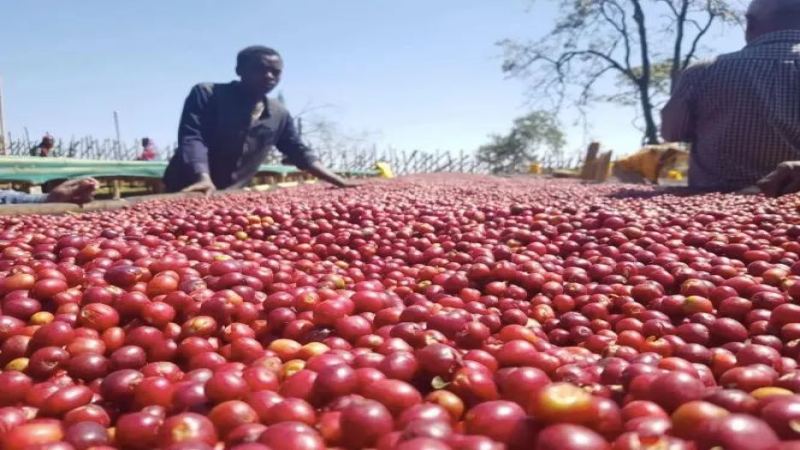
Where do arabica coffee beans come from in Ethiopia?
Arabica coffee traces back to Ethiopia, the recognized birthplace of the species and home to an estimated 15,000 varieties. Within the country, the Guji region stands out for complex terrain and diverse microclimates, and its Hambella sub-region is where Huakui coffee beans are grown. Ethiopia is the largest producer of arabica coffee in Africa.
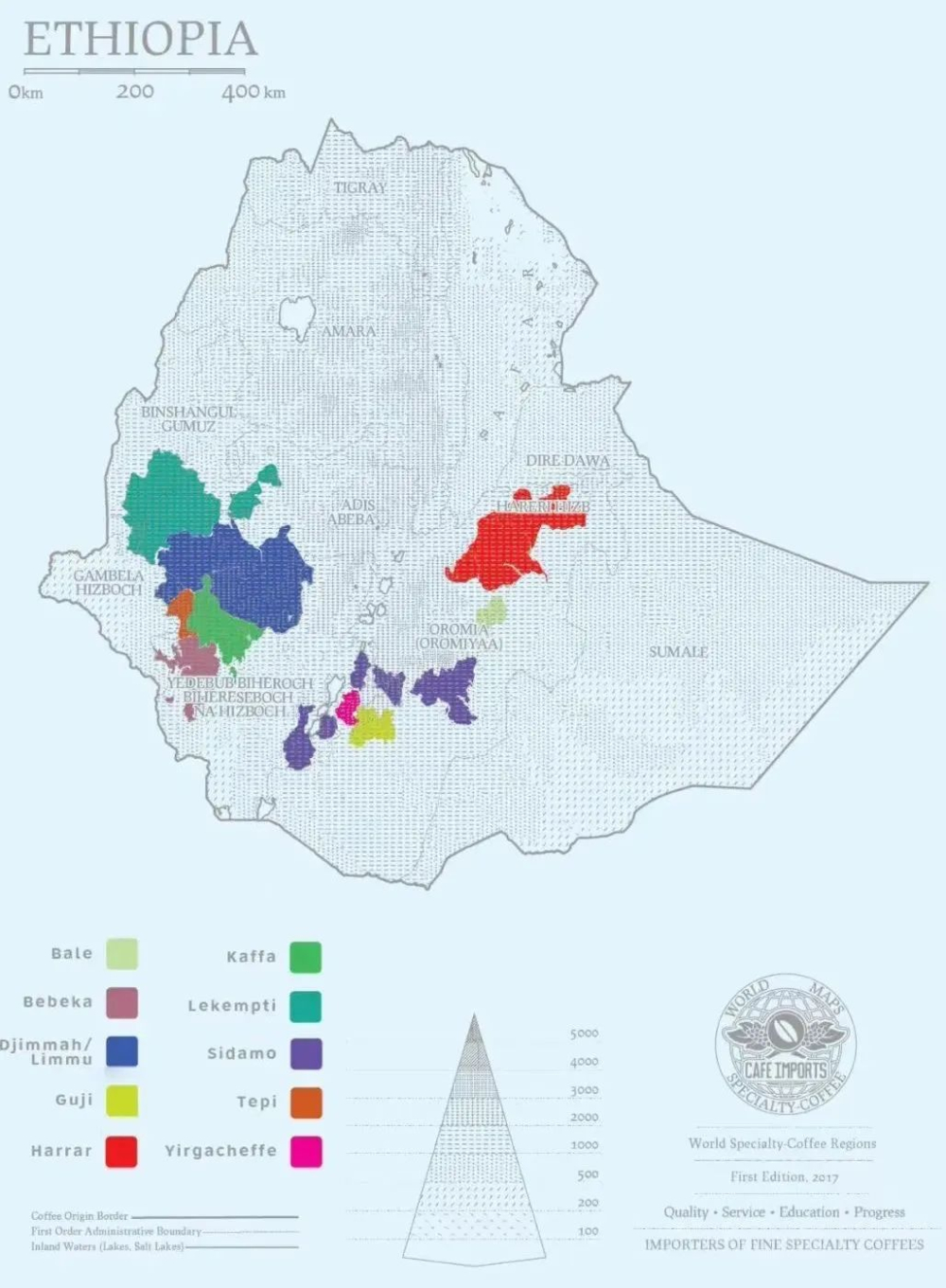
Ethiopian coffee-growing areas are divided into ten regions, including Sidamo, Jima, Harrar, Guji, and Yirgacheffe; Guji and Yirgacheffe were once part of Sidamo and became separate because of their distinctive flavors. Highlands averaging nearly 3,000 meters, annual temperatures around 16°C, and wide day-night swings slow cherry growth and add flavor complexity.
Ethiopia, as the birthplace of coffee, boasts the world's richest resource of coffee varieties. Among its many renowned growing regions, Guji stands out for its complex terrain and diverse microclimates, and its Hambella sub-region is where the much-talked-about Huakui coffee beans have been cultivated in recent years. This article will guide you through the geographical features of Guji, the unique advantages of the Hambella sub-region, and the complete story of Huakui coffee beans—from winning the TOH competition to sweeping the domestic market. At the same time, Front Street Coffee also brings you everyday beans such as Yirgacheffe and Huakui 8.0, making it easy to enjoy the classic flavors of these two famous regions in your daily routine.
When it comes to African coffee, Ethiopia is always the first name that comes to mind. This country holds a pivotal position on the global coffee map, being both the recognized birthplace of coffee and the custodian of the world's largest coffee gene pool. It is estimated that Ethiopia is home to as many as 15,000 coffee varieties.
Currently, Ethiopia is the largest producer of Arabica coffee in Africa, which is closely tied to its superior natural endowments. Located in northeastern Africa, the country's terrain is dominated by mountains and plateaus, with most of its area belonging to the Ethiopian Highlands. The East African Rift Valley runs through the entire country from north to south, with numerous mountains and volcanoes distributed on both sides, and an average elevation of nearly 3,000 meters. Although situated in the tropics, the high altitude effectively moderates temperatures, with an annual average of about 16°C and a significant diurnal temperature difference. These conditions extend the growth cycle of coffee cherries and contribute to richer flavor complexity.
Ethiopia is administratively divided into 12 states and 2 chartered cities, while its coffee-growing areas are divided into 10 regions, many of which bear globally renowned names such as Sidamo, Jima, Harrar, Guji, and Yirgacheffe. Guji and Yirgacheffe were originally part of the Sidamo region but were separated out later because of their distinctive flavors.
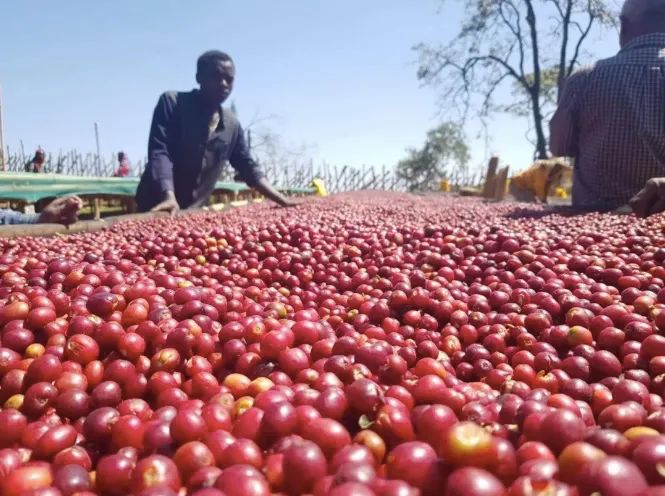
Yirgacheffe was initially just a sub-region under the Sidamo coffee region and administratively belongs to the Sidama State, but the coffee produced there features bright white floral notes, clear lemon-like acidity, and a fresh tea-like quality reminiscent of green tea. These signature flavors ultimately earned it the status of an independent coffee region.
In Front Street Coffee's everyday beans lineup, you can also find coffee beans from the famous Yirgacheffe region. Made from Heirloom varieties and washed processed, they reveal floral, citrus, and berry aromas when brewed, with bright lemon-like acidity and a refreshing mouthfeel.
Guji's story is similar to Yirgacheffe's—it was once a sub-region of Sidamo. Due to its outstanding performance and highly recognizable flavors, it was officially designated as a new region by the Ethiopian Commodity Exchange (ECX) in 2010. Administratively, Guji belongs to Oromia State, and its name comes from a local tribe. The Guji region is located to the southeast of Yirgacheffe, with complex and diverse terrain featuring interwoven mountains, valleys, and plains, and an average elevation of 1,800 meters. These conditions together create a rich microclimate environment. Guji is currently further divided into multiple sub-regions, among which Hambella, Uraga, and Shakiso are the most well-known.
Among these sub-regions, Hambella is second to none in fame. It is one of the highest-altitude sub-regions in Ethiopia, with coffee cultivation areas reaching 2,100 to 2,300 meters. The area is densely forested, and the soil is fertile and rich in minerals, providing ideal conditions for coffee cultivation.
In 2017, Ethiopian DW Coffee Company submitted a naturally processed coffee from the Buku Abel processing station in Dimtu town, Hambella sub-region, to the TOH green bean competition organized by the African Fine Coffees Association. With its intense berry aroma and creamy smooth texture, this bean won the championship in the natural category that year. In the same year, the winning lot was purchased by a Beijing green bean trader and introduced to the domestic market under the name "Huakui." Subsequently, a contestant in a China coffee brewing competition used this bean and, although ultimately finishing as runner-up, the name "Huakui" quickly spread throughout the domestic coffee community.
As Huakui's fame continued to rise and market demand kept growing, DW Company built five additional independent coffee green bean drying stations in Dimtu town, Hambella sub-region. In addition to the original Buku Abel, four small villages—Buku Saysay, Haro Soresa, Tirtiro Goye, and Seke Bokosa—were incorporated into the coffee bean production system. Huakui 2.0 was released in 2018, 3.0 in 2019, and since then a new Huakui X.0 series has been released every year, now updated to Huakui 8.0.
At Front Street Coffee, Huakui 8.0 coffee beans from this famous region are also available. Naturally processed, they offer tropical fruit flavors such as dried mango, citrus, and jackfruit when brewed, with abundant juiciness, a round mouthfeel, a black tea-like sweet aftertaste, and rich layering.
For more information about coffee origins, feel free to scan the QR code to follow: Kaping
Long-press the QR code to follow:
TRANSLATE with
x
English
Arabic Hebrew Polish Bulgarian Hindi Portuguese Catalan Hmong Daw Romanian Chinese Simplified Hungarian Russian Chinese Traditional Indonesian Slovak Czech Italian Slovenian Danish Japanese Spanish Dutch Klingon Swedish English Korean Thai Estonian Latvian Turkish Finnish Lithuanian Ukrainian French Malay Urdu German Maltese Vietnamese Greek Norwegian Welsh Haitian Creole Persian
TRANSLATE with
COPY THE URL BELOW
Back
EMBED THE SNIPPET BELOW IN YOUR SITE Bing Webmaster Portal
Back
The above content is compiled by CoffeeHunters, a coffee news website.


