







How does coffee cultivation in Costa Rica's Tarrazu shape Hacienda Cedral?
Costa Rica was the first Central American country to grow coffee commercially, and its high-altitude mountains, volcanic soil and steady rainfall support distinct regions. Tarrazu is the largest and most prominent, earning EU and WIPO origin certification in 2019 as Cafe de Tarrazu. El Cedro estate sits there, run by Johel Monge Naranjo and his son Matias.
The family founded the Hacienda San Isidro Labrador company and mill nine years ago. El Cedro grows Geisha and has repeatedly performed well at the Cup of Excellence, while honey processing, which spread from Costa Rica, remains one of the three dominant methods alongside washed and natural, shaping coffee growth and cup quality.
Costa Rica was the first country in Central America to grow coffee for commercial value. With its high-altitude mountains, volcanic soil, and abundant rainfall, it has nurtured many well-known producing regions and estates. Among them, Tarrazu is the country's largest and most prestigious coffee-producing region, and in 2019 it even obtained origin certification from the EU and WIPO under the name "Café de Tarrazú." This article focuses on El Cedro estate in the Tarrazu region, introducing its family background, microclimate environment, Geisha cultivation, and its repeated championship performances at the Cup of Excellence (COE), while also outlining the origins and craft evolution of honey processing in Costa Rica, and mentioning the Tarrazu entry-level selection in Front Street Coffee's daily beans series.
The coffee industry continues to evolve, and processing methods keep getting reinvented, but the three that still dominate the market today are washed, natural, and honey processing. When it comes to honey processing, most people immediately think of Costa Rica, because the name first spread from that country.
Costa Rica is located in Central America and was the first country in the region to develop coffee cultivation for commercial value. Its natural resources are abundant, with high-altitude mountain areas, volcanic soil, ample sunshine, and moderate rainfall working together to provide ideal conditions for coffee cultivation. The coffee beans it produces were even praised by British aristocrats as "golden beans."
Because of this, the country has produced many well-known estates, such as Finca Las Piedra and Volcan Azul. At the same time, in recent years new estates have gradually entered the public eye, and El Cedro is one of them.
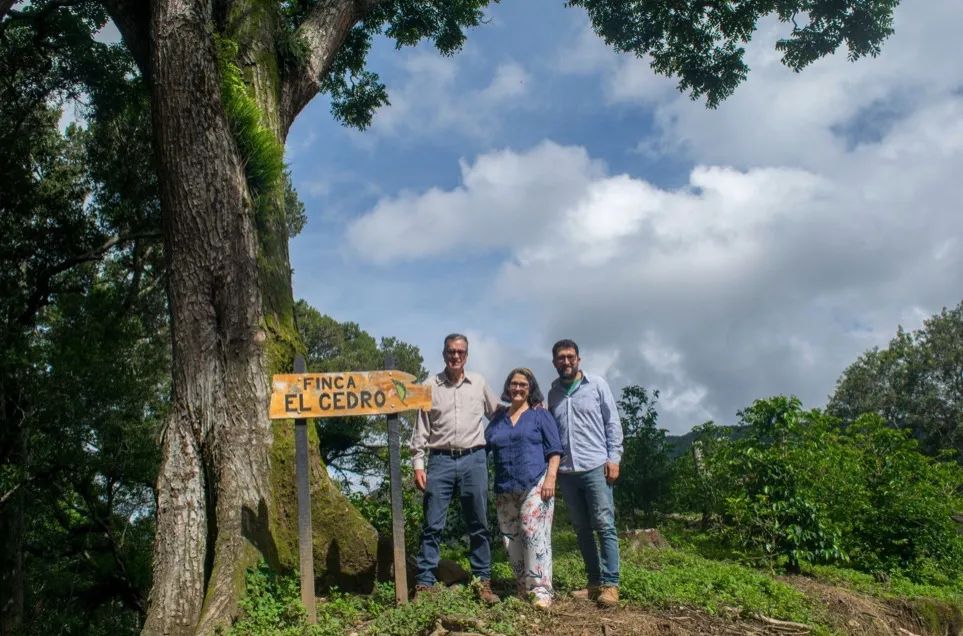
The owner of El Cedro is Johel Monge Naranjo. Nine years ago, he and his son Matias co-founded the company and processing plant Hacienda San Isidro Labrador, which has now grown into a family business. El Cedro is the coffee estate under its name, located in Costa Rica's famous Tarrazu region.
Central Costa Rica is bisected by the Cordillera mountains, which separate the east and west sides. This mountain system belongs to the world's longest fold mountain system, composed of a series of parallel ranges, intermontane plateaus, and basins, with dense volcanic distribution, and is an important part of the Pacific Ring of Fire. Thanks to this, Costa Rica is exceptionally rich in natural resources, and all seven of the country's coffee-producing regions are located on the central mountain range.
Costa Rica's largest and most famous coffee-producing region is Tarrazu. This region lies in a volcanic zone, with a humid climate, volcanic rock soil, and sufficient annual rainfall, surrounded by multiple mountain ranges and national parks, while dense forests provide natural shade, creating uniquely favorable conditions for coffee growth.
Tarrazu is located in the southeastern part of San José Province, the capital province, and has a long history of coffee cultivation, covering areas such as the town of Tarrazu and the town of Dota. The Costa Rican government places considerable importance on the coffee industry in this region, and in 2019 it registered the "Café de Tarrazú" coffee origin certification with the EU and the World Intellectual Property Organization (WIPO). FrontStreet Coffee's daily beans series also includes this well-known region. This entry-level selected Tarrazu coffee uses Catuai and Caturra varieties, adopts the washed processing method, and is graded SHB. After brewing, it has a slight fruity acidity, presenting flavors of sweet orange, nuts, and honey, with a smooth finish.
El Cedro is located within the Tarrazu region, in the mountainous area near the town of Dota, at an altitude of up to 1,950 meters. The higher altitude, combined with the temperature difference between day and night, extends the coffee's growth cycle and makes the flavor more layered. The estate is adjacent to the famous Parque Nacional Los Quetzales, a birdwatching paradise where cloud forests formed by different microclimates and high altitude, along with multiple rivers, are distributed. El Cedro is likewise influenced by this environment, producing high-quality coffee beans.
In addition, El Cedro has long focused on the cultivation and production of specialty coffee, placing great importance on coffee quality, implementing strict technical management, and ensuring traceability, mainly cultivating the Geisha variety. Through these efforts, El Cedro has repeatedly participated in Costa Rica's Cup of Excellence (COE) competition, repeatedly placing in the top ten, and won first place at the Cup of Excellence three times, in 2017, 2019, and 2023.
It is worth mentioning that El Cedro has repeatedly won rankings with honey processing, which shows the importance of honey processing to El Cedro and even to Costa Rica's coffee industry. In earlier years, Costa Rica was mostly high mountains. Although rainfall was abundant, it was difficult to store water, making it impossible to support water-intensive washed processing; nor did it have the longer sunlight hours of African countries, so the risk of natural processing was also relatively high. The country therefore borrowed Brazil's pulped natural method—first removing the fruit skin, rinsing with water for one hour, then spreading the beans out for sun drying. Costa Rica adapted it to its own conditions, and it eventually evolved into honey processing.
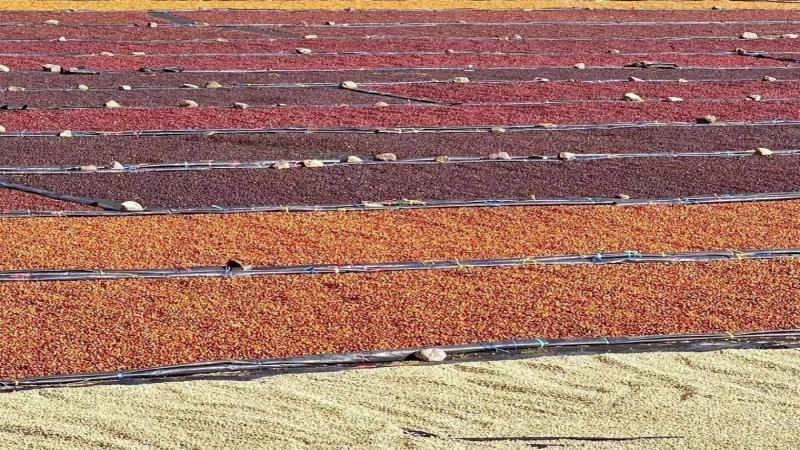
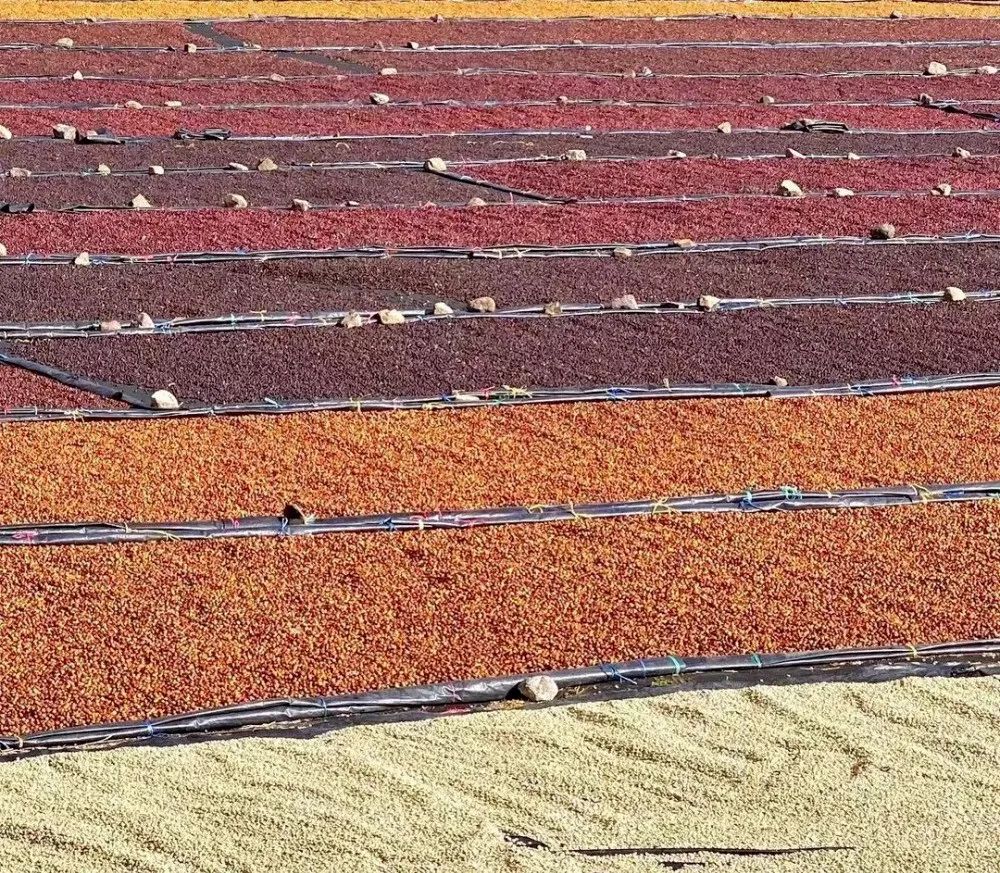
The improved honey processing procedure is as follows: first strip the coffee cherry of its skin and part of its mucilage, using a depulper to ensure high precision and precisely control the thickness of the remaining mucilage, then spread the beans directly on high drying beds without contact with water. According to the different degrees of mucilage retention, it is further divided into black honey, red honey, yellow honey, and white honey, corresponding to different colors.
To learn more about coffee origin information, please scan the QR code to follow: Coffee Review
Long-press the QR code to follow:
The above content is compiled by CoffeeHunters, a coffee news website.


