







How serious is the coffee industry crisis in Brazil?
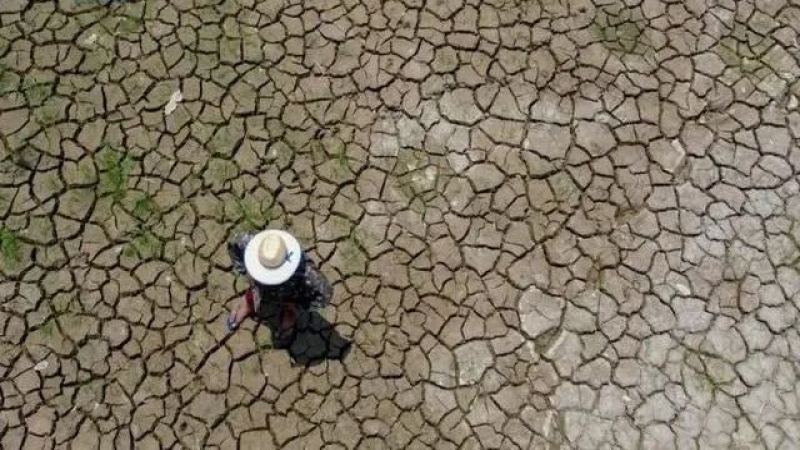
Brazil's drought and fires are worsening, and the coffee industry is bracing for losses. Minas Gerais has seen cities go as long as 158 days without rain, and the Bom Despacho waterfall has dried up. In São Paulo state, 12 cities were hit by fires again after a brief period of control, with initial agricultural losses estimated at 2 billion reais, affecting sugarcane, coffee plantations and livestock farms.
Fires in Rio de Janeiro state have risen more than 95% year over year, and close to 4,000 cities nationwide face drought threats. Smoke has pushed air quality down, with warnings of black rain across five states. Brazil has asked the EU to postpone the deforestation-free regulation taking effect at year's end, while international coffee prices keep climbing and the production of coffee beans for the new season remains uncertain.
Since the start of spring in September, Brazil's drought and fire situation has not eased but continued to worsen. Multiple cities in Minas Gerais have gone without rain for an extended period, and the Bom Despacho waterfall has even dried up; after briefly bringing fires under control, São Paulo state saw 12 cities hit by fires again, with initial agricultural losses estimated at 2 billion reais. Meanwhile, widespread smoke has caused air quality to plummet, and Brazil's meteorological agency has warned that five states will experience "black rain." The number of fires in Rio de Janeiro state has surged by more than 95% year-on-year, and nearly 4,000 cities nationwide face drought threats. The Brazilian government has sent a letter to the EU requesting a postponement of the deforestation-free regulation (EUDR) set to take effect at the end of the year, but international coffee prices continue to climb, and Brazil's coffee industry is deeply concerned about production and export prospects for the new crop season.
According to the latest reports from local Brazilian media, after entering September, the country's drought and fire situation has still not been effectively contained, and in recent days there have even been signs of further deterioration. The reports show that Minas Gerais in southeastern Brazil is experiencing extremely severe drought, with many cities in the state having gone without a single drop of rain for a considerable period, and the city with the longest dry spell having gone 158 days without rainfall. The area's famous Bom Despacho waterfall has completely dried up as a result.
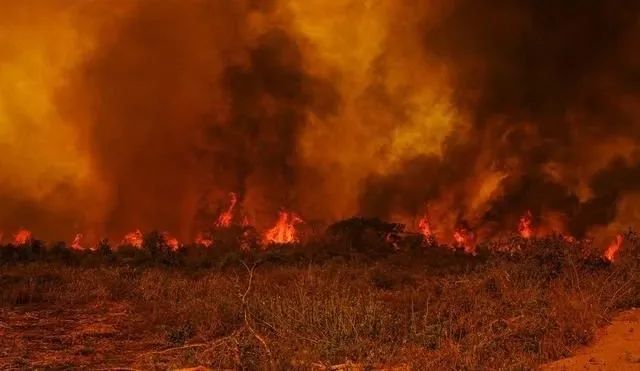
In fact, as early as late August, reports indicated that São Paulo state had been hit by severe fires, with 46 cities declaring a 180-day state of emergency. In early September, there were reports that the fires had been brought under control, but recently news emerged that 12 cities had been affected by fires once again, and they have yet to be fully extinguished. The continued spread of the fires has dealt a heavy blow to the local economy.
The Secretary of Agriculture of São Paulo state said that agriculture is the backbone of the state's economy, and the fires mainly affected sugarcane plantations, coffee plantations, and livestock farms. Combined with the impact of secondary disasters such as smoke from the fires on subsequent agricultural production, the initial estimated losses are around 2 billion reais.
At the same time, many parts of São Paulo state are currently shrouded in thick smoke, with extremely poor air quality and very low visibility, which has not only affected residents' daily travel and some transportation sectors but also poses a serious threat to the safety of local residents. Brazil's meteorological agency has issued a warning that a cold front will move south in the coming days, but because Brazil is still in a state of intense heat and drought, combined with large amounts of pollutants suspended in the air, five states—Rio Grande do Sul, Santa Catarina, Paraná, São Paulo, and Mato Grosso do Sul—will experience "black rain."
The so-called "black rain" is a special rainfall phenomenon. The rainwater does not necessarily appear black in color, nor is it easily detectable on the surface, but this rainwater contains extremely high concentrations of harmful pollutants and usually occurs near industrial areas, fire sites, or areas where large amounts of fossil fuels are burned. When "black rain" falls to the ground, it can impact groundwater quality and surrounding vegetation, and may also cause corrosion to the surfaces of buildings, vehicles, and infrastructure.
According to the latest reports, the fires are still spreading to southeastern Brazil. The environmental department of Rio de Janeiro state reported that as of early September, more than 16,500 fires had occurred in Rio state this year, a year-on-year increase of over 95%. In just one day, September 13-14, Rio state recorded 330 new fires. Currently, more than 1,000 firefighters have been deployed to fight the fires, but the blazes have still burned large areas of forest. As a result, the state has temporarily closed all ecological parks within its territory to prevent even more serious losses.
In addition, due to the extremely severe drought situation in Brazil, the National Institute for Climate Research stated in a report that, affected by factors such as declining water levels in several major rivers, frequent wildfires, and severe environmental pollution, approximately 3,978 cities in Brazil are currently facing varying degrees of drought. Of these, 201 cities are in a state of extreme drought, with dryness levels approaching those of the Sahara Desert in Africa. Combined with the recent arrival of "black rain," which has contaminated groundwater sources and vegetation, the drought situation may further worsen in the future, which will have a serious impact on Brazilian agriculture and many other industries.
Therefore, the Brazilian government recently stated in a letter to the EU that it hopes the EU will cancel the deforestation-free regulation (EUDR) planned to take effect at the end of 2024, because the regulation could affect one-third of Brazil's exports to the EU. Under the regulation, its scope would cover products such as soybeans, beef, coffee, cocoa, and timber, which are precisely Brazil's main products supplied to the EU.
According to data from Brazil's Ministry of Development, Industry and Foreign Trade, Brazil's exports of these products reached 46.3 billion US dollars in 2023. According to government statistics, the EUDR could affect approximately 15 billion US dollars in exports. Given Brazil's current situation, the actual amount affected could be even larger. Therefore, once the regulation is formally implemented, it will reduce Brazil's export quotas for agricultural products. In addition, multiple countries and several well-known global buyers had previously written to the European Commission hoping to postpone the implementation of the new EU deforestation-free regulation, but to no avail.
Currently, international coffee prices are continuing to climb. In addition to reports of reduced production from multiple countries such as Brazil, Vietnam, and Indonesia, many EU traders, fearing that the implementation of the EUDR at the end of the year will affect future imports, have been increasing their purchases toward the end of the year to build up sufficient inventories.
As a result, people in Brazil's coffee industry are very worried about the state of the coffee industry next year. The current period coincides with the flowering stage of the new coffee crop season, and problems such as fires, drought, water shortages, and contaminated groundwater resources may significantly reduce both yield and quality. And next year, after the EUDR is formally implemented, it will also reduce export volumes, which is not conducive to the development of the industry as a whole.
To learn more information about coffee origins, please scan the QR code to follow: Coffee Review
Long-press the QR code to follow:
The above content is compiled by CoffeeHunters, a coffee news website.


