







How Did Yunnan Coffee Move From Typica to Catimor?
Yunnan small-bean coffee refers to Arabica grown in Yunnan, the smallest-fruited of the three commercial coffee species. Cultivation traces to the late Qing Dynasty, when French missionaries planted coffee in Zhukula Village. After 1949, Typica and Bourbon were promoted widely, and the industry stalled in the 1960s and 70s as Sino-Soviet relations worsened.
In the 1980s, leaf rust pushed Nestle to enter Yunnan, bringing Catimor 7963 and setting up a Coffee Agriculture Department. That shift fundamentally changed the variety structure of Yunnan coffee. Arabica itself contains hundreds of varieties, so the main small-bean types grown in Yunnan differed across historical periods.
What exactly is Yunnan small-bean coffee? Where is its place of origin? And what is its connection to Nestlé? Front Street Coffee takes you through this century-spanning industrial history. Starting from the small-bean variety within the Arabica family, we trace the first plantings by French missionaries in Zhukula Village, to the large-scale promotion of Typica and Bourbon after the founding of the People's Republic, and the industry's stagnation caused by the deterioration of Sino-Soviet relations in the 1960s and 70s. Then, in the 1980s, Nestlé entered Yunnan due to the leaf rust crisis, introduced Catimor 7963, and established a Coffee Agriculture Department, fundamentally transforming the variety structure of Yunnan small-bean coffee. This article fully preserves the key timelines and facts to help coffee enthusiasts clarify the past and present of Yunnan small-bean coffee.
Although everyone is familiar with the name Yunnan small-bean, Front Street feels that not many friends truly have a systematic understanding of its origins and development. So today, Front Street will talk about what exactly "Yunnan small-bean" is.
What is Yunnan small-bean?
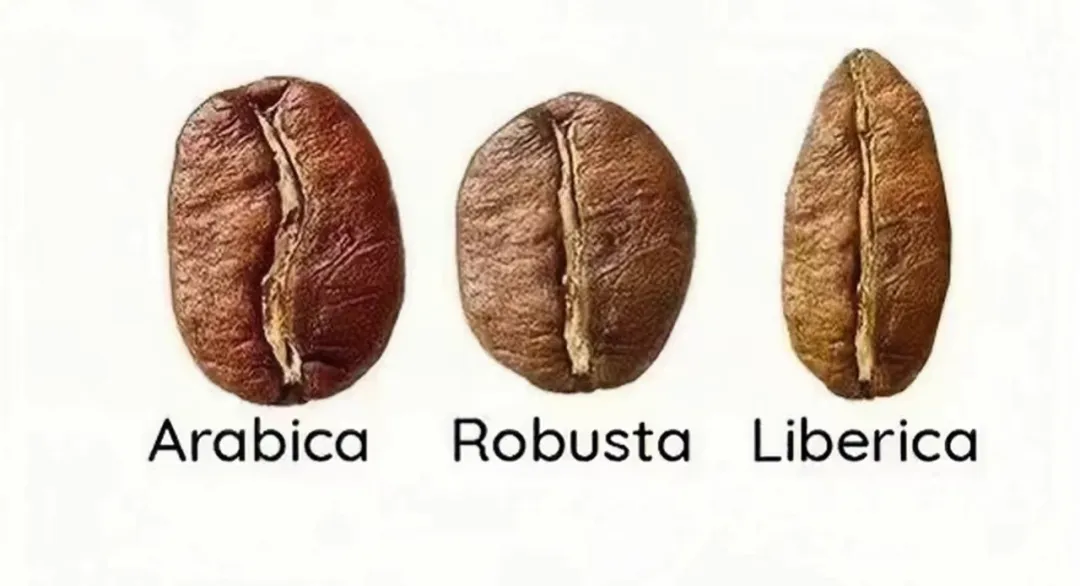
The genus Coffea contains over 130 species, but only three truly have commercial value: Arabica, Robusta, and Liberica. For easy differentiation, coffee farmers refer to them by fruit size as small-bean, medium-bean, and large-bean, respectively.
Arabica has the smallest fruit of the three, so small-bean coffee refers to Arabica. Following this logic, Yunnan small-bean naturally refers to Arabica coffee grown within Yunnan. However, it's important to know that Arabica itself is a vast family containing hundreds of varieties, including Typica, Bourbon, Geisha, and more.
Although Yunnan small-bean broadly refers to all Arabica coffee in Yunnan, the main small-bean varieties cultivated in Yunnan have actually differed across historical periods. To use an analogy, it's somewhat like the difference between pure-blood and half-blood wizards in the wizarding world.
Yunnan small-bean in different periods
The history of coffee cultivation in Yunnan can be traced back to the late Qing Dynasty. According to records, coffee was first introduced to Yunnan by two groups: the Jingpo ethnic minority border people, and the French missionaries, whose influence spread more widely.
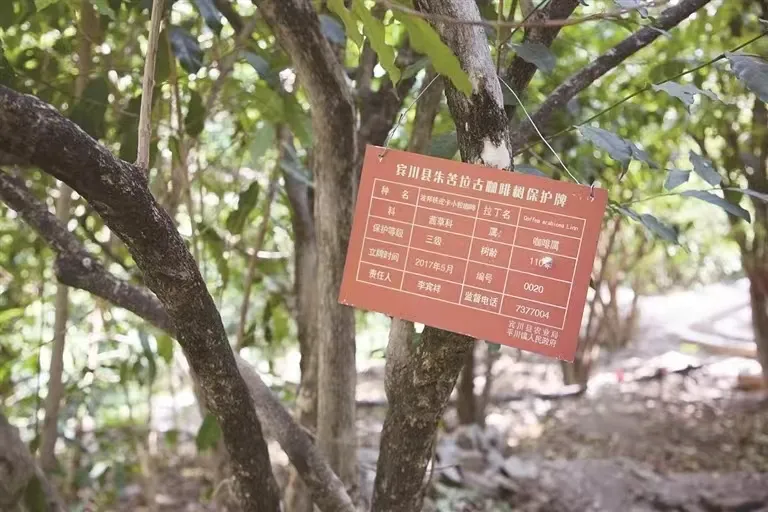
In the 18th year of the Guangxu reign of the Qing Dynasty (1892), French missionary Tian Deyang introduced coffee from Vietnam and planted it in Zhukula Village, Binchuan County, Dali, while also teaching local residents a series of coffee preparation methods including processing, grinding, and brewing.
However, Zhukula Village was remote with poor transportation and small planting scale, so coffee did not spread rapidly as it did in other countries at the time. It was only after the founding of New China that Yunnan coffee truly began its path to fame.
In 1952, experts from the Tropical Economic Crops Research Institute of the Yunnan Academy of Agricultural Sciences went to Zhefang Township in Dehong Prefecture for a survey and discovered a never-before-seen plant bearing red fruit in a farmer's courtyard. They purchased a large quantity of fresh fruit and brought it back to Lujiangba in Baoshan City for cultivation and research, ultimately confirming that it was the "small-bean coffee" abundant in South America.

During the period of economic development after the founding of the People's Republic, in order to supply coffee to the Soviet Union and Eastern European socialist brother nations, Yunnan quickly launched large-scale coffee popularization and promotion of cultivation, and established China's first small-bean coffee planting base there.
Yunnan's climate conditions are excellent, and with assistance from foreign experts in various aspects, coffee cultivation achieved great success. With unique flavor and extremely high yield, the planting area once reached over fifty thousand mu, earning Yunnan small-bean a certain reputation in the international market. The Yunnan small-bean that people spoke of during this period referred to the "old varieties" grown in Yunnan such as Typica and Bourbon, which have pure Arabica lineage.
If this path had remained viable, China might have already become a major coffee-growing country today. Unfortunately, the good times did not last. By the 1960s and 70s, Sino-Soviet relations deteriorated, and China's fledgling coffee industry came to a halt. Large numbers of coffee plantations stopped planting and switched to other crops.
It was not until the 1980s that coffee-growing countries in South America such as Brazil were hit by leaf rust, causing production to plummet and coffee prices to soar. International coffee companies, in order to break away from dependence on South American producing countries, began directly developing new, untapped coffee origins, with Africa and Asia becoming key targets for this project.
In 1988, during the wave of China's reform and opening up, Nestlé established a joint venture in China and introduced Catimor 7963 from the Portuguese Coffee Rust Research Center (CIFC) for trial planting, with the aim of purchasing a batch of favorably priced coffee bean raw materials for making instant products. To this end, Nestlé vigorously promoted Yunnan's coffee agriculture development and established a Coffee Agriculture Department in 1992 to better guide and research the cultivation and improvement of Yunnan coffee.
The above content is compiled by CoffeeHunters, a coffee news website.


