







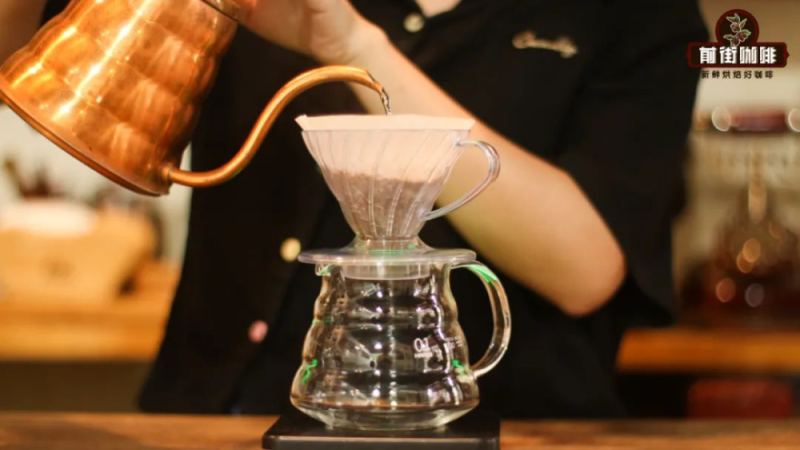
Does the Process of Coffee Beans Affect Pouring Direction?
A controlled comparison changed only the pouring direction while keeping every other parameter identical. Clockwise pouring follows the V60's clockwise spiral ribs, which lengthen the water path and help the stream converge into a flowing vortex; counterclockwise pouring can strike the ribs, adding turbulence that may lift extraction. Extraction time, concentration, and flavor were compared for both directions.
The larger point is that circle amplitude and speed usually matter more than direction. Amplitude sets how much of the coffee bed the water covers, while speed controls how often the bed is agitated, both shaping the final cup. The process of coffee beans matters too, but on the pour-over side these two variables deserve more attention than circling direction alone.
In pour-over coffee techniques, the circling amplitude and speed are often discussed, but whether the circling direction affects extraction flavor has also become a curious question for many enthusiasts. The spiral ribs of the V60 dripper are arranged clockwise, and some believe that pouring in the same direction can guide the water flow smoothly and improve uniformity, while counterclockwise pouring may cause turbulence by hitting the ribs, altering the extraction results. To verify this claim, Front Street conducted a comparative experiment with identical parameters, changing only the pouring direction, and compared extraction time, concentration, and flavor performance one by one. This article will outline the experiment process and conclusions, and explain which pouring factors are truly worth focusing on.
For example, how large the circling amplitude is and whether the circling speed is fast or slow. These are easy for everyone to understand, because the amplitude directly affects the area covered by the hot water, while the speed relates to the frequency of agitation of the coffee bed by the hot water. However, some coffee enthusiasts insist on taking a different path and start pondering the direction of circling: will clockwise pouring and counterclockwise pouring produce different-tasting coffee?
The reason some people obsess over pouring direction is mostly related to the V60 dripper. The spiral ribs on the V60 wall are coiled clockwise. Friends who have read today's first article should know that one of the functions of these ribs is to lengthen the water flow path, giving the hot water a chance to contact more coffee grounds.
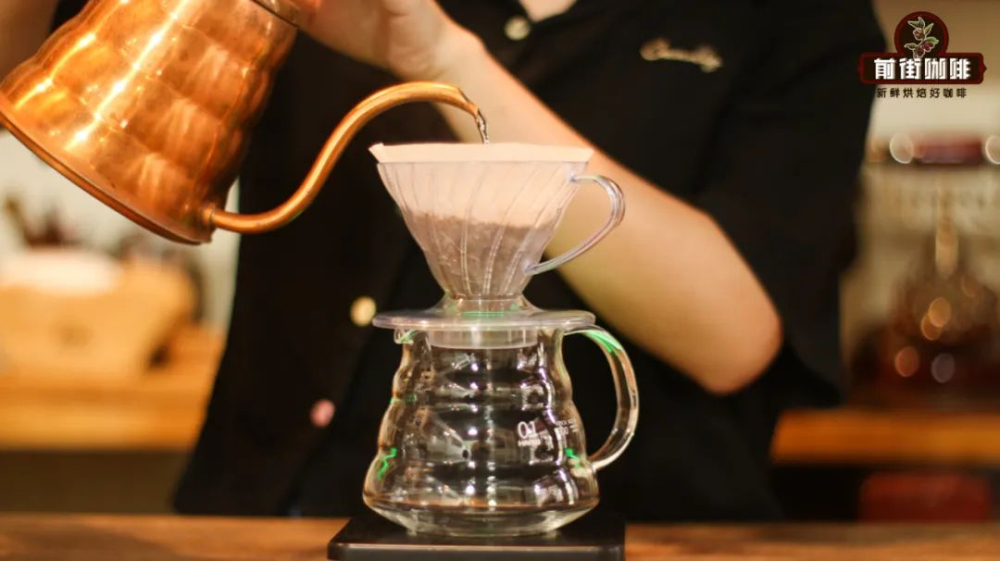
Most people choose clockwise pouring when using a V60, partly due to personal habit and partly due to the "guidance" of the ribs. People tend to think that as long as you pour in circles along the direction of the vortex, the water flow can move more smoothly along the ribs, converge toward the center of the dripper along the established route, and more easily form a flowing vortex, thereby making extraction more uniform. But if you switch to counterclockwise pouring, the water flow easily collides with the ribs, and this interaction produces an effect similar to wringing out a rag. Simply put, turbulence may arise and raise the extraction yield, allowing the hot water to bring out more flavor compounds. It sounds quite special! So, to get to the bottom of it, Front Street specifically conducted an experiment to see whether the facts really matched these friends' speculations. Circling experiment To compare the difference more intuitively, this time Front Street kept all other parameters consistent except for the circling direction. The coffee beans used were Ethiopia Gesha Village Red Label, 15g dose, grind size at 9.5 on the Ek43, a fine-sugar grind, with 85% passing through a No. 20 sieve, brew ratio 1:15, water temperature 92°C, V60 dripper, and a one-pour brewing method. Both cups first used twice the coffee dose in water (30ml) for a thirty-second bloom, then the remaining hot water (195ml) was poured in entirely through continuous circling.
After brewing was completed, the extraction times of the two groups were almost identical, one at 1 minute 56 seconds and the other at 1 minute 58 seconds. Then, observing the concentration test results, the two were also nearly the same, with no obvious difference.
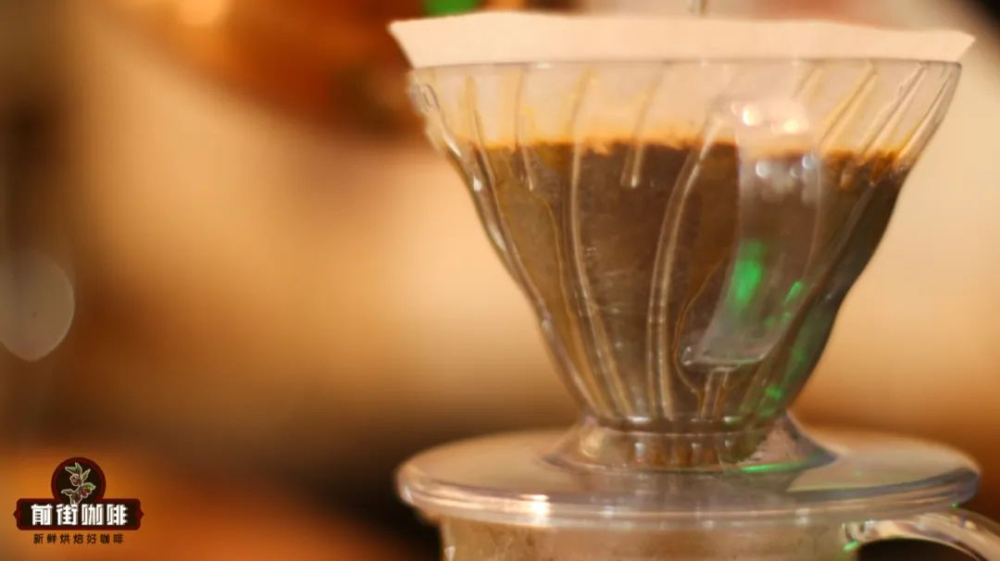
The same was true in terms of taste. Since the same person brewed the two pots at different times, there was a certain temperature difference between the two cups. The temperature difference did indeed make the mouthfeel slightly different, but only to a very small extent. If they were not compared at the same time, it would actually be hard to tell.
From this it can be seen that different pouring directions do not have much impact on extraction with a V60 dripper. Although counterclockwise pouring causes some water flow to collide with the ribs, the turbulence formed by this is negligible. By comparison, the turbulence produced by irregular pouring is more influential. Therefore, Front Street believes that whether the pouring direction is clockwise or counterclockwise, since the impact is almost negligible, you can simply decide according to personal habit. After all, major influencing factors such as a stable water flow, agitation speed, and pouring time are more worthy of our time and careful study.
- END -
The above content is compiled by CoffeeHunters, a coffee news website.


