







How does channeling affect coffee extraction in espresso?
Channeling is when hot water breaks through the coffee puck along the path of least resistance instead of passing evenly through the bed. The result is uneven coffee extraction: some grounds are over-extracted and release harsh, bitter compounds, while others are under-extracted, leaving the cup thin and unbalanced.
Espresso is especially prone to channeling because coffee extracted in small concentrated amounts relies on high temperature and high pressure, which demand a very uniform puck. Clues include holes on the puck surface and spattering during the shot. Better distribution and leveling before tamping help water travel through the grounds more evenly.
When making espresso, hot water doesn't always pass evenly through the coffee puck—when the water flow breaks through along the path of least resistance, it creates what is known as "channeling." This phenomenon causes some coffee grounds to be over-extracted, releasing off-flavors, while other areas are under-extracted, ultimately leading to an imbalance in the concentration and flavor of the entire cup. Channeling is especially prone to occur in espresso extraction because the extreme conditions of high temperature and high pressure place extremely high demands on the uniformity of the coffee bed. Although we cannot directly observe the water flow during extraction, the holes on the surface of the puck and the spattering during extraction can provide clues for diagnosis. This article will systematically explain the causes of channeling, how to identify it, and share Front Street Coffee's practical advice on optimizing distribution.
What Is Channeling?
In the coffee extraction process, channeling refers to a phenomenon of uneven hot water distribution. To get a delicious cup of coffee, besides ensuring stable parameters, you also need the hot water to pass through as much of the coffee grounds as evenly as possible, so that the grounds can release the right flavor compounds in the right amounts.
Ideally, water under the force of gravity would actively penetrate downward, allowing the coffee grounds to be evenly extracted. However, water is lazy—it prioritizes finding the paths that are easiest to flow through and concentrates its passage there.
By analogy, it's like watering dry land: if there are cracks in the ground, the water will mainly seep down along the cracks. Applying this principle to the scenario of hot water extracting coffee makes it easy to understand.
What does this lead to? The areas where the water flow concentrates have excessively high extraction efficiency, dissolving flavor compounds that shouldn't be there; while the areas not adequately penetrated by the water flow are under-extracted, dissolving an insufficient amount of compounds. When these under-saturated coffee liquids mix into the entire cup, they create defects in concentration and taste.
Espresso extraction is most significantly affected by channeling. This is because espresso extraction requires hot water to dissolve two-thirds of the soluble substances in the puck within an extremely short time, and the extraction efficiency at every stage is very high. Under such extreme conditions, if channeling occurs, the impact on coffee flavor is considerable.
Although we can't directly see the flow of hot water during extraction, that's okay, because once channeling occurs, its manifestations are very obvious. Even before tasting the coffee, you can judge whether channeling has occurred through the following signs.
1. Holes in the Puck
The cause of channeling is uneven distribution of coffee grounds in the puck and inconsistent water flow resistance across different areas, causing hot water to break through concentrated at the positions of weaker resistance. Therefore, when channeling occurs during extraction, we will see many dense holes on the surface of the removed puck—these are the "channels" formed by hot water penetrating through. This phenomenon is also called "puck perforation."

2. Spattering During Extraction
Using a bottomless portafilter allows you to observe this phenomenon more directly—the bottomless portafilter was invented precisely for this purpose. So, if you're extracting with a bottomless portafilter, as long as channeling occurs during the process, the espresso may spatter as it flows out, as shown in the image below.
How to Solve Channeling?
Since the problem mainly lies in the distribution of coffee grounds, we only need to optimize the distribution step. In the article "The Importance of Proper Distribution," Front Street Coffee explained in detail the points to pay attention to during distribution—you can click the blue text to jump to the detailed explanation.
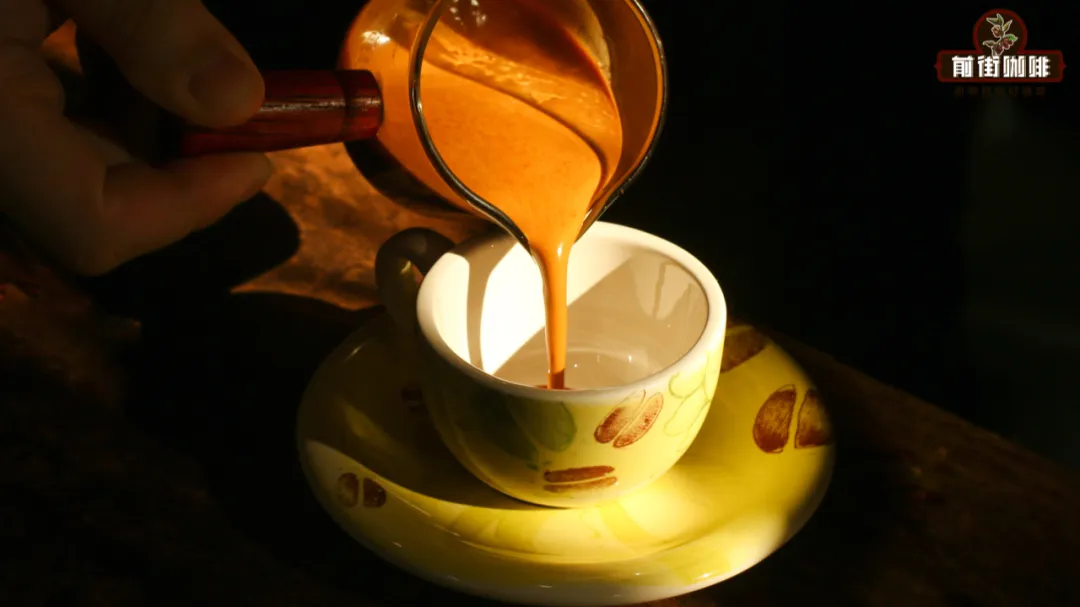
Finally, Front Street suggests that those wearing light-colored clothing should keep a certain distance when using a bottomless portafilter for extraction, otherwise channeling won't just make your espresso taste like a "symphony of mixed flavors"~
The above content is compiled by CoffeeHunters, a coffee news website.


