







How did the coffee industry develop across Indonesia and Sumatra?
Indonesia ranks as the world's fourth-largest coffee producer, and its coffee industry rests on volcanic soil, a tropical rainforest climate and average temperatures of 25 to 27 degrees Celsius. Arabica and Robusta are both cultivated, with Sumatra's Gayo highlands, Lintong region and Mandheling names marking key specialty areas.
The archipelago holds more than 17,508 islands and over 500 volcanoes, the most of any country, and the ash-enriched soil supports coffee farming. Arabica was the original focus from the 17th century, and where are arabica beans grown today includes Aceh's Gayo highlands and North Sumatra's Lintong, alongside Golden Mandheling lots.
As the world's fourth-largest coffee-producing country, Indonesia—with its unique geography and volcanic soil—cultivates coffee beans with a distinctly bold character. This article will guide you through the development of Indonesia's coffee industry, its main growing islands, and the specific distribution of specialty coffee regions on the island of Sumatra. From the Gayo highlands in Aceh to the Lintong region, from Mandheling to Golden Mandheling, we will take a deep dive into how this tropical archipelago became a force that cannot be overlooked on the world coffee map.
Among the world's seven continents, Asia holds the largest land area. This continent has an extremely diverse topography, with dramatic differences in elevation—high in the center and gradually lowering toward the edges. Mountains, plateaus, and hills make up its main landforms, and it has a large number of volcanoes. The continent's average elevation reaches 950 meters.
At the same time, Asia spans three climate zones—frigid, temperate, and tropical—resulting in highly complex climate types. The fertile soil created by volcanic ash, combined with diverse climate conditions, has laid an excellent foundation for agricultural development. It is for this reason that Asia has given rise to several coffee-producing countries, such as Vietnam, Indonesia, and China—and Indonesia has even ranked among the world's top four coffee producers.
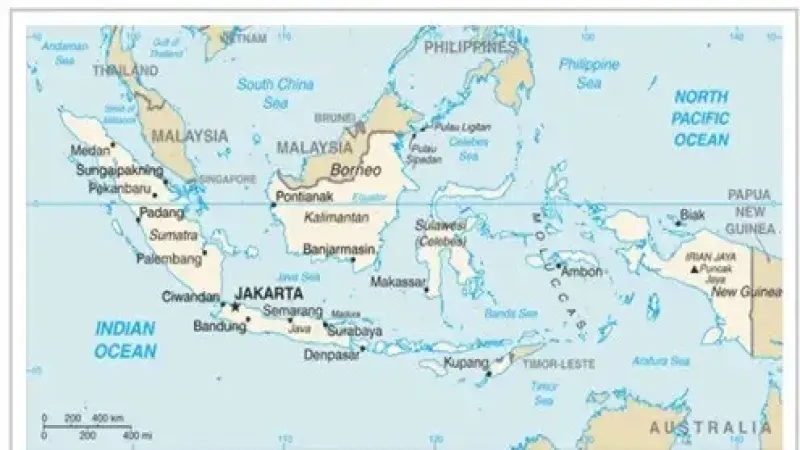
The reason Indonesia can achieve such high coffee yields is inseparable from its exceptional natural resources, earning it the reputation of a "tropical treasure island." This country is the world's largest archipelagic nation, made up of 17,508 islands, with richly varied terrain, crisscrossing rivers, and volcanoes scattered throughout. It has more than 500 volcanoes in total, the most of any country in the world.
Indonesia lies in the tropical zone and has a tropical rainforest climate, warm and humid year-round, with average temperatures maintained between 25 and 27 degrees Celsius. Its seasons are mainly divided into the dry season and the rainy season. The fertile soil gifted by volcanoes, abundant water resources, and warm, humid climate conditions together create an ideal environment for coffee cultivation.
At present, Indonesia cultivates both Arabica and Robusta coffee varieties, but originally the country mainly grew Arabica. In the 17th century, Indonesia was still a Dutch colony. Because the local natural conditions were suitable for coffee cultivation, the Dutch colonial government introduced coffee to Indonesia for planting. Coffee thrived here, and by the early 18th century, Indonesia's annual coffee exports had already reached several thousand pounds.
However, by the 1860s, coffee leaf rust broke out on a large scale, and the industries of many coffee-producing countries suffered severe damage. Indonesia was no exception. After that, Indonesia introduced the more disease-resistant and easier-to-cultivate Robusta variety to replace Arabica. As a result, Arabica currently accounts for only 15% of the country's total coffee production.
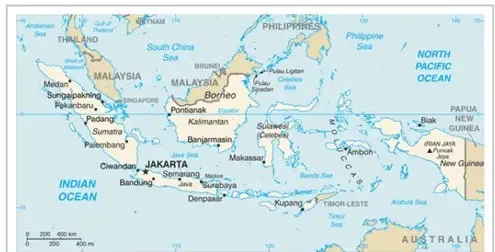
Several islands in Indonesia engage in coffee cultivation, and coffee-producing regions are usually divided by island, such as Sulawesi, Bali, Java, and Sumatra.
Among them, the most famous is Sumatra, where coffee is renowned worldwide under the name "Mandheling." This island is the largest in Indonesia, and its landforms mainly consist of the Barisan Mountains in the west and lowland plains in the east. The entire island is divided into ten administrative regions. Because the equator runs across the island, it has a tropical rainforest climate, hot and rainy year-round.
Arabica coffee is mainly grown in the area of the Barisan Mountains. This mountain range stretches for 1,600 meters and runs the length of the island, with about 90-plus volcanoes distributed along it, the highest peak being Mount Kerinci. Thanks to the nourishment of volcanic ash, the soil is very fertile, and with lakes scattered everywhere—including Lake Toba, the world's largest volcanic lake—these favorable conditions have allowed the island's coffee and other agricultural industries to flourish.
Among the island's ten administrative regions, specialty coffee is mainly divided into the Aceh Gayo producing region and the Lintong producing region, concentrated in the Special Region of Aceh, North Sumatra Province, and West Sumatra Province, while the southern part of the island mainly grows the Robusta variety.
As for the Lintong producing region, Lake Toba is located north of Medan, the provincial capital of Sumatra, and is the world's largest volcanic lake. The soil in this area is rich in minerals due to ancient volcanic eruptions. The Lintong area southwest of Lake Toba sits at an altitude between 1,400 and 1,800 meters, and its climate, soil, and elevation conditions are all highly suitable for coffee cultivation. Front Street Coffee's entry-level selection Mandheling comes precisely from Mandheling coffee beans in Sumatra's Lintong producing region, presenting flavors of dark chocolate, herbs, and caramel, with a sweet aftertaste.
The Gayo producing region takes its name from the Gayo people and is located in the high mountain area of Aceh Province at an altitude of 1,300 to 1,600 meters. The region contains multiple volcanoes and numerous volcanic lakes, among which the most representative coffee-growing area is near Lake Lawar, a freshwater lake. Front Street Coffee's PWM Golden Mandheling comes from the well-known Indonesian green bean merchant Pwani Coffee Company. The coffee beans are produced in the Gayo Mountains of Aceh, North Sumatra, and carry flavors of toasted bread, pine wood, cocoa, and a mild herbal note. The mouthfeel is clean and balanced, with a caramel-like sweetness in the finish.
The above content is compiled by CoffeeHunters, a coffee news website.


