







Where are the coffee beans grown for Vietnamese condensed milk coffee?
Vietnamese coffee centers on Robusta, which makes up about 97 percent of the country's output, and the beans are dark roasted to a strong, bitter profile. Condensed milk and a phin filter turn that coffee beans grown in Vietnam into the sweet, full-bodied condensed milk coffee served in cafes and street stalls.
Coffee was introduced to Vietnam by the French, and the country now produces millions of tons a year, ranking behind Brazil in total output but first for Robusta alone. For where are robusta coffee beans grown, Vietnam leads, and its high-yield farms supply the dark-roasted base used in the traditional phin drip.
Vietnamese coffee has long been a distinctive calling card in Southeast Asian culinary culture, and the core that supports this unique flavor is none other than the robusta bean, which accounts for over ninety percent of Vietnam's total coffee output. After the French introduced coffee to Vietnam, locals combined the intense bitterness of dark-roasted robusta with the sweetness of condensed milk, and with the help of the unique phin filter, created a highly recognizable condensed milk coffee. This article will guide you through the origin status of Vietnamese robusta, the structure and extraction principles of the phin filter, and using Front Street Coffee's practical parameters as an example, provide a complete demonstration of the process and drinking method for a traditional Vietnamese coffee.
Coffee is not an indigenous beverage of Vietnam. It was not until the French introduced it that this dark drink gradually permeated into the daily lives of Vietnamese people.
When Vietnamese coffee is mentioned, the first thing that comes to most people's minds is probably robusta. The reason is that Vietnam produces millions of tons of coffee beans each year, of which robusta accounts for about 97%. Although Vietnam still ranks behind Brazil in terms of total production, when narrowed down to the single variety of robusta, Vietnam firmly holds the top spot globally.
However, one point that needs clarification is that the term "Vietnamese coffee" does not only refer to coffee beans grown and exported within Vietnam — it is also a byname for Vietnam's distinctive local coffee beverage. In Vietnam, whether at a café in a luxury hotel or an inconspicuous open-air stall on the street, you can buy this cup of specially crafted coffee full of Vietnamese character.
The key components of this beverage are actually quite simple — condensed milk plus black coffee. The black coffee uses dark-roasted robusta as its raw material. After deep roasting, the bitterness of the coffee becomes particularly intense and pungent. To tame this punch, people chose to add condensed milk into it. The sweetness of the condensed milk and the bitterness of the robusta — two completely different flavors collide, ultimately presenting a sweet and full-bodied taste.
But if it were merely adding condensed milk to coffee, that alone would not be enough to support the label of "Vietnamese specialty." At this point, one cannot help but mention the tool Vietnamese people use to extract coffee — the phin filter.
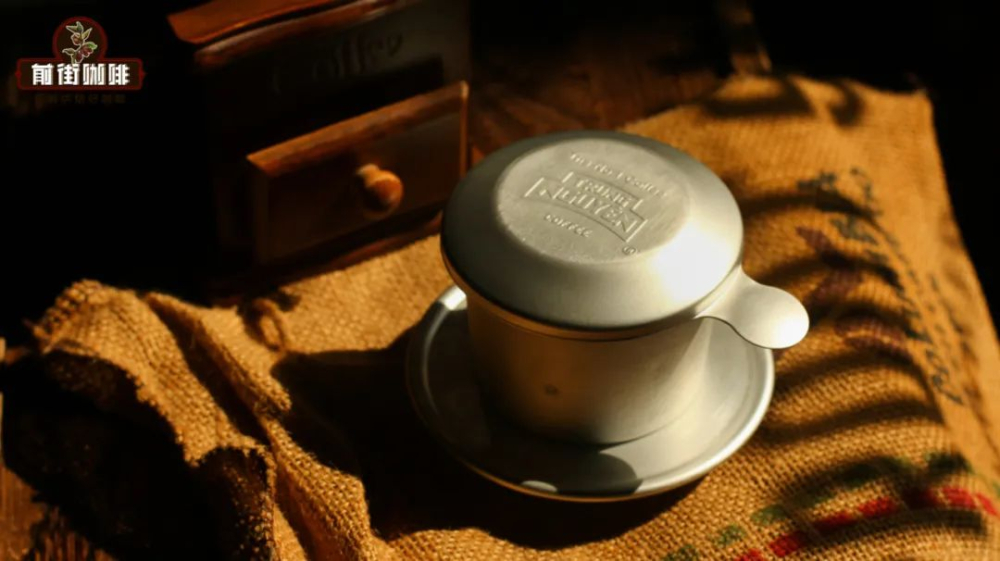
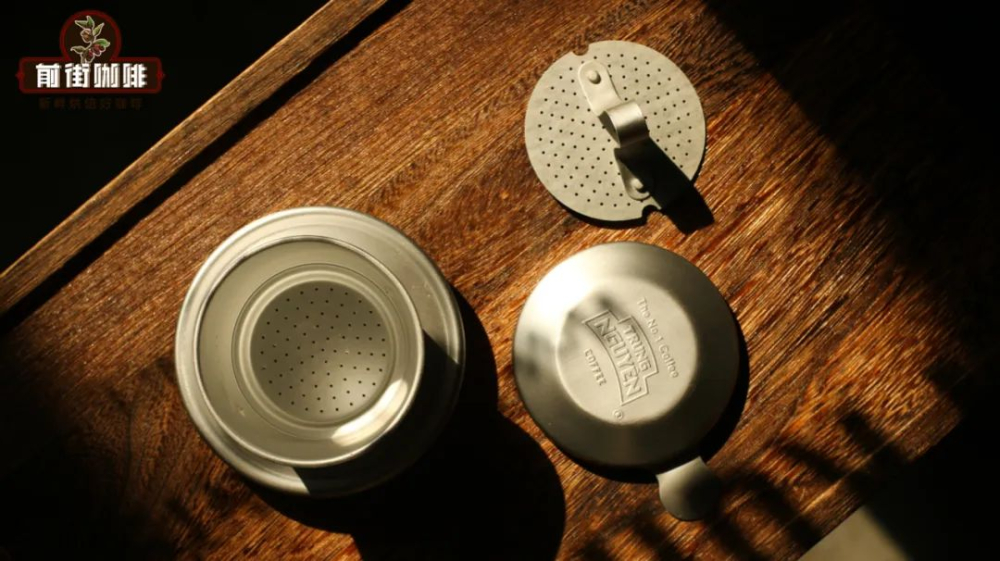
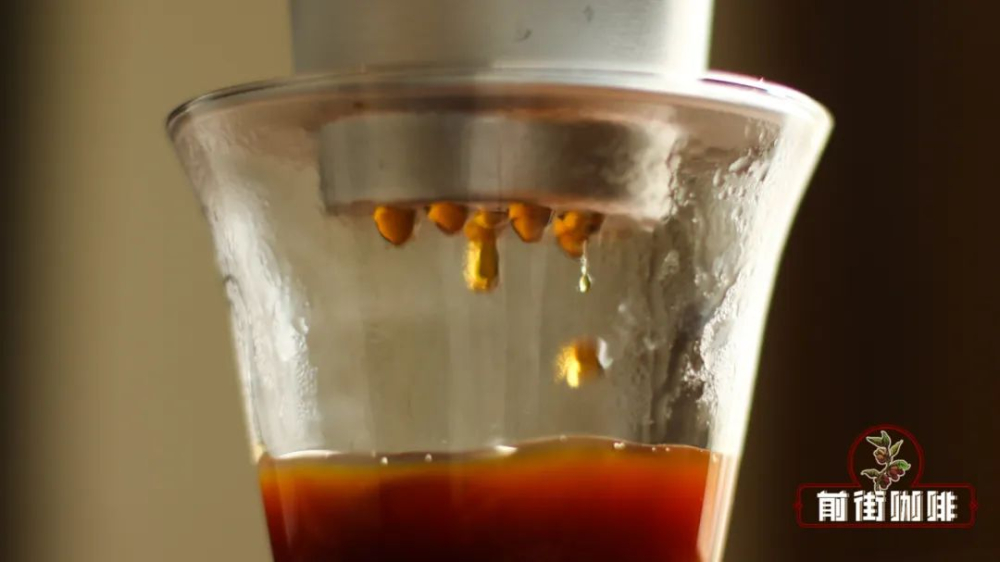
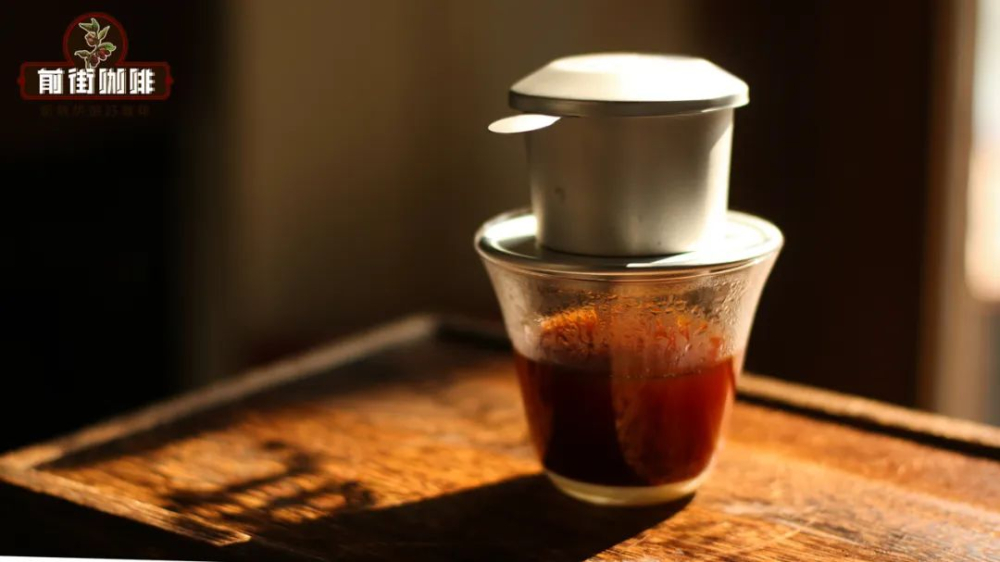
This small tool, shaped like a cup, can be called the soul of Vietnamese coffee. In terms of working principle, the phin filter is actually a type of dripper, because it also belongs to the category of drip-style extraction devices. The entire set consists of three parts: the body, the press plate, and the lid. The operation is not complicated — first put the coffee grounds into the body, then use the press plate to tamp them down, and finally pour in hot water and wait for the coffee liquid to slowly seep through.
Since the holes at the bottom of the phin are not particularly small, some finer coffee particles will "slip away" through the holes. But there is no need to worry too much about this — as long as the coffee grounds are tamped firmly enough beforehand, the amount that escapes will be very limited. This situation not only does not bring about an unpleasant mouthfeel, but can actually increase the coffee's body to a certain extent, though the coffee liquid will appear slightly more turbid.
Next, let Front Street Coffee demonstrate for everyone — how exactly should traditional Vietnamese coffee be made!
Vietnamese Coffee
Step one: first determine the extraction parameters. The phin filter is a typical drip-style coffee device, but compared to other drip methods, its operation is more direct and coarse. Therefore, we only need to raise the extraction efficiency slightly, since the water flow of the phin does not agitate the coffee bed, so there is no stirring effect to speak of. The parameters used by Front Street are as follows:
Bean used: Sumatra · Golden Mandheling
Grind setting: Ek43 setting 10.5, coarse sugar grind, 70% pass-through rate on a No. 20 sieve
Dose: 15g
Coffee-to-water ratio: 1:10
Brewing temperature: 94°C
Then, find a container to catch the coffee liquid — you can pour the condensed milk in beforehand. Front Street used 10ml of condensed milk here, and the sweetness of the final product is fairly moderate. You can adjust the amount up or down according to your own taste preference.
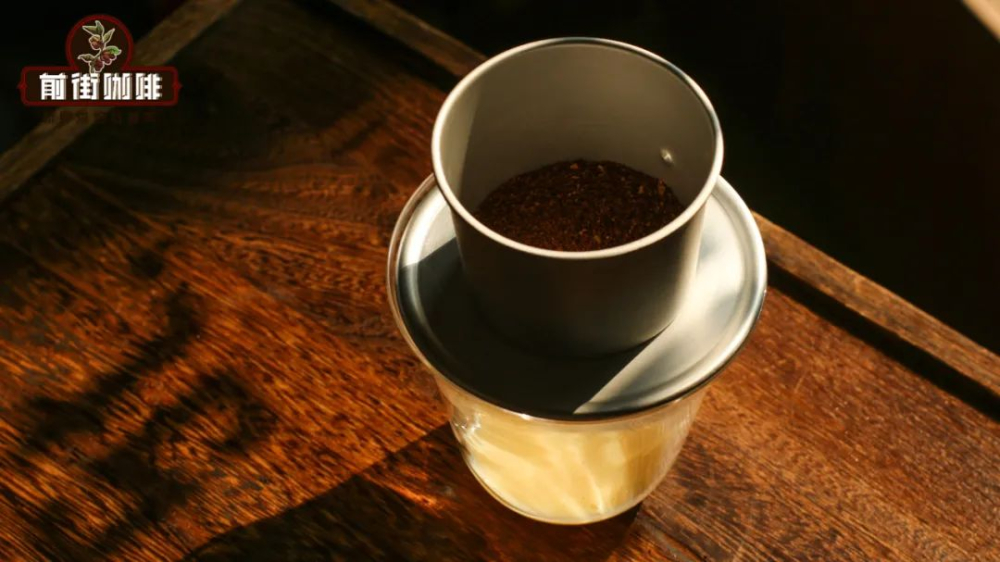
Once everything is ready, place the phin filter on top of the container and pour in the coffee grounds!
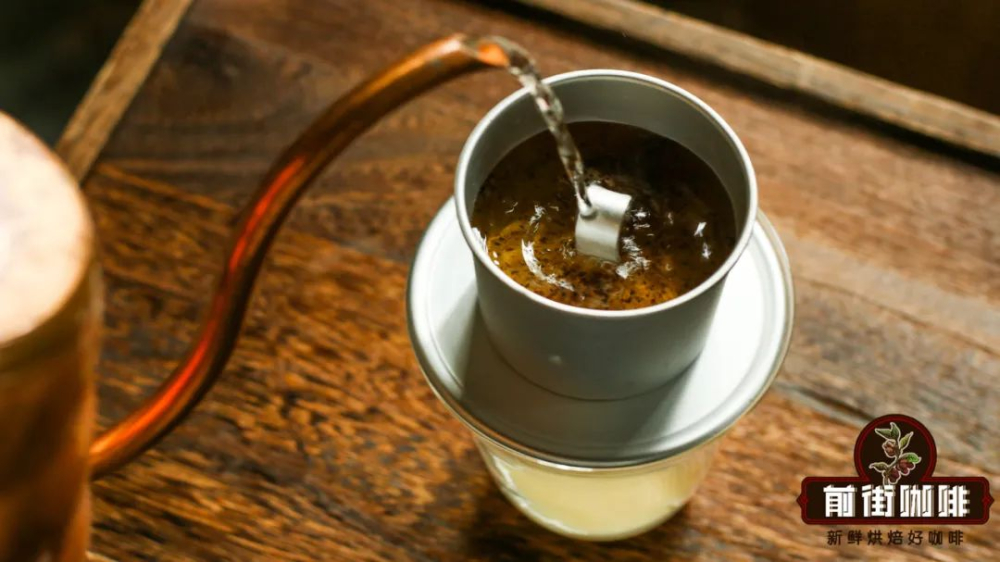
Next, gently tap the surface of the grounds to level them, then place the press plate horizontally into the filter and press it down firmly — this ensures that the coffee grounds will not leak out in large quantities. At the same time, the force of tamping affects how tightly packed the coffee bed is — the tighter the tamp, the slower the water passes through. Front Street usually tamps it down as firmly as possible, so there is basically no need to worry about under-extraction. Then pour in hot water!
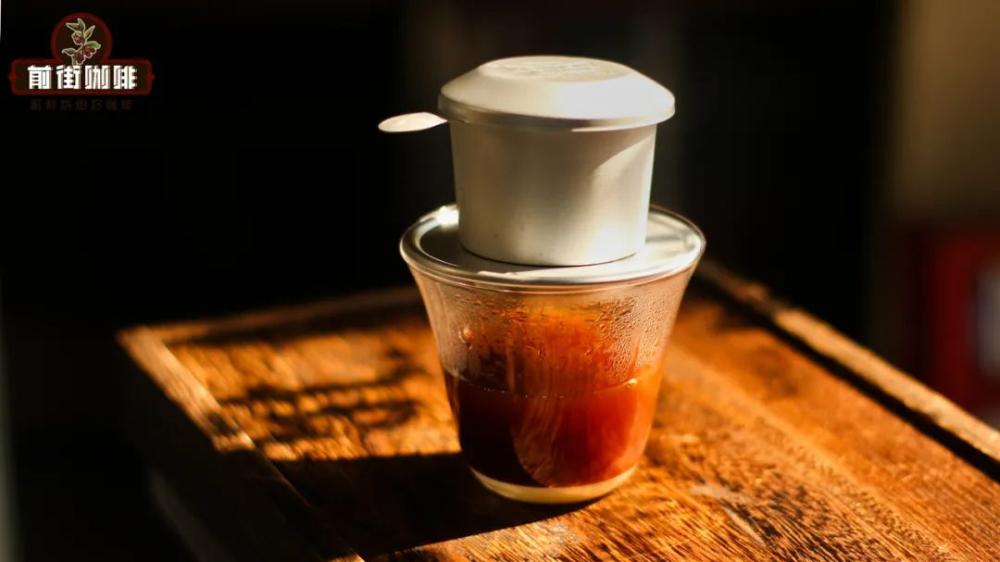
Finally, put the lid on. The purpose of the lid is not to keep the hot water warm, but to prevent the press plate from floating up. After hot water is poured in, the press plate will float upward, and without the lid pressing it down, it can easily scatter coffee grounds everywhere.
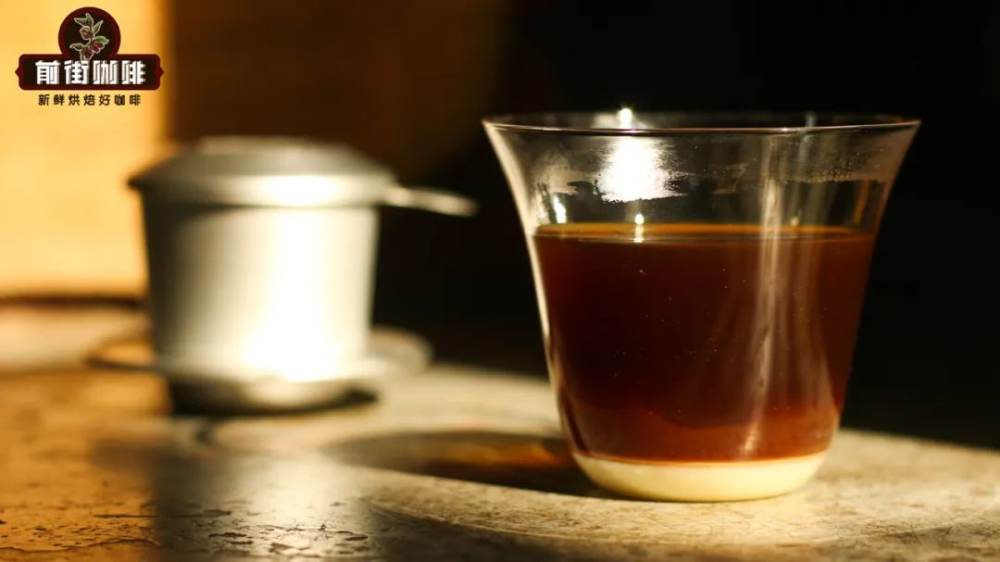
Once the lid is on, all you need to do is wait for the coffee to finish dripping, and a cup of Vietnamese coffee is complete.
When drinking, you can skip stirring and drink slowly from the top down, experiencing the layered changes in coffee strength and sweetness from light to deep. But if you are someone who cannot handle bitterness, then it is recommended to simply stir it evenly with a spoon before drinking.
- END -
The above content is compiled by CoffeeHunters, a coffee news website.


