







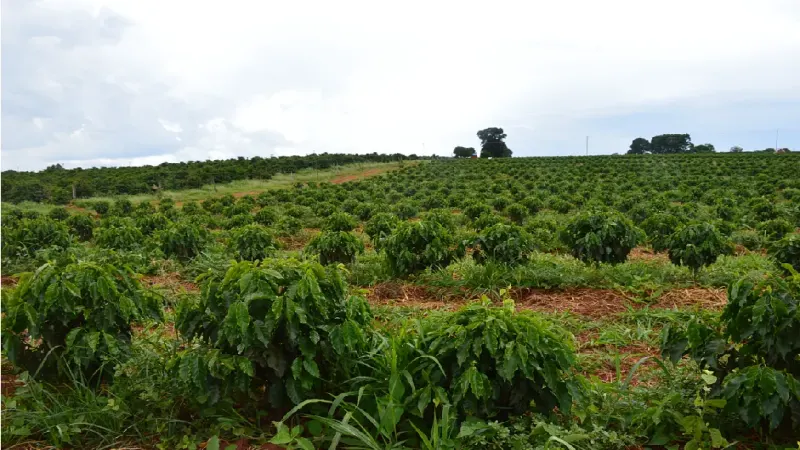
Where does Brazil's coffee production actually happen?
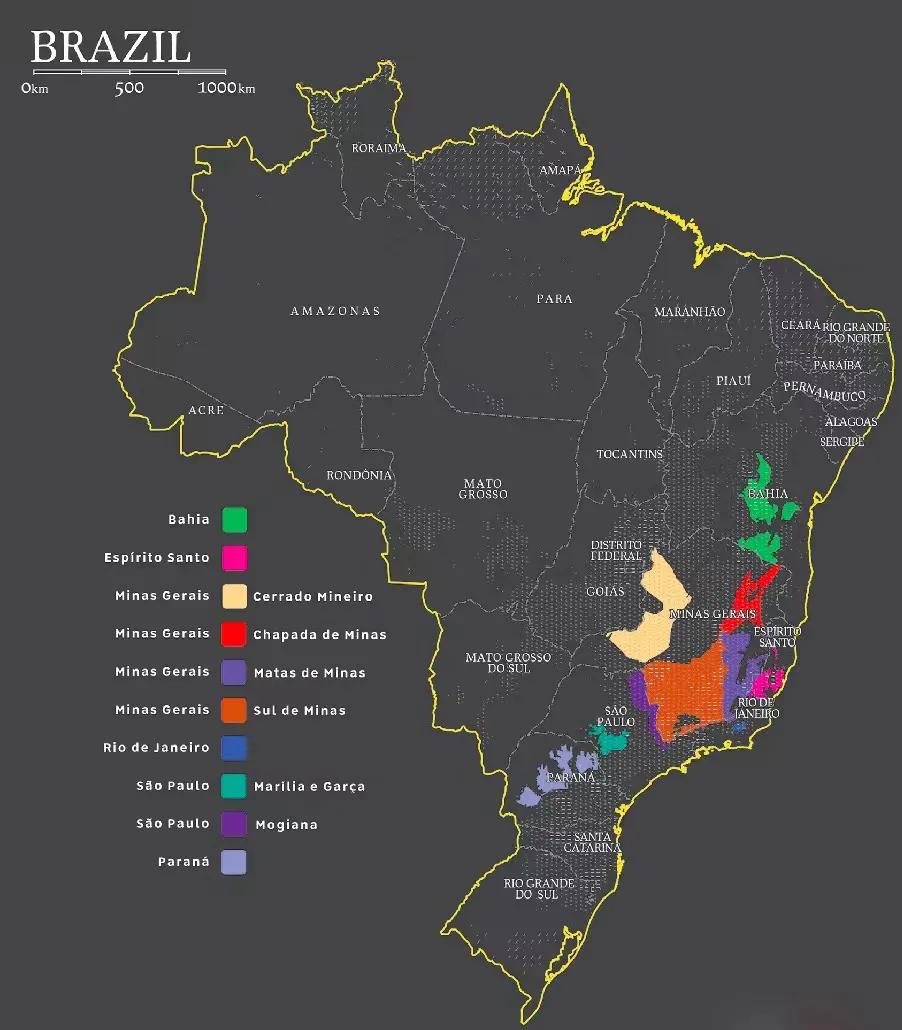
Brazil is the largest coffee producer in the world, growing the crop in 17 of its 26 states. Four states, Paraná, São Paulo, Minas Gerais, and Espírito Santo, account for more than 80 percent of national output. Minas Gerais leads in reputation, and its Cerrado and Sul de Minas areas are considered the heart of the country's coffee industry.
South America offers volcanic ash soils, the Andes, and a mostly tropical climate, conditions suited to coffee cultivation. Within Brazil, most growing sits in the Brazilian Highlands above 500 meters, where red earth and a large diurnal temperature range support the crop, with an annual average near 21°C. Mogiana in São Paulo has produced specialty coffee estates such as Fazenda Rainha and Fazenda Recreio.
South America, with its natural advantages such as the Andes Mountains, the Brazilian Highlands, and volcanic ash soils, has become a key region for global coffee cultivation. Among them, Brazil, as the largest country in South America, produces coffee in 17 of its 26 states, and its output consistently ranks first in the world. Brazil's coffee cultivation is mainly concentrated in Paraná, São Paulo, Minas Gerais, and Espírito Santo, with these four states contributing more than 80% of the nation's production. Minas Gerais is the most renowned, and its sub-regions Cerrado and Sul de Minas are hailed as the heart of Brazil's coffee industry; Mogiana in São Paulo, due to its high altitude and excellent microclimate, has nurtured specialty coffee estates such as Fazenda Rainha and Fazenda Recreio. This article will guide you through the distribution of Brazil's specialty coffee regions and representative estates.
South America is the world's fourth-largest continent, possessing natural environmental resources such as the Andes Mountains and the Brazilian Plains, and it is one of the continents with more volcanoes in the world, with fertile soil provided by volcanic ash, plus most areas have a tropical climate, warm and humid, these conditions are very suitable for coffee cultivation, therefore South America has many major coffee-producing countries, such as Brazil, Colombia, Ecuador, etc.
And among South America, the largest country is Brazil. Due to its strong industrial base and relatively developed agriculture, among Brazil's 26 states, 17 states produce coffee, which also makes Brazil the world's largest coffee producer.
Brazil's terrain is mainly divided into 2 major parts, one part is concentrated in the northwestern Amazon River basin within the country, while the southeastern part is mainly the Brazilian Highlands above 500 meters in elevation, where the soil is mainly red earth, therefore the south is very suitable for the cultivation and growth of tropical crops such as coffee.
Most of Brazil is in the tropics, with some southern areas having a subtropical monsoon humid climate, with high temperatures and rain in summer, while winters are mild and humid, with a large diurnal temperature difference, and an annual average temperature of 21°C. Brazil is vast in territory and rich in resources; besides multiple states cultivating coffee, its superior geographical conditions and climate are also what make Brazil the country with the highest coffee production.
Although Brazil has 17 states cultivating coffee, coffee is mainly grown in four states: Paraná, São Paulo, Minas Gerais, and Espírito Santo. These four states account for 80% of the country's total coffee production and cultivate both Arabica and Robusta coffee varieties.
Among them, the most well-known and largest in production is Minas Gerais, which accounts for 30% of the national coffee production. The relatively famous sub-regions Cerrado and Sul de Minas are both in this state, and Sul de Minas is called the heart of Brazil's coffee industry. Front Street Coffee has a semi-washed Cerrado coffee, as an entry-level selected representative, with chocolate flavor and nutty aroma, and a balanced taste.
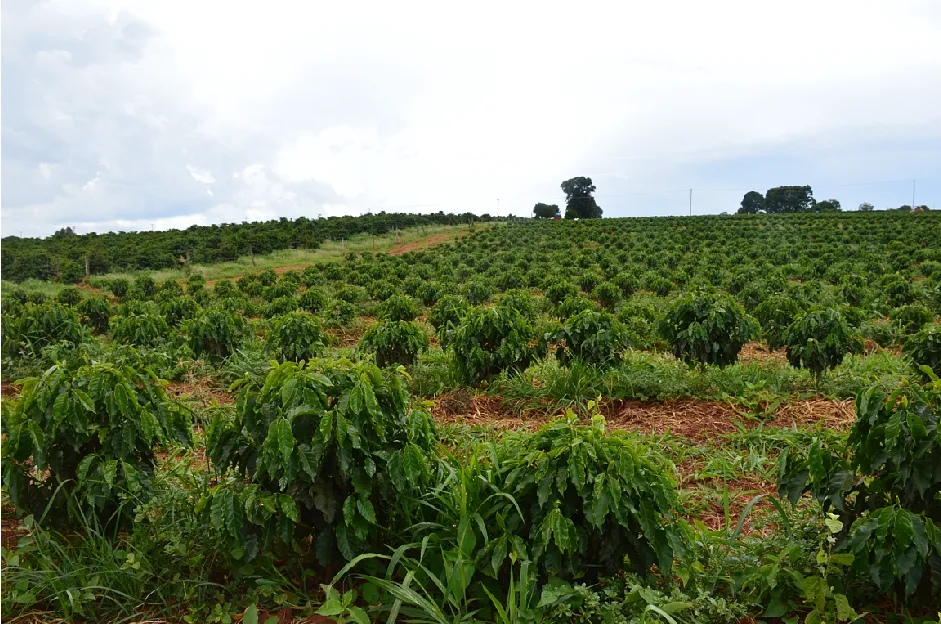
In addition, São Paulo is also one of Brazil's important producing regions. São Paulo is located in southeastern Brazil, bordering Rio de Janeiro and Minas Gerais to the northeast, Mato Grosso do Sul to the west, and Paraná to the south. The terrain is high in the southeast and low in the northwest, with a subtropical climate and an annual average temperature of 20°C.
And the most well-known sub-region in São Paulo is Alta Mogiana ("Alta" means "high" in Brazilian Portuguese), located in the northern part of São Paulo, near the high mountain area of Minas Gerais, belonging to one of the higher altitude regions, with an elevation between 1000-1400 meters. However, due to the steep terrain, the level of mechanization is limited, and most crops here are harvested manually. Thanks to the higher altitude, fertile soil, mild climate, ample sunlight, and abundant rainfall, it is a high-quality environment for growing coffee crops.
Therefore, within the Mogiana region there are many well-known coffee estates, such as Front Street Coffee's semi-washed Fazenda Rainha Yellow Bourbon coffee, which has fruity sweetness, nutty flavors like sugarcane, chocolate, and peanut, a faint clean bitterness, and a smooth, delicate mouthfeel.
There is also Fazenda Recreio, which was established in 1890 and has been managed by Teixeira de Macedo Júnior and his family for 5 generations. Currently, it is mainly managed by his son Diogo Dias Teixeira de Macedo, who studied agricultural industry and has been working on the estate since 2000, learning about coffee cultivation and processing.
In addition, the farm owner places great emphasis on environmental protection, with designated environmental protection areas featuring native vegetation and thriving flora and fauna. Due to geographical reasons, the coffee crops here are harvested manually, and for this reason, the estate has complete infrastructure, and in order to ensure the quality and origin of the coffee produced, the coffee is carefully marked from harvest to transportation and warehouse storage.
Therefore, the estate began participating in the Brazil Cup of Excellence in 2004 and won runner-up in 2008 . Previously the estate grew varieties such as Bourbon, Catuai, Typica, and Mundo Novo, after which the farm participated in the specialty coffee program of the Campinas Agronomic Institute ( IAC ) to plant the Geisha variety, and with the Geisha variety achieved 4 th place in the 2023 Brazil Cup of Excellence.
The above content is compiled by CoffeeHunters, a coffee news website.


