








What Sugar Is Used for Coffee and Why Sweetened Drinks Matter
Researchers at Tsinghua University surveyed 1,028 people across 31 Chinese provinces and found that men who drank more than one 500 ml sugar-sweetened beverage daily had a 253% higher rate of hair loss. The category includes any drink with added brown sugar, corn sugar, fructose or glucose, so sweetened coffee and milk tea count.
The findings, published in the journal Nutrients, connect habitual sugar intake to a risk factor beyond genetics and disease. What sugar is used for coffee matters here: syrups, flavored creamers and bottled sweetened coffee all add sugar, so cutting back on those drinks is the practical step the study points to.
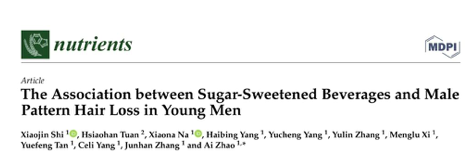
On the list of troubles facing today's young people, hair loss probably ranks near the top. Losing handfuls of hair at a young age and watching a receding hairline, many people have tried all kinds of anti-hair-loss methods, but the results vary from person to person. Besides genetics and disease, eating habits may also be quietly increasing the risk of hair loss. Recently, researchers at Tsinghua University published a study in the nutrition journal Nutrients, offering new ideas for young people troubled by hair loss—quitting sugar to prevent baldness. The study surveyed 1,028 participants across 31 provinces nationwide and found a significant association between sugar-sweetened beverage intake and the risk of hair loss in men. Men who drank more than one 500 ml sugar-sweetened beverage per day had a 253% higher incidence of hair loss. How exactly was this study designed? Which sugar-sweetened beverages carry the highest risk? Let's take a closer look.
▲
Click to follow | Daily specialty coffee culture magazine Coffee Workshop
If today's young people were asked to make a list of troubles, the word "hair loss" would most likely rank near the top. They are still young, yet handfuls of hair come out with every tug—not only does it look alarmingly bald, it also feels deeply distressing.
To hold onto their gradually receding hairlines, many people have tried every folk remedy, but the results often vary from person to person.
Genetic factors and certain diseases are certainly triggers of hair loss, but daily eating habits may also quietly be pushing up the risk of hair loss, which also explains why some people's anti-hair-loss efforts yield little effect.
Recently, a research team at Tsinghua University published a study in the nutrition journal Nutrients, pointing young people troubled by hair loss toward a new path: quit sugar to prevent baldness!
In this study, researchers surveyed 1,028 participants from 31 provinces nationwide, collecting data on their eating habits and hair condition. During the analysis, the researchers focused on the association between hair structure and sugar-sweetened beverage (SSB) intake.
So-called SSBs (Sugar-Sweetened Beverages) refer to beverages with any form of added sugar, including brown sugar, corn sugar, fructose, glucose and others. Common sugar-sweetened sodas, juices, energy drinks, milk tea and sweetened coffee on the market all fall under the category of SSBs.
In China, young people aged 13 to 29 are the main consumers of SSBs, accounting for 22.38%. After all, "happy water for homebodies" is deeply ingrained, and drinking sugar-sweetened beverages is also a way for contemporary people to regulate their emotions.

However, multiple research surveys in recent years have shown that excessive consumption of sugar-sweetened beverages brings many health risks, such as obesity and diabetes. In this study, researchers divided participants into four groups based on drinking frequency: never drink, 1 to 4 times per week (1-1500 ml/week), 4 to 7 times per week (1500-3500 ml/week), and more than 7 times per week (over 3500 ml/week).
Data analysis showed that people who drank more than 3500 ml of sugar-sweetened beverages per week had a 3.36 times higher risk of hair loss compared with those who did not drink sugar-sweetened beverages. Even after adjusting for other risk factors, drinking sugar-sweetened beverages more than 7 times per week still increased the risk of hair loss in men by 1.78 times.
The study conclusion showed that the more sugar-sweetened beverages consumed, the higher the risk of hair loss in men. If more than one bottle (500 ml) is consumed per day, the incidence of hair loss in men increases significantly by 253%!
Interestingly, the researchers further explored which sugar-sweetened beverage is the "chief culprit" causing hair loss. They found that no matter which sugar-sweetened beverage was consumed, there was a significant association with male pattern hair loss, with fruit juice drinks, soft drinks, sports drinks and sweetened tea drinks being particularly prominent.
However, even pure fruit juice or nut milk with added artificial sweeteners also increases the risk of baldness.
(The impact of different types of SSBs on hair loss risk)
It can thus be seen that if you want to win the battle against hair loss and hold onto your precarious hairline, you had better quickly put down the "happy water for homebodies" in your hand and bid a thorough farewell to all kinds of sugar-sweetened "hair-loss agents."
Disclaimer: Some images in this article are from the internet. For some content on the website, such as images, we will respect the original author's copyright and indicate the source. However, due to the large quantity, some images and texts may not have been credited in time. Please forgive us. If the original author has any dispute, they may contact the website for handling. Once verified, we will correct it immediately. Compiled and edited by "Coffee Workshop." Please indicate the source when reprinting. If there is infringement, please inform us for deletion. Thank you~!
The above content is compiled by CoffeeHunters, a coffee news website.


