







How does Costa Rica grade its arabica coffee beans?
Costa Rica was the first country in Central America to grow coffee commercially, and it still leans on volcanic soil, high altitude, and a mild climate to produce high-quality arabica beans. The country is divided into eight major coffee regions, and its green bean grading system sorts beans by the altitude at which they were grown, with Tarrazu standing out among the growing areas.
Coffee reached Costa Rica from Cuba in the 18th century under Spanish rule. After independence in the 1820s, the government handed out free coffee seeds and granted tax exemptions, and the industry grew fast, once making the country Britain's largest coffee supplier. Central American coffee later weathered World War II export losses and 1980s tree diseases.
Costa Rica is one of the earliest countries in Central America to cultivate coffee for commercial purposes. Thanks to its volcanic soil, high altitude, and mild climate, it produces high-quality Arabica coffee beans. This article traces the history of coffee in the country, the distribution of its eight major coffee regions, and the altitude-based grading system, with a focus on the most famous Tarrazu region. It also recommends Front Street Coffee's entry-level selection of Tarrazu everyday beans, offering a comprehensive look at this Central American coffee-producing country that wins on quality.
Central America, also known as the Central American Isthmus, stretches between the continents of North and South America. Its terrain is dominated by mountains and hills, interspersed with basins and valleys. The region also features a volcanic belt with fertile volcanic soil that is conducive to crop growth. Combined with its tropical location and the pleasant climate of its mountain basins, it is highly suitable for cultivating coffee and other cash crops.
For this reason, six of the seven countries in Central America produce coffee and are known for it. Costa Rica is one of them. It was the first country in Central America to grow coffee and bananas for commercial value, and these two crops are also its main exports.
Coffee was introduced to Costa Rica from Cuba in the 18th century, when the country was still under Spanish rule and the coffee industry was controlled by Spain. It was not until the 1820s, when Costa Rica declared independence, that the government distributed coffee seeds to the public free of charge and implemented tax-exempt policies to encourage coffee as a cash crop. From then on, the coffee industry rose rapidly in the country, with its products exported to Europe and the United States.
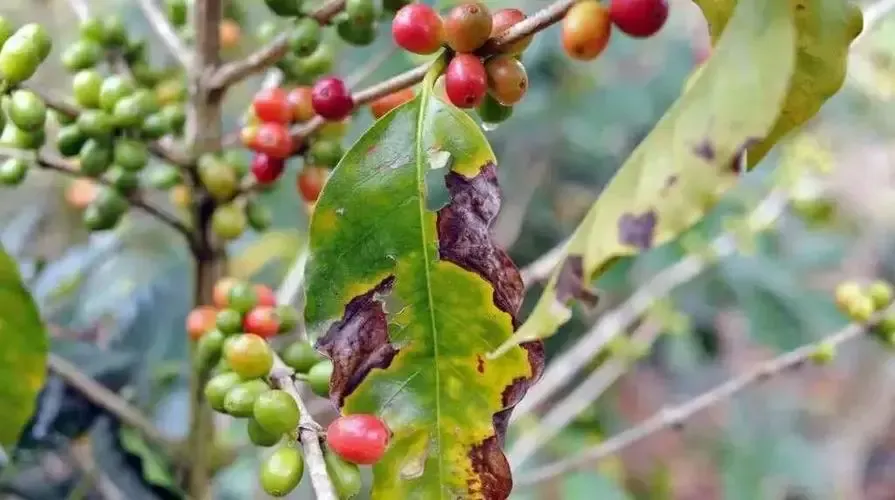
Entering the 20th century, Costa Rica once became Britain's largest coffee supplier. However, after the outbreak of World War II, Britain stopped importing Costa Rican coffee beans, dealing the country a heavy blow. In the 1980s, coffee tree diseases swept across Central America, killing more than a million coffee trees, and Costa Rica's coffee industry suffered another severe setback.
Afterward, the industry gradually recovered, and the Costa Rican government realized that only by producing high-quality Arabica coffee beans could it remain competitive in the market, so it passed legislation banning the cultivation of the Robusta variety.
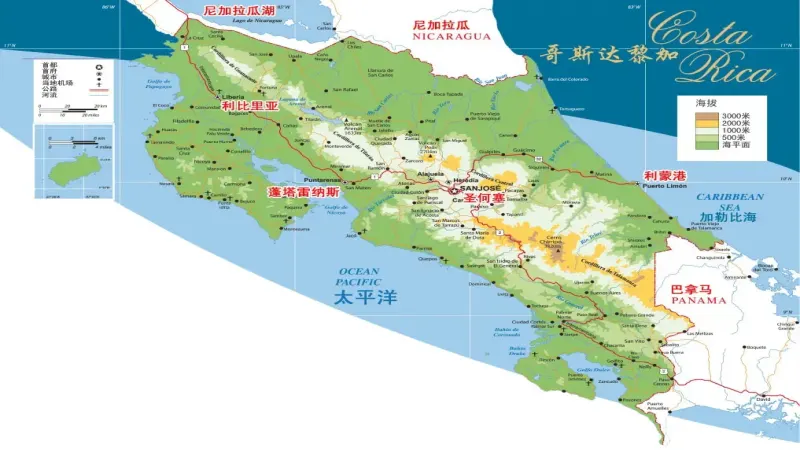
Costa Rica's suitability for coffee cultivation benefits from its rich natural resources. The Cordillera mountain system runs through the center of the country, and the terrain is mostly volcanic and rugged mountains that separate the east and west sides. Coffee is planted on the slopes on both sides, where high-altitude mountain areas, volcanic soil, and abundant sunlight provide ideal conditions for coffee growth.
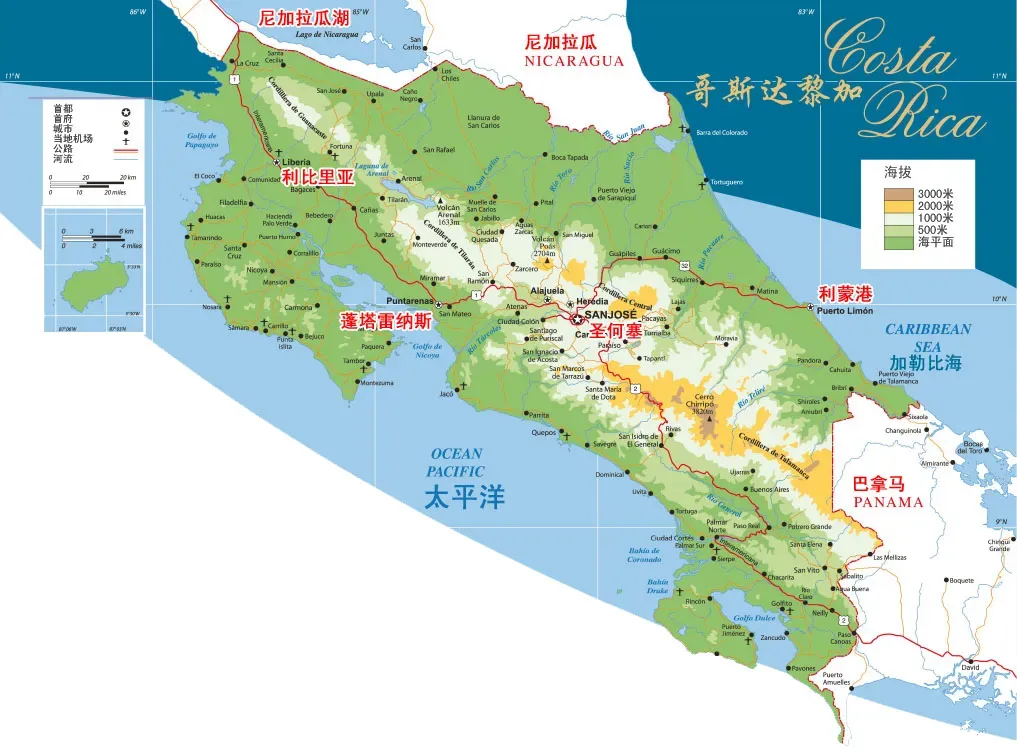
At present, Costa Rica is divided into eight major coffee regions: West Valley, Central Valley, Tarrazu, Tres Rios, Orosi, Brunca, Turrialba, and Guanacaste. These regions are all located on the central mountain range.
Among them, Tarrazu is the country's largest and most well-known region, located in San José Province in the center of the country. The region was originally called Los Santos and has a long history of coffee cultivation, covering areas such as the town of Tarrazu and the town of Dota. However, Tarrazu was the first to gain fame in the area. In 2019, the Costa Rican government registered the "Café de Tarrazú" coffee designation of origin with the European Union and the World Intellectual Property Organization (WIPO), so people habitually use "Tarrazu" to refer collectively to this broad category of producing regions.
The region is adjacent to the Pacific Ocean and, influenced by the warm Pacific currents, receives abundant annual rainfall and has a mild climate. Located in a volcanic area, coffee here is grown on slopes at altitudes of 1,200 to 1,900 meters. Fertile volcanic soil combined with a humid climate creates a uniquely favorable environment for coffee growth.
Costa Rica's grading system is relatively simple and, like most Central American origins, is mainly based on altitude. This is because the higher the altitude, the lower the temperature, the longer the maturation cycle of coffee cherries, the fuller the accumulation of sugars, the richer the flavor, and the better the density and hardness. It is generally divided into three grades: SHB (STRICTLY HARD BEAN, above 1,200 meters), GHB (GOOD HARD BEAN, 1,000 to 1,200 meters), and MHB (MEDIUM HARD BEAN, below 1,000 meters).
FrontStreet Coffee's everyday beans series also includes this well-known region. This entry-level selected Tarrazu coffee bean uses the Catuai and Caturra varieties, adopts the washed processing method, and is graded SHB. After brewing, it has a slight fruity acidity, presenting flavors of sweet orange, nuts, and honey, with a smooth sweetness in the finish. FrontStreet Coffee believes that Costa Rica was the first country in Central America to grow coffee for commercial value, and that the country focuses more on improving coffee quality than on yield. It is therefore known for producing high-quality coffee, with a gentle fruity acidity paired with nutty and other flavors, overall balanced and harmonious, making it a representative of Central American coffee.
To learn more about coffee origin news and information, please scan the QR code to follow: 咖评
Long-press the QR code to follow:
The above content is compiled by CoffeeHunters, a coffee news website.


