







Where does Brazil grow coffee, and how is it graded?
Brazil is the world's largest coffee exporter, holding about one-third of the international market, so its coffee production shapes global supply. The country's northern plains and the Amazon basin sit too low for coffee, and cultivation concentrates in the southern and southeastern states, where a tropical climate, warm temperatures, and steady rainfall support the crop.
Much Brazilian coffee is used in blends rather than drunk alone, and the grading system captures that role. The common NY2 SC17/18 SS FC label combines the New York screen size standard with screen 17/18, a strictly soft cup, and fine cup designation. Coffee came to Brazil in the 18th century via a seed carried back to Pará, then spread south. Arabica beans grown here include Cerrado Red Bourbon.
Brazil boasts the largest territory in South America and exceptional natural conditions, making it the world's largest coffee exporter, accounting for about one-third of the international market share. Despite its impressive production, Brazilian coffee is not known for its refined flavor, so it is often used in blends. This article will guide you through Brazil's coffee-growing environment, the distribution of its main producing regions, and a detailed explanation of its unique and complex grading system, including the meaning of the common "NY2 SC17/18 SS FC" label. Finally, we will introduce a beginner's selection from Front Street Coffee—a Cerrado Red Bourbon coffee bean—to experience the unique charm of Brazilian coffee.
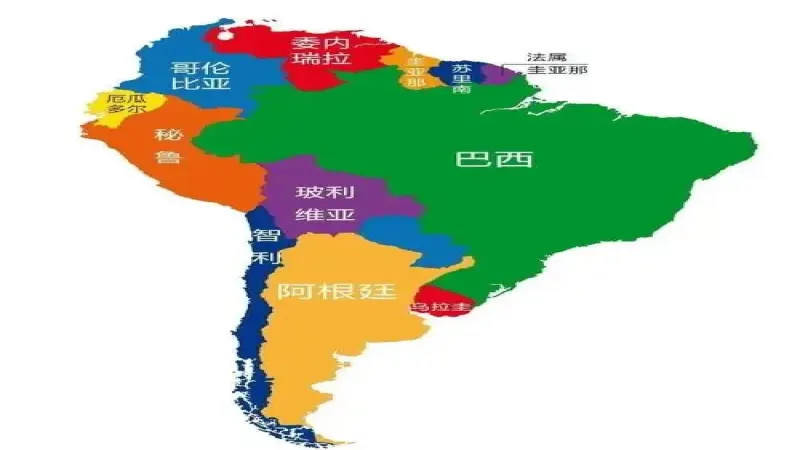
South America is extremely rich in natural resources, with the Andes Mountains running through the western part of the continent, where the highest peak of the entire continent is also located. This continent has numerous volcanoes, with plateaus, hills, and mountains interspersed, at an average elevation of about 600 meters. Most areas have a tropical climate, warm and humid with abundant rainfall, making agriculture very prosperous, especially the coffee industry—Brazil, the world's largest coffee exporter, and Colombia, the third-largest exporter, are both located here.
Brazilian coffee plays a pivotal role in the international market, with exports accounting for about one-third of the global total. Such high production levels are inseparable from the local superior geographical and climatic conditions. However, Brazilian coffee's flavor performance is not particularly outstanding, so it is often used as a blending ingredient.
Back in the 18th century, the coffee trade was basically controlled by Europeans. Later, a Brazilian sergeant, during his travels, gained the trust of the wife of the governor of the capital of French Guiana and obtained a coffee seed. He brought the seed back to Pará in northern Brazil, and from then on, coffee quickly took root in Brazil and gradually spread to the southern regions.
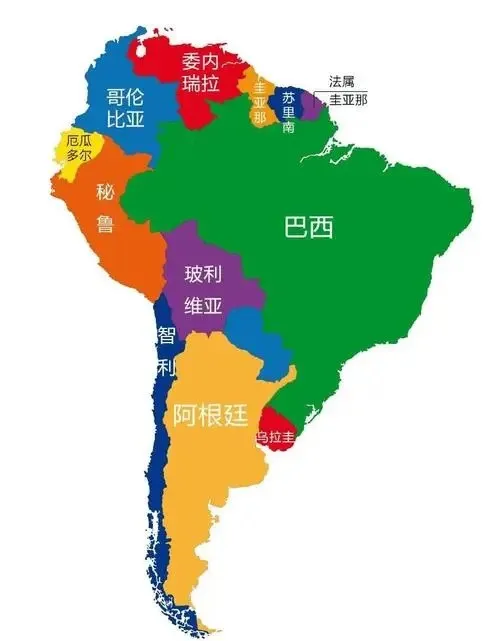
Brazil is the largest country in South America, with a vast territory and diverse resources, providing ideal conditions for coffee cultivation. The northern region is mostly plains below 200 meters in elevation and the Amazon basin, which is not suitable for coffee growing. Therefore, coffee cultivation is mainly concentrated in the central-southern Brazilian Highlands, where the soil is fertile and water sources are abundant. The south also has a subtropical monsoon climate, mild and humid with abundant sunshine and rainfall, which is more conducive to the development of coffee trees.
Brazil has 26 states in total, of which 17 produce coffee. The four states of Paraná, São Paulo, Minas Gerais, and Espírito Santo together account for 80% of the total production, and Brazil cultivates both Arabica and Robusta varieties.
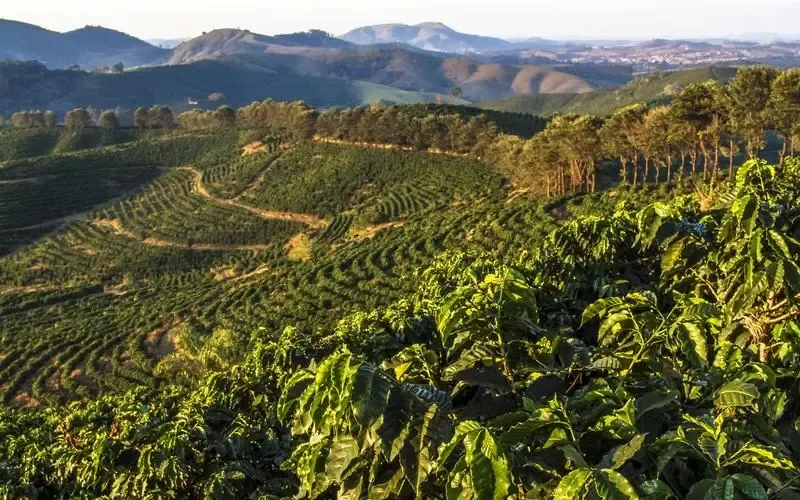
Minas Gerais is Brazil's most prestigious coffee-producing region, with abundant agricultural resources, currently contributing 30% of the country's coffee production. The state is crisscrossed by rivers with extremely abundant water resources. In addition, the continuous mountain ranges effectively block the Atlantic sea breeze, providing natural shelter for coffee trees.
Within Minas Gerais, there are several well-known sub-regions, such as Cerrado and Sul de Minas. Cerrado is located in the central-western part of the state, and only areas above 1,000 meters in elevation are classified as the Cerrado specialty coffee producing region. The area has a higher elevation, fertile soil, and abundant groundwater, making it very suitable for coffee cultivation. At the same time, Cerrado's nighttime temperatures are cooler, which can slow down the growth rate of coffee beans and promote sugar accumulation, so the coffee beans from this region have a more excellent flavor.
Brazil's grading system comprehensively considers defect ratio, bean size, flavor, and cup quality scores. It is a system unique to the country and more complex than those of other producing nations. A common label is "NY2 SC17/18 SS FC." Among these, "NY" originates from the Green Coffee Association of New York. Brazil's highest grade is NY2, and the number after it represents the defect ratio classification, with grades such as 2, 2/3, 3, 3/4, 4, etc. The larger the number, the higher the defect ratio.
"SC" indicates the screen size of the coffee beans, usually 17/18 screen or 16/17 screen. "SS" represents the cupping score, and its scoring method draws on the SCA cupping standards. SS is the highest level, with a score above 85. The final "FC" is a taste description, commonly including FC (Fine Cup) and GC (Good Cup).
This entry-level selection from FrontStreet Coffee—the Cerrado Red Bourbon coffee bean—uses the Bourbon variety, which is mainly grown in Brazil, and is processed using the semi-washed method. After brewing, it presents flavors of nuts, peanuts, and cocoa chocolate, with low acidity and moderate body.
To learn more about coffee origin information, please scan the QR code to follow: Coffee Review
Long press the QR code to follow:
The above content is compiled by CoffeeHunters, a coffee news website.


