







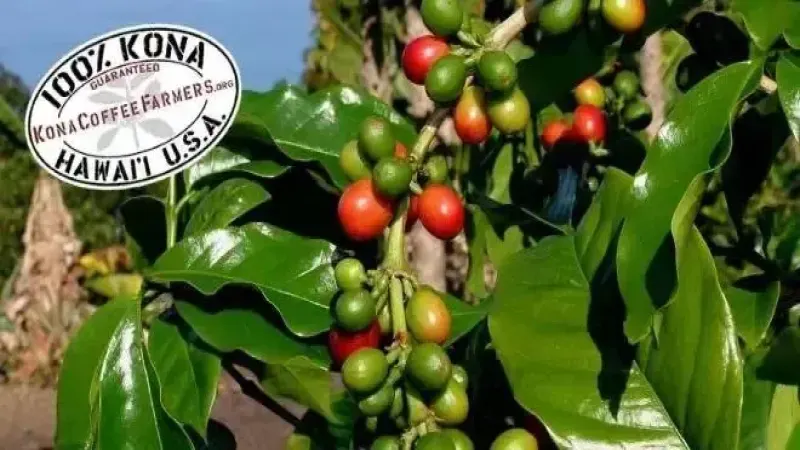
Why does Kona coffee command such high prices?
Hawaiian Kona coffee is expensive because of a combination of limited growing area, difficult island geography and a long, uneven production history. Grown from the Typica variety in the Kona district on Hawaii Island, it earned the nickname Queen of Coffee alongside Jamaican Blue Mountain, and supply stays small relative to demand from buyers who prize its cup profile.
Hawaii is the only US island state, made up of eight major islands and 124 small ones in the central Pacific, about 3,700 kilometers from the mainland. Coffee planting there began in the early 19th century and survived pest outbreaks and economic downturns before the Kona region became known worldwide, while most US states lack the tropical conditions coffee needs.
Hawaiian Kona coffee has long enjoyed the reputation of "Queen of Coffee," rivaling Jamaican Blue Mountain. Yet its price has always remained high, a phenomenon driven both by exceptional terroir and a winding industrial history. This article begins with the context of coffee cultivation in North America, tracing the full story of Hawaiian coffee from its introduction in the early 19th century, through pest infestations and economic depression, to its eventual fame through the Kona growing region. It also analyzes the varietal characteristics of Kona coffee, its growing region distribution, and the reasons behind its high price, helping coffee enthusiasts fully understand the value of this legendary bean.
As the third-largest continent in the world, North America is dominated by plateaus and mountains, with numerous active volcanoes and rivers and waterfalls scattered throughout. Spanning tropical, temperate, and frigid zones, it encompasses a rich variety of climates. Favorable geographical and climatic conditions have enabled many countries to develop coffee cultivation, such as El Salvador, Honduras, and Mexico.
The United States is located in North America, and its overall climate is not conducive to coffee growth. However, certain states have still managed to cultivate coffee successfully under specific conditions, including Hawaii and California.
Among the coffees produced in Hawaii, Kona coffee is the most well-known. Jamaican Blue Mountain was once hailed as the "Emperor of Coffee," while Hawaiian Kona, also grown from the Typica variety, earned the title of "Queen of Coffee."
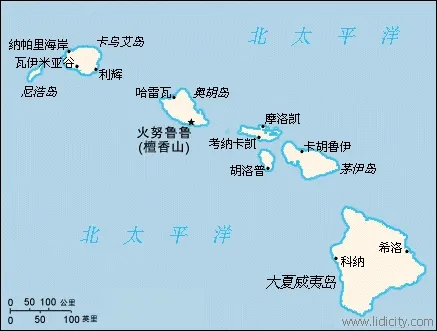
This reputation is inseparable from Hawaii's unique geographical and climatic conditions. Hawaii is the only island state in the United States, composed of 8 major islands and 124 small islands in the central Pacific, located 3,700 kilometers from the U.S. mainland.
The Hawaiian Islands originated from volcanic eruptions. The island of Hawaii is the largest, home to 2 active volcanoes, with forest coverage approaching 50%. The local climate is tropical maritime, mild and comfortable year-round. Although the elevation is not particularly high, the coffee produced there far surpasses other growing regions at similar elevations in quality.
The development of Hawaii's coffee industry has not been smooth sailing. According to historical records, local coffee cultivation can be traced back to the early 19th century, when Hawaii was still a kingdom. The first coffee trees were introduced to Ouhu, but cultivation was unsuccessful. By the 1820s, the chief of Oahu introduced the Bourbon variety from Brazil, and coffee finally took root in Hawaii.
Thereafter, coffee cultivation gradually spread to various Hawaiian islands and formed large-scale plantings on Kauai. However, this good fortune did not last. A pest infestation nearly wiped out all Hawaiian coffee trees, with only plants in the Kona region surviving. It was not until the 1870s that the Guatemalan Typica variety was introduced and quickly adapted to the local environment. More and more people began growing coffee, and Hawaii's coffee industry gradually recovered.
At the end of the 19th century, the Kingdom of Hawaii was annexed by the United States and became the 50th state. In the 1930s, the United States fell into the Great Depression, and Hawaii was not spared. Many coffee estates could not survive and were forced to sell their land. Since the economic environment at the time could not support large-scale land management, these lands were divided into small plots for sale, resulting in the formation of approximately 600 farms in the Kona region.
After World War II, the Japanese coffee market grew increasingly prosperous. Even with a monopoly on Blue Mountain coffee supply, demand could not be met. Hawaiian Kona and Jamaican Blue Mountain share similar geographical and climatic conditions and grow the same variety, naturally making Kona a target for the Japanese market. However, protected by U.S. labor and wage regulations, combined with limited farmland suitable for coffee cultivation, Kona coffee supply has always been scarce.
Currently, Hawaii's specialty coffee is mainly distributed in Ka'u, Kona, and Maui. Among these, Kona's output exceeds that of other islands, and only coffee produced in this region can bear the name "Kona."
The western part of the Big Island of Hawaii is the Kona growing region. This area has numerous volcanoes, and coffee is mainly grown on the slopes of Mauna Loa at elevations between 600 and 1,100 meters. On the island of Hawaii, Kona already qualifies as a high-elevation area. Some have therefore attempted to transplant Kona Typica to other islands, but those islands have higher temperatures and lower elevations, where Typica grows poorly and cannot produce the soft acidity and aroma unique to the Kona region.
Today, affected by a combination of factors including low production and high input costs, Hawaiian Kona coffee prices naturally remain high, and retail prices on the market are relatively expensive.
The above content is compiled by CoffeeHunters, a coffee news website.


