







How did Tanzania become a notable coffee producing country?
Tanzania is one of East Africa's important coffee origins, known by the nickname Coffee Gentleman. Coffee arrived in the 19th century during German colonial rule, first planted around Bukoba, and later spread under British administration. Today nine growing areas, including Kilimanjaro, Arusha and Kigoma, each produce coffee with distinct regional character shaped by altitude, soil and climate.
Kigoma is the newest of these areas to draw attention, drawing on the natural resources around Lake Tanganyika. Tanzania's coffee production has followed a twisting path: slow adoption by local farmers who preferred food crops, reforms after independence, and a shift of growing areas after leaf rust arrived. Africa as a whole supplies a large share of the world's coffee, with Ethiopia, Kenya and Tanzania among the most recognized origins.
As the world's second-largest continent, Africa's terrain is dominated by plateaus, and its climate spans the equator, nurturing numerous high-quality coffee-producing regions. Tanzania, with its unique geographical environment and historical heritage, has become an important coffee-producing country in East Africa, earning the reputation of "Coffee Gentleman." From the introduction of coffee during the German colonial period, to industrial reforms after independence, and then to the shift of production areas after the invasion of leaf rust, Tanzanian coffee has undergone a tortuous development process. Today, nine production areas including Kilimanjaro, Arusha, and Kigoma each have their own characteristics. Among them, Kigoma, as an emerging production area, is gradually demonstrating its coffee potential by relying on the natural resources of Lake Tanganyika. This article will take you into a deeper understanding of the distribution and characteristics of Tanzania's coffee-producing regions, and focus on the terroir and prospects of the Kigoma production area.
The African continent straddles both sides of the equator and is located in the southwestern part of the Eastern Hemisphere. It is the world's second-largest continent by area. This continent is mainly characterized by plateau landforms, with plateau areas between 500 and 1,000 meters above sea level accounting for more than 60% of the continent's total area, and mountains, volcanoes, lakes, and rivers are found throughout. Because the equator runs through its territory, Africa is mainly tropical in climate, with year-round high temperatures, scarce rainfall, and dryness, and the continent's average annual temperature remains above 20 degrees Celsius.
Africa, rich in natural resources, has developed agriculture, and many countries are famous worldwide for coffee production, such as Ethiopia, Kenya, and Tanzania. Among them, Tanzania is even given the title of "Coffee Gentleman."
In the nineteenth century, Tanzania was under German colonial rule. Coffee was introduced by the Germans and was initially planted in the Bukoba area. However, the local Haya people were unwilling to replace the food crops they depended on for survival with coffee trees, which led to slow progress in the coffee industry.
After the end of World War I, jurisdiction over the region was transferred to Britain. Although the British planted more than ten million coffee seedlings in Bukoba, conflicts with the Haya people also broke out. In the end, a large number of seedlings were uprooted, and the coffee industry still failed to develop well, so the focus of planting gradually shifted to the Chagga area.
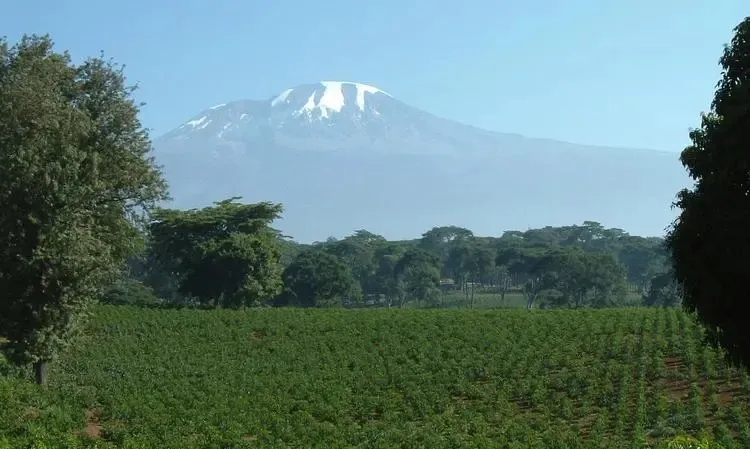
After Tanzania gained independence in 1961, it made the coffee industry a development priority, and from the 1990s it implemented a series of reform measures. However, in the late 1990s, coffee leaf rust spread widely, causing a sharp decline in the number of coffee trees in the northern production areas. The planting areas had to move south again and shift to the area around Mount Kilimanjaro. With favorable terrain and climatic conditions, coffee has now become a key agricultural cash crop in Tanzania.
Tanzania is located in eastern Africa, south of the equator, with a terrain pattern of high in the northwest and low in the southeast. The eastern coast is lowland, the western plateau accounts for half of the country's total land area, and the East African Rift Valley splits into eastern and western branches from Lake Malawi, running north to south. In the northeast stands Africa's highest peak—Mount Kilimanjaro.
Influenced by the equator, the eastern coast and inland lowlands have a tropical savanna climate, while the western inland plateau has a tropical mountain climate, with average annual temperatures between 21 and 26 degrees Celsius. Although rainfall across the country is on the low side, with annual precipitation in 80% of areas less than 1,000 millimeters, Tanzania is densely covered with rivers and lakes, and its hydropower resources are very abundant.
At present, coffee cultivation in Tanzania is divided into nine production areas, among which the better known include Kilimanjaro, Arusha, Ruvuma, Mbeya, Tarime, and Kigoma.
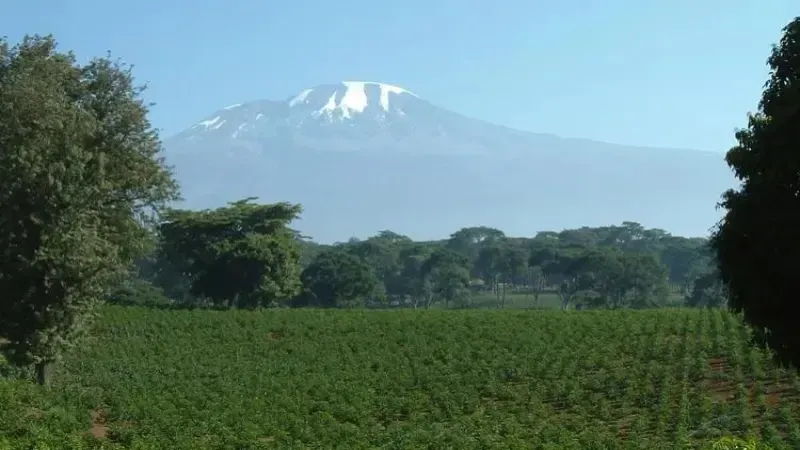
The Kilimanjaro production area is the most well known. Mount Kilimanjaro is the highest peak on the African continent and consists of three extinct volcanoes: Kibo, Mawenzi, and Shira, with the highest elevation reaching 5,895 meters. Coffee trees are grown on slopes between 1,050 and 2,500 meters above sea level. The high altitude, volcanic soil, and pure snowmelt water sources create the most suitable environment for coffee growth. Front Street Coffee has a washed Typica from the Kilimanjaro production area. It tastes with a gentle acidity, with flavors of citrus, berries, honey, and nuts, a soft mouthfeel leaning toward tea, and overall balance.
In addition, quite a few coffee production areas have good quality, such as Kigoma. This region is named after the regional capital city of Kigoma and is located in the northwest of the country, near Burundi and Lake Tanganyika.
Lake Tanganyika provides abundant natural resources. The shoreline has beautiful scenery, a pleasant climate, and lush vegetation, with stretches of banana groves and oil palms. These plants can provide shade and wind protection for coffee trees. In addition, aquatic resources are abundant. This allows the production of many stunning coffees, but the local coffee industry has only just begun. In recent years, the government has begun to invest heavily in the region to fund the development of agriculture, fisheries, and other industries in the area.

The above content is compiled by CoffeeHunters, a coffee news website.


