







What Sets Typica, Bourbon and Geisha Apart in Arabica Coffee?
Typica and Bourbon are the two genetic pillars of Arabica coffee, and most common varieties descend from them. Typica is a tall coffee tree, up to roughly 5 meters, with long internodes, bronze young leaves, red fruit and large pointed beans, but it yields little, needs altitude and is vulnerable to leaf rust. Bourbon and Geisha developed from this same Arabica base.
Geisha traveled from Ethiopian forests to global attention through Hacienda La Esmeralda in Panama, which put its cup profile on the map. South and Central American countries planted Typica widely around the 1940s before its low yield and disease susceptibility pushed growers toward other selections. Tracing these three varieties shows where the flavors in a cup come from and why coffee tree genetics still shape farming choices.
The world of coffee varieties is vast and diverse, but the true foundation supporting specialty coffee comes mainly from the Arabica species. Among these, Typica and Bourbon are arguably the two most genetically important sources, from which many common varieties today have evolved; Geisha, meanwhile, thanks to its stunning performance at Hacienda La Esmeralda in Panama, has traveled from the forests of Ethiopia to the global stage. This article will focus on these three varieties, outlining their botanical characteristics, historical spread, and current cultivation distribution, while also incorporating representative bean offerings from Front Street Coffee to help coffee enthusiasts more systematically understand where the flavors in their cup come from.
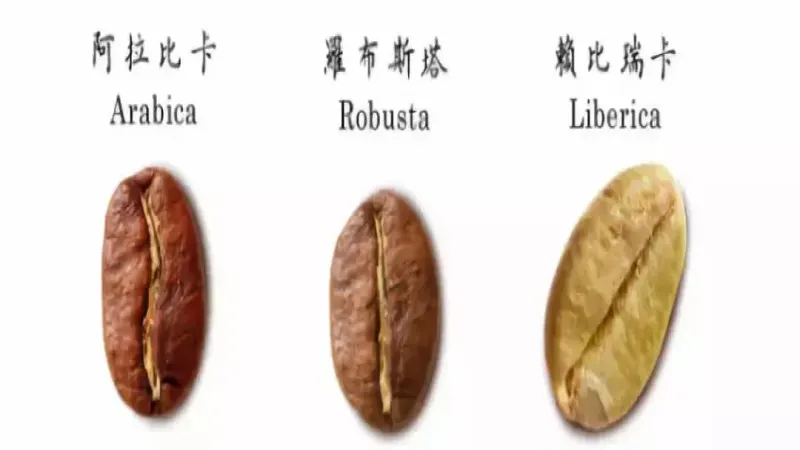
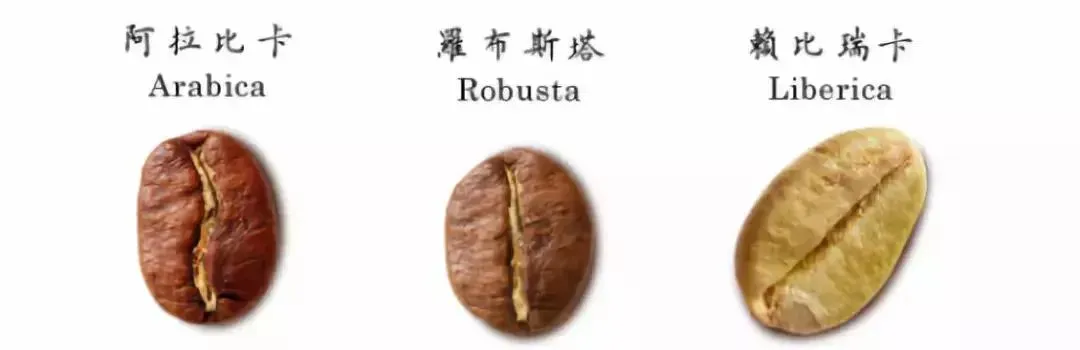
The types of coffee beans are quite diverse, and the most familiar name to everyone is Arabica. Strictly speaking, coffee beans are the seeds inside the fruit of the coffee tree, and they can be mainly divided into three major categories: Arabica, Robusta, and Liberica.
The beans used in today's specialty coffee market overwhelmingly belong to the Arabica system. As the coffee industry continues to evolve, this species has undergone repeated introduction, natural mutation, and artificial hybridization, giving rise to numerous distinctive sub-varieties. In genetic terms, Typica and Bourbon are regarded as the two most core varieties of Arabica, and many subsequent varieties can be traced back to them.
Typica
The name Typica comes from the Latin word "Typica," meaning "typical" or "standard." This tree has a highly recognizable appearance: the plant as a whole tends to be tall, reaching up to about 5 meters in height, with longer internodes where the fruit is borne. Its young leaves are bronze-colored, the leaf surface is relatively smooth, and the wavy undulation along the leaf margins is not pronounced. The fruit is mainly red, and the beans are on the larger side, with a pointed oval or slender pointed shape. However, Typica's yield is not high, it has certain requirements for growing altitude, and the plant is relatively delicate, susceptible to coffee leaf rust, with weak resistance to both disease and pests.
Around the 1940s, most coffee-producing countries in South and Central America had planted Typica on a large scale. But due to its low yield per unit and susceptibility to disease, it was gradually replaced by emerging varieties. Today, Typica is mainly found in producing regions such as Peru, Jamaica, Papua New Guinea, Yunnan in China, and Kona in Hawaii.
Front Street Coffee currently offers coffee beans of several Typica varieties, such as Jamaica Blue Mountain, which uses the washed processing method and presents a balanced, full-bodied cup with a pleasant aroma and a relatively persistent aftertaste and sweetness.
Bourbon
The history of Bourbon can be traced back to the early 17th century, when French missionaries introduced coffee from Yemen to Réunion Island. Before 1789, Réunion Island was also called Île Bourbon, and this variety was thus named "Bourbon." In terms of plant morphology, Bourbon is also a relatively tall type, but compared with Typica, it has more branches, thicker trunks and branches, and denser internodes where the fruit is borne, so Bourbon's yield is higher than Typica's.
Bourbon's leaves are relatively broad, with wavy undulations along the margins, and the young leaves are mostly green. The fruit shape tends toward round, and when ripe it may appear red, orange, or yellow; the beans are smaller in size and generally round. Like Typica, Bourbon is suited to cultivation in high-altitude areas and is similarly vulnerable to leaf rust and pests, but its yield performance is better than Typica's.
In the mid-19th century, Bourbon followed in the footsteps of missionaries into the Americas, first introduced to Brazil and then spreading to other countries in South and Central America. To this day, it is still cultivated in places such as El Salvador, Honduras, and Brazil. Front Street Coffee has a semi-washed Cerrado coffee, which as an entry-level selection representative carries chocolate notes and nutty aromas with a balanced mouthfeel.
Geisha
Geisha was first discovered in 1931 in the Kaffa forest of southern Ethiopia, and its name comes from a nearby mountain called Gesha. Because there was no unified standard at the time for transliterating Ethiopian dialects into English, the variety was written as "Geisha" when first recorded, and most people have continued to use the name "Geisha" ever since.
Botanically, Geisha is a tall variety, with longer spacing between branches, and both the trunk and branches are relatively slender; the leaves appear smooth and elongated, and the coffee cherries and fruit are also on the slender side.
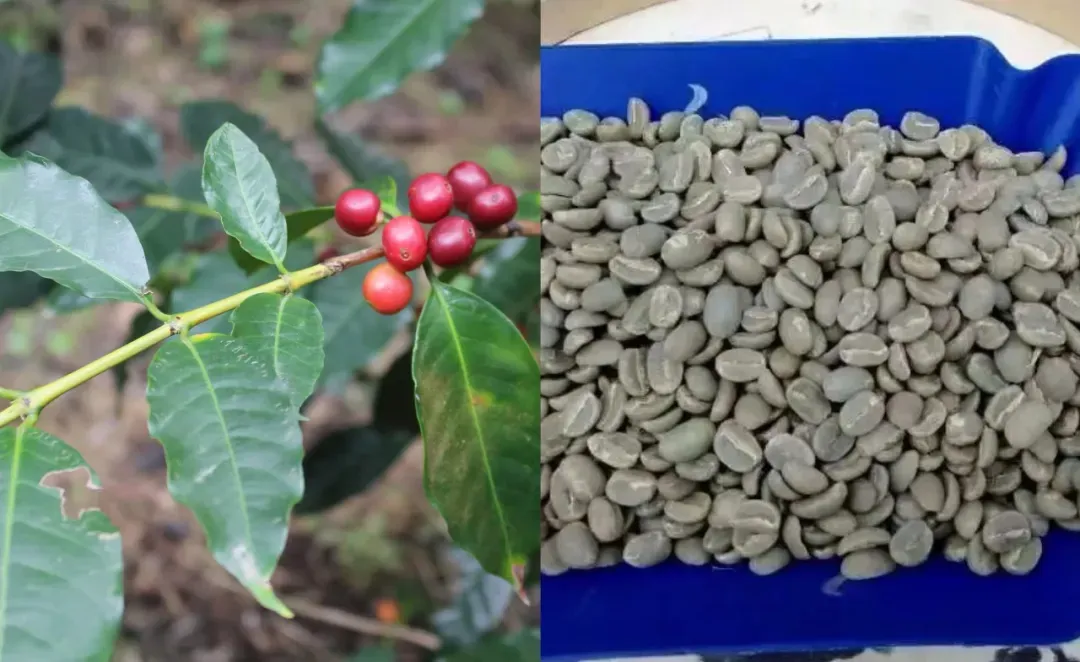
The Geisha collected in Ethiopia at the time was successively sent to the Lyamungu research station in Tanzania and the Tropical Agricultural Research and Higher Education Center (CATIE) in Costa Rica, and was assigned the number "T2722." Because T2722 is tolerant to coffee leaf rust, it was distributed for planting across Panama, until it was discovered by the owner of Hacienda La Esmeralda in Panama and used to compete in the Best of Panama BOP competition and auction. Geisha won the highest score in that event and fetched what was then a record-high price, immediately causing a global sensation, with many countries rushing to introduce and cultivate it. As a result, Geisha can now be found in countries such as Colombia, Costa Rica, and Guatemala.
However, there is now more than one variety bearing the name Geisha, such as Gori Gesha and Gesha 1931. Because Geisha became so famous, Adam Overton and his wife conceived the idea of establishing their own coffee estate, so they returned to Ethiopia to search for Geisha's place of origin, and in the Bench Maji region found a production area that might be the original Geisha, establishing Gesha Village.
Gesha 1931 is precisely the native Geisha variety that estate owner Adam Overton found in the Geisha forest; genetic comparison showed it to be very close to Panama Geisha, so the variety was named Gesha 1931. Later, in 2011, the estate owner discovered a coffee bean variety similar to Geisha in the Gori forest ( Gori ) 12 kilometers from the estate, so he brought it back to the estate to plant and named it Gori Gesha .
The above content is compiled by CoffeeHunters, a coffee news website.


