








Why Does Adding Salt Make Coffee Taste Sweeter?
Salt does not sweeten coffee by adding sugar; it suppresses bitterness and shifts how the other flavors are perceived. In practice, about 0.1 grams of salt added to a latte and frothed together with the milk balances sweetness and savory aroma. The effect comes from salt's interaction with taste perception rather than any change in the coffee itself.
The habit has old roots. In the early 19th century, when coffee became popular across Europe, beans were dark-roasted, low in quality and mostly boiled, producing a bitter, astringent, strong drink. Sugar was a costly luxury, so salt served as the affordable substitute. Bitterness in coffee comes largely from chlorogenic acid lactones and phenylindanes.
Adding salt to coffee may sound unconventional, yet it is a long-standing piece of drinking wisdom. This article will start from the science of taste, explaining how salt weakens bitterness and enhances the perception of other flavors by activating taste buds, and review the history of 19th-century Europeans using salt instead of sugar due to the poor quality of coffee. At the same time, we will also explore why adding salt to milk coffee can bring a cheese-like savory layering. Front Street Coffee found through actual testing that adding 0.1 grams of salt to a latte and frothing it together with the milk creates a clever balance between sweetness and savory aroma, adding a whole new experience to coffee.
(Exaggerated ↓ Do not imitate)
Perhaps many friends will wonder: wouldn't sprinkling salt into milk coffee make it salty and unpleasant? How could this way of drinking it become popular? Salt is a kind of seasoning, and so-called seasonings refer to special ingredients that can influence taste. Although they each have their own representative characteristics, such as sugar being sweet and salt being salty, in many cases, we do not add seasonings to fully bring out their own traits. This is because the relationships among flavors keep one another in check. So in many cases, they play a supporting role, just like harmony in music!

So then the question comes: what effect does adding salt to coffee have? What effect can adding salt to coffee have? In fact, Front Street Coffee shared this earlier. The reason people in earlier times added salt to coffee was mainly to dilute bitterness! In the early 19th century, coffee was popular across European countries. At that time, because the coffee was dark-roasted and poor in quality, and because the extraction method was still mainly boiling, the resulting taste could only be described with three words: bitter, astringent, and strong.
For the vast majority of people, this black liquid was very hard to swallow, so people would dilute the bitterness by adding various seasonings. Although sugar was the best seasoning, granulated sugar at the time was a high-priced luxury that few ordinary people could afford, so people would seek other seasonings to dilute it. And salt was the best substitute at the time. The reason coffee is bitter is mainly due to the presence of chlorogenic acid lactones and phenylindanes in it. When we brew coffee with a relatively high extraction yield, these bitter substances are dissolved out in large amounts, filling the coffee with bitterness.
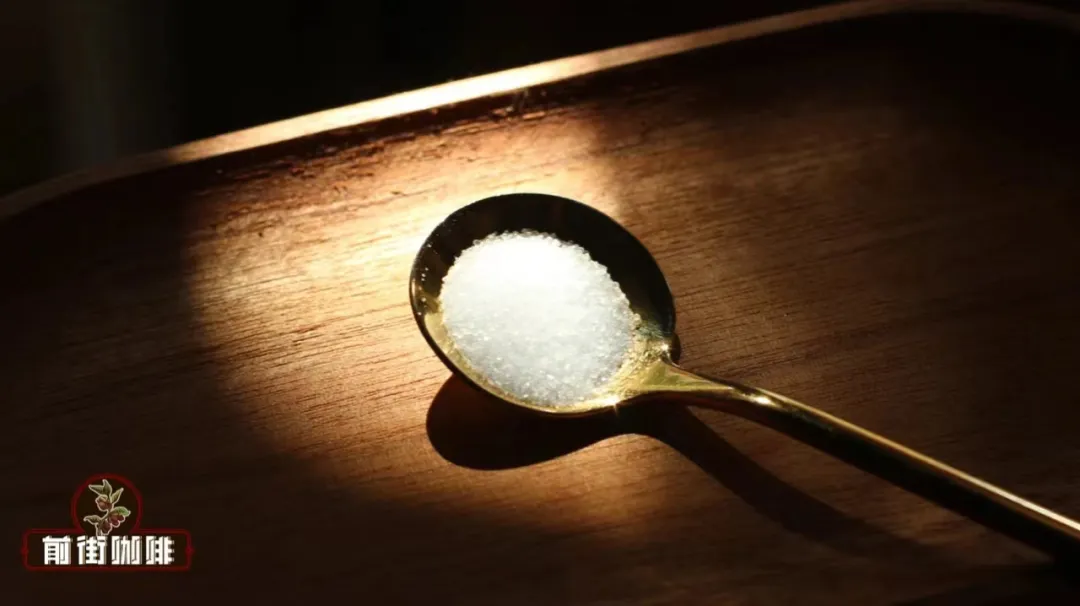
After bitter coffee enters the mouth, our taste buds release calcium ions, then transmit the message of "bitterness" to the brain, activating the bitterness perception receptors. So generally speaking, the time when we perceive bitterness is slightly later than the time when the coffee enters the mouth. The sodium ions in salt activate and bind with salt receptors in taste, which increases our sensory perception of other tastes. Therefore, when people add a little salt to coffee, the presence of salt enhances the taste buds' perception of the other flavors in the coffee. This is equivalent to amplifying the other flavors, reducing the proportion occupied by bitterness, thereby achieving balance, and the coffee tastes less bitter.
To this day, most regions still retain the habit of adding salt, especially some coastal cities! The question comes again: adding salt to over-extracted black coffee is to reduce bitterness, but milk coffee is not bitter either, so why would anyone think of adding salt to it? Why add salt to milk coffee? Very simply, to give the coffee more layering. As Front Street Coffee mentioned earlier, the addition of salt enhances the taste buds' perception of other flavors, so adding salt can amplify some of the flavors in milk coffee, thereby obtaining a completely new taste. Front Street Coffee gave it a try and added 0.1g of salt to the original latte-making process (added to the milk and frothed together) , and sure enough, the originally sweet latte developed a cheese-like savory aroma under the effect of salt, and the sweetness became even more obvious with the assistance of the saltiness. Very good!

The above content is compiled by CoffeeHunters, a coffee news website.


