







How did Colombia's coffee industry grow into a specialty powerhouse?
Colombia is the world's third-largest coffee producer. Coffee arrived in the 18th century, then the wars of the 19th century set the sector back badly. Land reform and the work of the National Federation of Coffee Growers of Colombia turned coffee into a pillar of the national economy, and today Colombia also stands as a specialty coffee source.
Three Cordillera ranges run north to south through western Colombia, averaging over 3,000 meters with many volcanoes, and coffee is planted along the highlands. Climate shifts with elevation, from tropical rainforest on the eastern plains and Pacific coast to subtropical conditions between 1,000 and 2,000 meters. Among 15 producing regions, Huila is known for canyon terrain and volcanic ash soil.
South America, with the volcanic fertile soil of the Andes and its tropical climate, has nurtured major coffee-producing countries such as Brazil and Colombia. Among them, Colombia stands out as the world's third-largest coffee producer, with its three Cordillera mountain ranges running north to south through the west, numerous volcanoes, high-altitude mountains, and diverse climates providing ideal conditions for coffee to ripen year-round. However, Colombia's coffee industry has not had a smooth journey. After coffee was introduced in the 18th century, it suffered severe setbacks due to the wars of the 19th century. Only after the war, with land reform and the efforts of the National Federation of Coffee Growers of Colombia (FNC), did it become a pillar of the national economy. Among the country's 15 coffee-producing regions, Huila Province is renowned for its canyon terrain, volcanic ash soil, and consistent quality. Front Street Coffee's washed Huila is a representative entry-level selection, while well-known estates such as El Diviso and El Roble continue to write new chapters in specialty coffee.
As the world's fourth-largest continent, South America is rich in natural resources and is also one of the continents with more concentrated volcanic activity globally. The Andes run through it, with terrain dominated by plateaus, hills, and mountains, and an average elevation of about 600 meters across the continent. Widespread volcanoes bring abundant volcanic ash, forming fertile soil, and most of the region has a tropical climate, warm and humid, creating exceptional conditions for coffee cultivation. Because of this, South America has produced several major coffee-producing countries, such as Brazil, Colombia, and Peru.
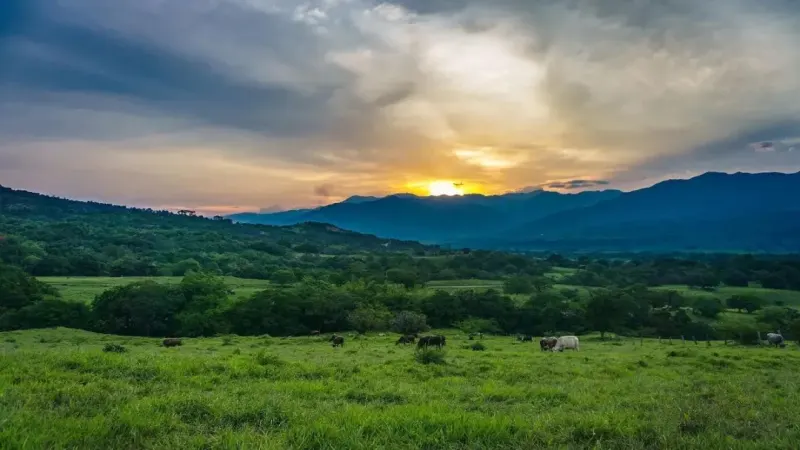
Relying on its unique terrain and climate, Colombia firmly holds its position as the world's third-largest coffee producer. In the west of the country, three Cordillera mountain ranges run north to south and extend to the Andes. These ranges average over 3,000 meters in elevation, with many volcanoes, and coffee is planted along the highlands of the mountains.
Colombia is located in the tropics, and its climate varies with elevation: the eastern plains and the Pacific coast have a tropical rainforest climate, the mountains at 1,000 to 2,000 meters have a subtropical climate, and the northwest has a tropical savanna climate. The diverse climate types, high-altitude mountainous areas, and fertile volcanic soil together create an ideal environment for coffee growth. The variable climate among the mountains also allows Colombia to have a harvest season year-round, with coffee ripening successively at different times.
However, Colombia's coffee development has not been smooth sailing. Coffee was introduced to Colombia in the 18th century, first planted in the Antioquia region and then gradually spreading across the country. But in the 19th century, wars broke out in Colombia, causing a sharp decline in the number of coffee growers, with many coffee estates abandoned and the entire coffee industry suffering a heavy blow.
After the wars subsided, the government implemented land reform, consolidating wasteland and dividing it into small plots sold to farmers at very low prices, enabling them to grow coffee and other crops. Thereafter, the growth of Colombia's coffee industry was largely thanks to the National Federation of Coffee Growers of Colombia (FNC).
The National Federation of Coffee Growers of Colombia (FNC) was founded in Medellín. It is a union organization that brings together 560,000 coffee-producing families across 22 departments and 590 municipalities nationwide. The organization successfully promoted coffee as Colombia's main export crop and profoundly transformed the country's economic landscape.
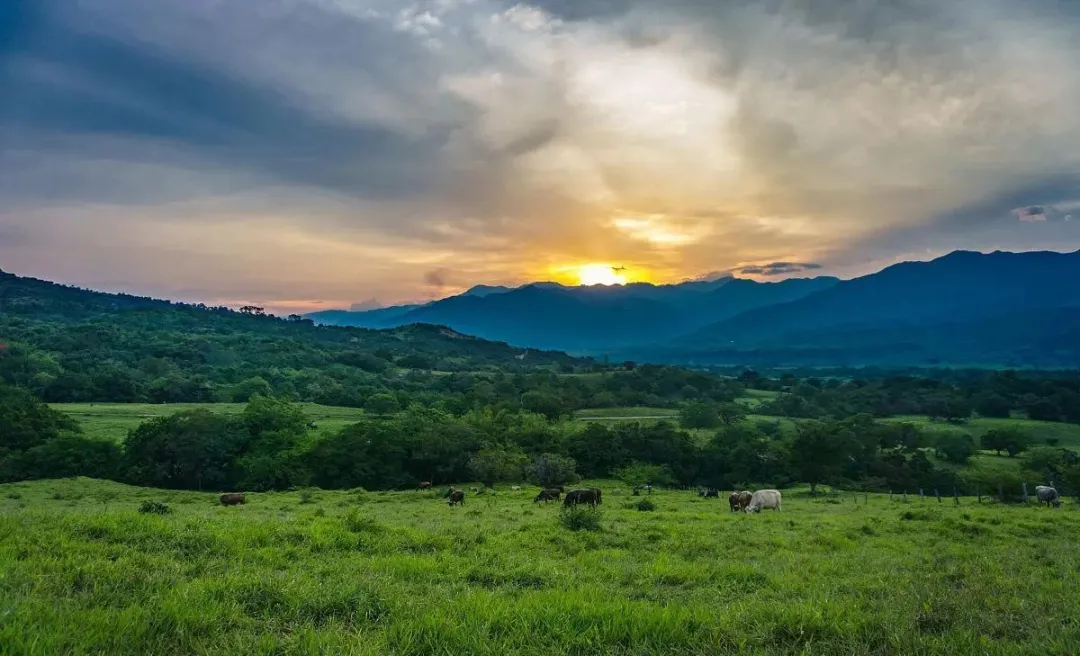
Colombia has a total of 15 coffee-producing regions, with the main ones including Cauca, Santander, Antioquia, Nariño, Tolima, and Huila.
Among the many regions, Huila (also known as Huila) is the most famous. It is located in the Andean mountainous area of southwestern Colombia, within a canyon, surrounded by several mountain ranges and volcanoes. Coffee farms extend along the valley of the Magdalena River, Colombia's mother river, planted on slopes above 1,500 meters on both sides of the valley. The town of Pitalito in the southwest is the province's most important coffee production center.
The Huila region has a relatively high altitude, with marked temperature differences between day and night, and is surrounded by mountains, making it less vulnerable to severe weather. The soil here is rich in volcanic ash, and together with suitable climate and rainfall, the coffee produced is of excellent and consistent quality. Front Street Coffee has a washed Colombian Huila coffee, a representative entry-level selection, with mild and soft fruit acidity, along with nut, dark chocolate, and caramel flavors, overall balanced with prominent sweetness.
The Huila region has many well-known estates, such as El Diviso and El Roble. El Roble is located in Pitalito in the southwestern part of the Huila region and is named after several old oak trees growing on the estate.
The current owner of the estate is Dionel Chilito, a third-generation coffee farmer of the Chilito family. Dionel places great importance on the estate's development, continuously learning and optimizing cultivation and processing techniques, introducing multiple coffee varieties, and setting strict standards for coffee harvesting, selection, grading, processing, and even hygiene, all in order to produce high-quality coffee.
The above content is compiled by CoffeeHunters, a coffee news website.


