







What Makes Yirgacheffe Coffee Distinctive in Ethiopia?
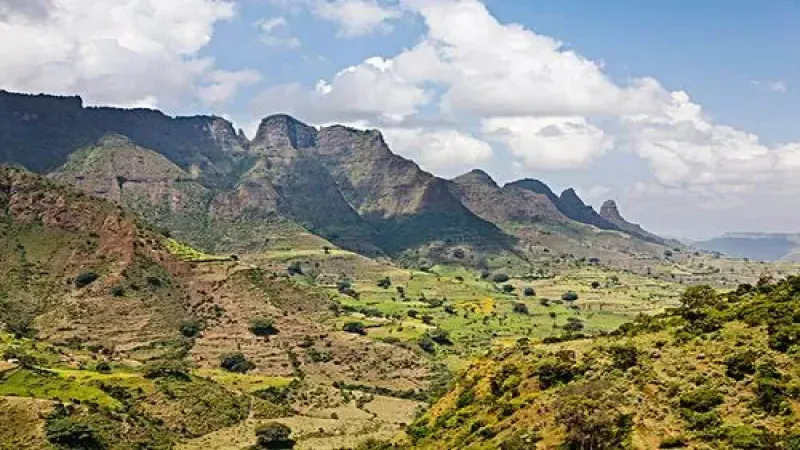
Yirgacheffe is one of Ethiopia's most representative coffee regions, known for citrus acidity and floral aroma. It sits in Sidama State at high altitude, where a humid climate, fertile soil, and abundant water support coffee with a highly recognizable flavor. Washed processing, introduced in 1972, helped the area establish itself as a separate region.
Ethiopia is regarded as the birthplace of coffee and is Africa's largest producer of Arabica. Its highlands average near 2,450 meters, with average annual rainfall around 1,237 millimeters and a marked gap between day and night temperatures. These conditions shape coffee cultivation in Yirgacheffe and its sub-regions, each showing slightly different cup character.
Yirgacheffe is one of Ethiopia's most representative coffee regions, renowned worldwide for its distinctive citrus acidity and floral aroma. This high-altitude area located in Sidama State, with its humid climate, fertile soil, and abundant water resources, nurtures coffee with highly recognizable flavors. From the early rough natural processing to the introduction of the washed method in 1972, Yirgacheffe gradually established its status as an independent region. This article will systematically outline the full picture of Yirgacheffe from the perspectives of geographical environment, administrative divisions, sub-region characteristics, cultivation patterns, and the evolution of processing methods, and introduce related representative products from Front Street Coffee.
The African continent is vast, with an average elevation of about 750 meters, and is known as the "Plateau Continent." This continent is home to numerous mountain ranges, volcanoes, lakes, and rivers. Because the equator runs through it, the climate is mainly tropical, with an average annual temperature above 20°C. Thanks to its rich natural resources, Africa has developed agriculture, and many countries are famous for coffee production, such as Ethiopia, Kenya, and Tanzania. Among them, Ethiopia is widely regarded as the birthplace of coffee and is also Africa's largest producer of Arabica coffee.
Ethiopian coffee is renowned in the international market, and the country possesses a vast number of native coffee varieties. The reason coffee can thrive here is inseparable from the local unique geographical conditions and climate.
Ethiopia is located in northeastern Africa. Its terrain is dominated by mountains and plateaus, with most of the country belonging to the Ethiopian Highlands, and the central and western highlands accounting for about two-thirds of the national area. The East African Rift Valley runs through the entire country from north to south. The average elevation of the mountains is close to 3,000 meters, and the national average elevation is about 2,450 meters.
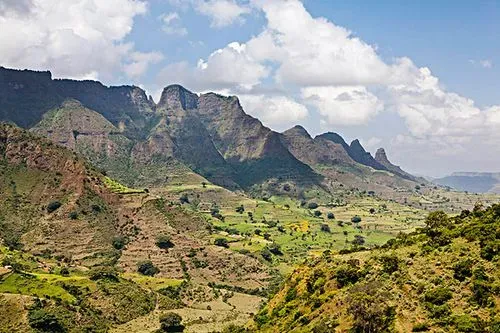
Affected by the high altitude, the country's average annual temperature is 16°C, with a significant temperature difference between day and night. The year is roughly divided into a dry season and a rainy season, with average annual rainfall of about 1,237 millimeters. There are nearly 50 volcanoes in the country, and together with abundant water resources and high-altitude mountainous areas, they provide very ideal conditions for coffee cultivation.
At present, Ethiopia is administratively divided into 12 states and 2 autonomous administrative regions, and is also divided into 10 coffee-producing regions, many of which are globally renowned origins, such as Sidamo, Gimma, Harar, Guji, and Yirgacheffe. Guji and Yirgacheffe originally both belonged to the Sidamo producing region, but later became independent regions due to their unique flavors.
From the perspective of administrative divisions, Yirgacheffe is a small town under Sidama State. Sidama State was originally part of the Southern Nations, Nationalities, and Peoples' Region and became an independent state through a referendum in 2019. The terrain in this area is rugged and complex. To the west lies Lake Abaya, which has been a wetland since ancient times, with abundant water resources, a humid and mild climate, and sufficient rainfall. Coffee is grown at altitudes between 1,750 and 2,200 meters, where the soil is fertile and sunlight is abundant, making it very suitable for coffee cultivation. Front Street Coffee has a washed Front Street Ethiopia Yirgacheffe coffee bean. As a representative introductory selection, Front Street washed Yirgacheffe has jasmine floral notes, lemon-like acidity, and fruit flavors such as orange and berries, with a refreshing and silky mouthfeel.
However, the Yirgacheffe coffee producing area does not refer only to the town of Yirgacheffe; it also includes sub-regions such as Wenago, Kochere, and Gedeb. Wenago is located about 26 kilometers north of Yirgacheffe town, Kochere is a small producing area about 25 kilometers to the south, and Gedeb is also a township, 60 kilometers away from Yirgacheffe town.
Because the country's industrial base is weak and its economy is mainly agricultural, coffee cultivation is mostly in the form of garden coffee (smallholder coffee). Coffee trees are planted together with other crops near the homes of coffee farmers, managed daily by the farmers, and harvested by themselves during the harvest season. After that, the coffee is purchased by intermediaries, or the farmers send it directly to nearby processing stations. Therefore, most coffee here is sold under the name of the sub-region or the processing factory, such as the Front Street Yirgacheffe Kochere coffee beans and Front Street Yirgacheffe Gutingting Cooperative coffee beans on the Front Street Coffee bean list.
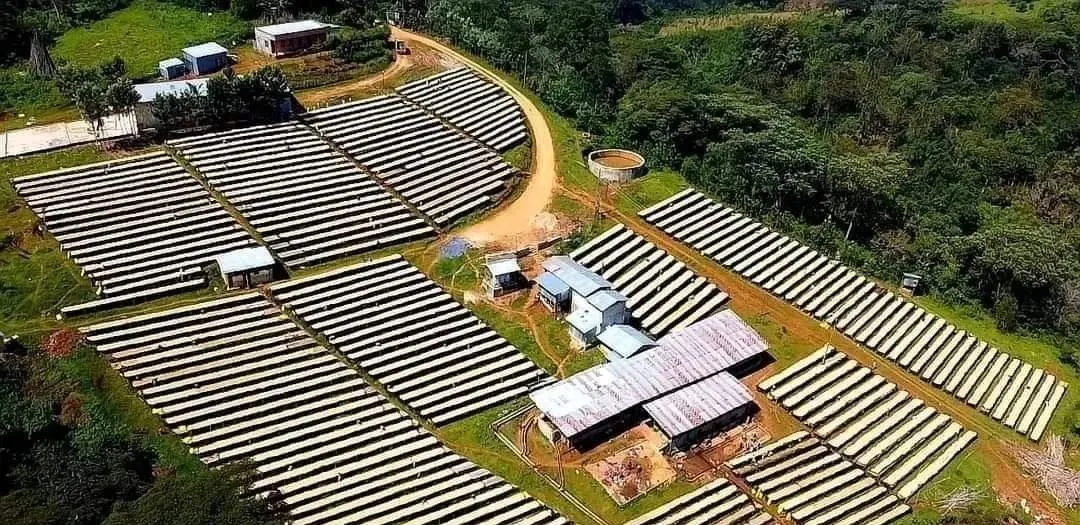
In the early days, the Yirgacheffe producing area mainly adopted a relatively rough natural processing method, spreading coffee cherries directly on the ground to dry. The site might be the farmer's own yard or the muddy ground of a balcony, and during the process it was easily contaminated by dust, so the final quality was often rather average.
By 1972, in order to improve coffee quality, the Ethiopian government introduced the washed method commonly used in Central America and established washed processing plants in the Yirgacheffe area. The flavor of Front Street washed Yirgacheffe coffee is very prominent, with unique flavors such as white floral notes, citric acidity, and a fresh green tea-like tea body. Compared with Front Street Sidamo coffee beans, it is similar but clearly different, so Yirgacheffe became an independent producing region.
At present, the area still mainly produces washed coffee beans. However, with the continuous development of specialty coffee, the Yirgacheffe area has also begun to experiment with other processing methods, such as refined natural processing and anaerobic slow natural processing, which have also performed well.
The above content is compiled by CoffeeHunters, a coffee news website.


