







How Did a Papua New Guinea Coffee Farm Earn Its Reputation?
Papua New Guinea coffee is grown across volcanic island terrain and a wide latitudinal range, which gives the country varied climates and is why it is called the Little Blue Mountain. Cultivation dates to the 1890s, but it stayed non-commercial until 1931, when Typica was brought in from Jamaica Blue Mountain while both places were under British rule.
Bourbon from Kenya and Mundo Novo and Caturra from Brazil followed, and a Brazilian frost in 1975 opened an unexpected market opportunity. Production now centers on the five highland provinces, with the Kimel estate in the Eastern Highlands run as a private cooperative of Opais smallholders, using a washed-processing plant and consistent quality control.
Although Oceania is the smallest continent by area in the world, its unique volcanic island terrain and diverse climate have given rise to Papua New Guinea coffee, known as the "Little Blue Mountain." From trial plantings in the late 19th century, to the introduction of Typica from Jamaica Blue Mountain in 1931, and then to the unexpected development opportunity brought by the Brazilian frost in 1975, Papua New Guinea coffee has gradually moved toward scale and specialty production. This article focuses on the five central highland provinces, with particular attention to the Kimel estate in the Eastern Highlands Province—a private cooperative owned by smallholder farmers of the Opais people, with a washed-processing plant and consistent quality control, combining terroir advantages with cultural character. At the same time, the article also mentions the Sigri estate Bird of Paradise coffee beans recommended by Front Street Coffee, offering a flavor reference for coffee enthusiasts.
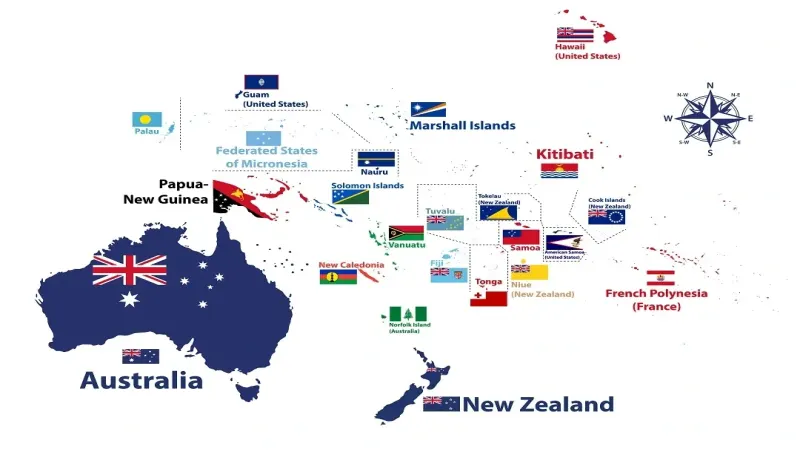
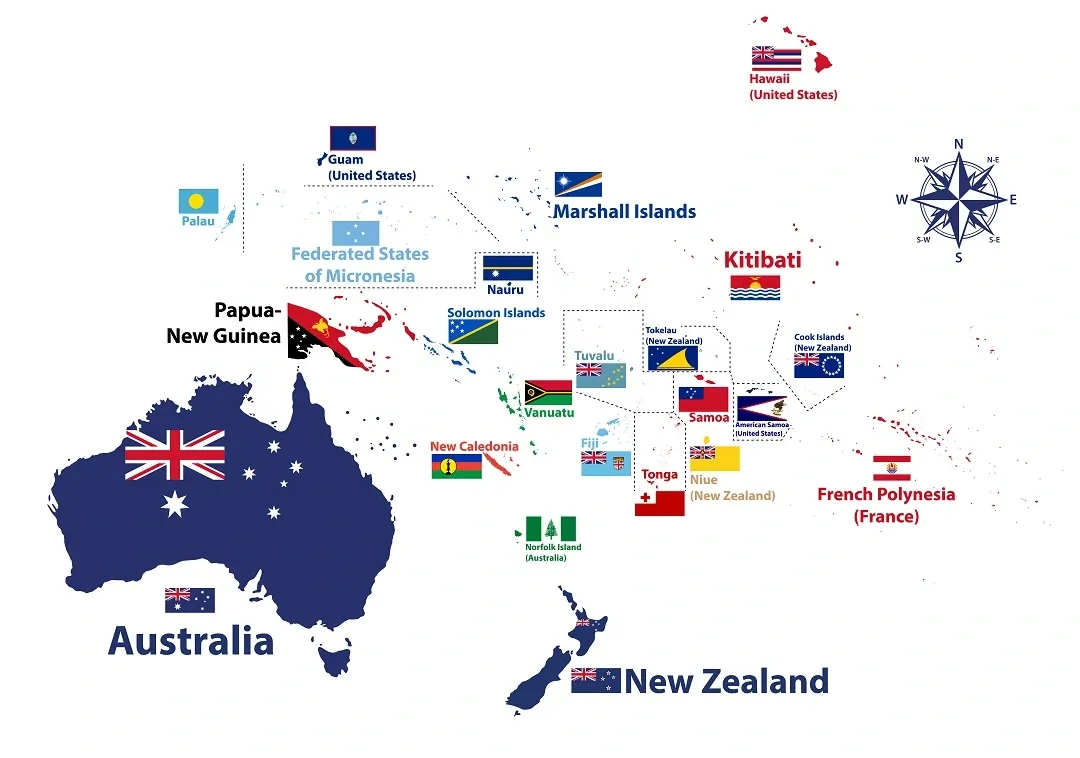
Oceania is distributed across the vast waters north and south of the equator in the central and south-central Pacific, and is the smallest continent in the world by area. It is mainly composed of the Australian continent, along with more than about ten thousand islands scattered across the sea.
Oceania spans three major geological plates—the Indo-Australian Plate, the Pacific Plate, and the Eurasian Plate. It has a huge number of islands, and the formation of most of them is closely related to volcanic activity. Because it crosses a wide latitudinal range from north to south, the climates of different places show significant differences and rich diversity, so the economies of the countries in this region mostly rely on agriculture. Among them, Papua New Guinea is famous for its abundant coffee production and enjoys the reputation of the "Little Blue Mountain."
According to historical records, coffee cultivation in Papua New Guinea can be traced back to the 1890s, but in the early period it was not treated as a commercial product. It was not until 1931, when Papua New Guinea was still a British colony and Jamaica was also under British occupation, that Papua New Guinea introduced the Typica coffee variety from Jamaica Blue Mountain. After that, it successively introduced Bourbon coffee beans from Kenya and the Mundo Novo and Caturra varieties from Brazil. These measures effectively improved the quality of Papua New Guinea coffee.
In 1975, Brazil suffered a frost disaster, and most of its coffee crops were destroyed. This event unexpectedly stimulated the development of Papua New Guinea's coffee industry. The government funded the creation of about 20-hectare coffee plantations in rural areas, strengthening the penetration of coffee cultivation in the local economy. By 1990, Papua New Guinea's annual output had reached 1 million bags.
Coffee has been able to flourish in Papua New Guinea thanks to the country's exceptional growing conditions. Papua New Guinea is the largest island country in the South Pacific and the second-largest island in the world. Its south is made up of plains and lowlands, the center is the Central Range, and the mountain ranges in the north run parallel to the range and consist of several independent mountain ridges, with many volcanoes distributed there.
In Papua New Guinea, areas above 1,000 meters in altitude have a mountain climate, while lower-altitude areas have a tropical rainforest climate. The dry season runs from May to October each year, and the rainy season from November to April of the following year. The average temperature in coastal areas ranges from 21.1°C to 32.2°C, while mountain temperatures are 5 to 6°C lower than those in coastal areas. The average annual rainfall reaches 2,500 millimeters. The climate here is mild, natural resources are abundant, and it has tropical rainforests, volcanic rock, and highlands, making it an ideal area for growing coffee.
At present, coffee cultivation in Papua New Guinea is concentrated in the five central highland provinces, namely Western Highlands, Eastern Highlands, Chimbu, Morobe, and East Sepik.
Western Highlands Province and Eastern Highlands Province are the most important coffee-producing provinces in Papua New Guinea. This area surrounds an ancient dormant volcano, and the fertile soil makes the coffee produced there especially outstanding in quality. Western Highlands Province is home to the famous Sigri estate. Front Street Coffee has a Sigri estate Bird of Paradise coffee bean, which presents caramel, cocoa, and almond flavors on the palate, with citrus-like acidity at lower temperatures and a good overall balance.
Eastern Highlands Province is best known for Arona estate, Kimel estate, Arokare estate, and Goroka estate.
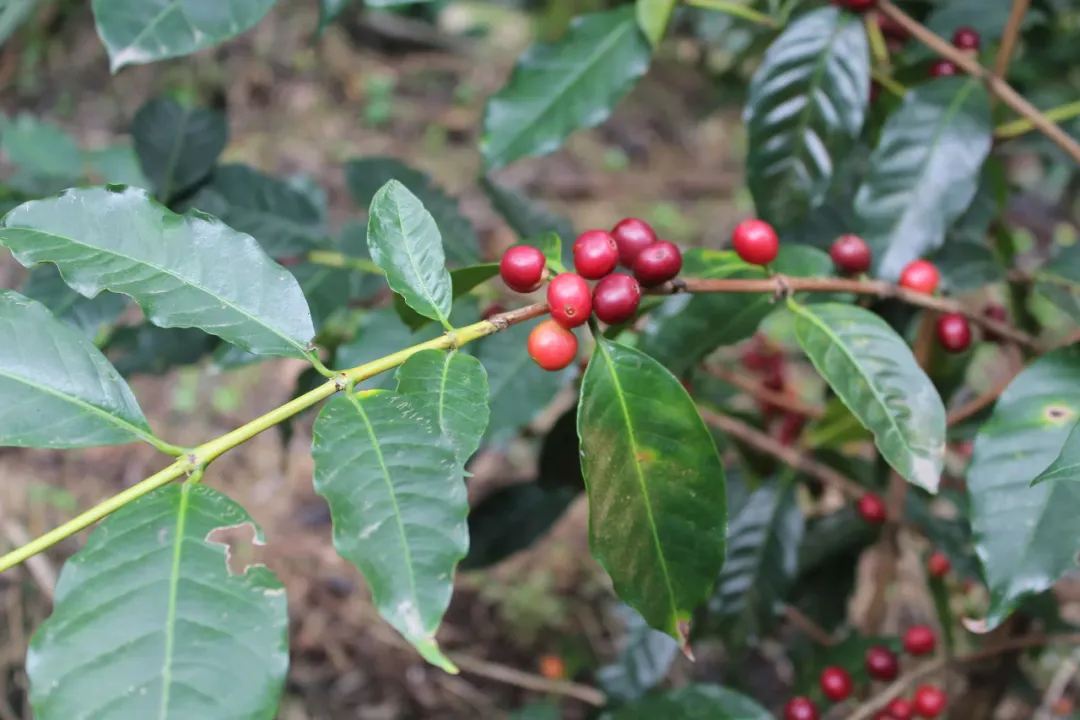
Kimel estate is located in the Wiki Valley of the western highlands of Papua New Guinea, adjacent to the Kimel River valley area. The estate is jointly owned by many smallholder coffee farmers of the surrounding Opais people and is essentially a private cooperative, equipped with a washed-processing plant. The estate has excellent growing environment conditions, and together with the processing plant's stable quality control process, it is able to produce high-quality coffee.
The above content is compiled by CoffeeHunters, a coffee news website.


