







How Much Does Espresso Dose Affect Coffee Extraction?
A 0.5-gram change in espresso dose does change the cup. Front Street Coffee ran comparative tests using a 20-gram, 30-second, 40-milliliter recipe as the baseline, then adjusted the dose up and down by 0.5 gram while keeping the liquid weight at 40 milliliters. The three espressos tasted side by side showed clear differences, which supports using a scale during extraction.
The experiment had two rounds. The first varied dose while holding liquid weight steady; the second held dose steady and varied the liquid weight. The goal was to capture flavor shifts under different parameters. Understanding what an espresso coffee is helps here: small parameter changes matter because the drink is concentrated and brewed in a short time, so a few tenths of a gram can shift the result.
Regarding whether an electronic scale is necessary when making coffee, there have always been two distinctly different voices within the coffee community. One side insists that a scale is a key tool for ensuring extraction quality, while the other feels that a few grams more or less makes no difference, and the taste of the espresso will not be noticeably affected. To verify this controversy, Front Street Coffee designed a set of comparative experiments, testing from the two dimensions of different doses and different liquid weights, to reveal through actual tasting how a change of just a few tenths of a gram in dose affects the flavor of espresso, and whether an electronic scale is actually necessary in daily production.
It is completely understandable that this friend raised this question, because in the coffee community, when it comes to "whether espresso really needs to be weighed," there have always been two voices in tug-of-war. Some people believe that weighing is indispensable for extraction; another group holds the completely opposite attitude, believing it does not matter at all whether a scale is used, since in the end that cup of espresso will not taste very different anyway. So today, Front Street Coffee will use a set of comparative experiments to talk with everyone about whether espresso extracted with different doses really shows obvious differences, and whether using an electronic scale is truly necessary!
Extraction experiment
In order to capture as accurately as possible the flavor changes in espresso under different parameters, this time Front Street Coffee divided the experiment into two rounds. The first round used different doses to extract the same liquid weight, while the second round did the opposite, using the same dose to extract different liquid weights, to see what these two comparisons could tell us.
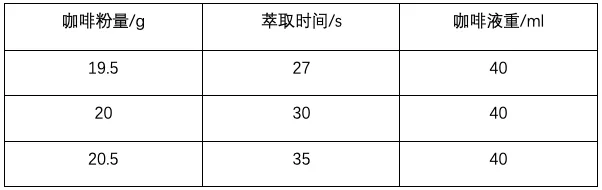
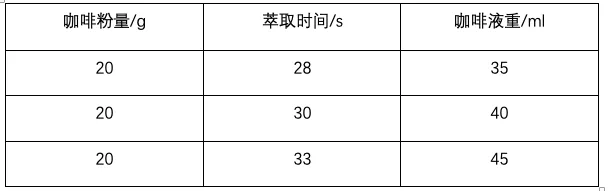
Let's first look at this round of experiments with different doses. The espresso extraction recipe Front Street Coffee obtained after this morning's dial-in was 20g coffee, 30 seconds, 40ml liquid weight. We used this parameter as the baseline and adjusted the dose up and down by 0.5g respectively, while keeping the extracted liquid weight the same, all at 40ml. All right, without further ado, let's look directly at the results!
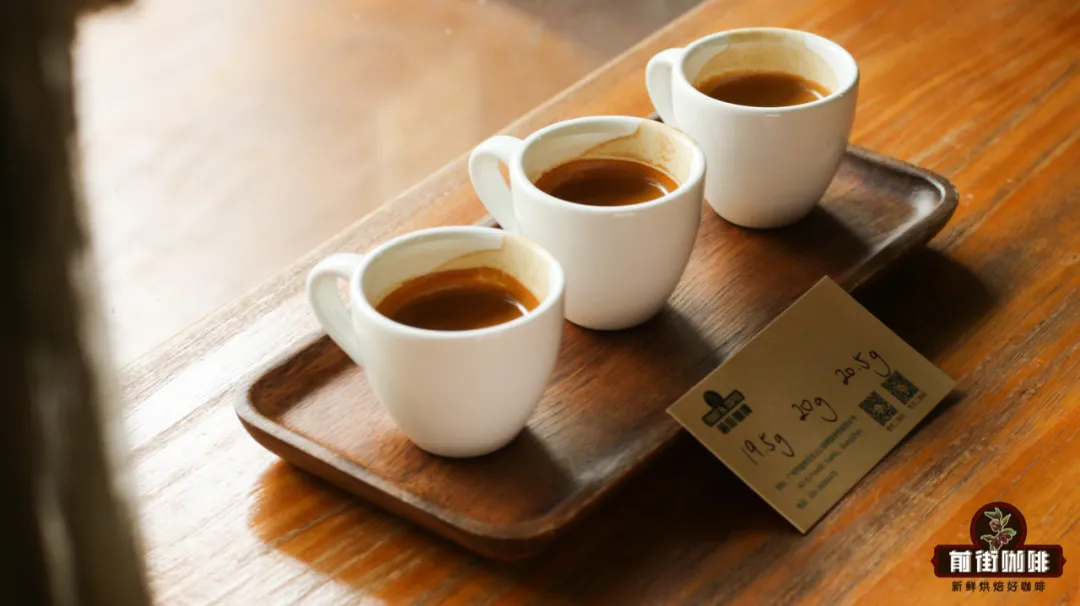
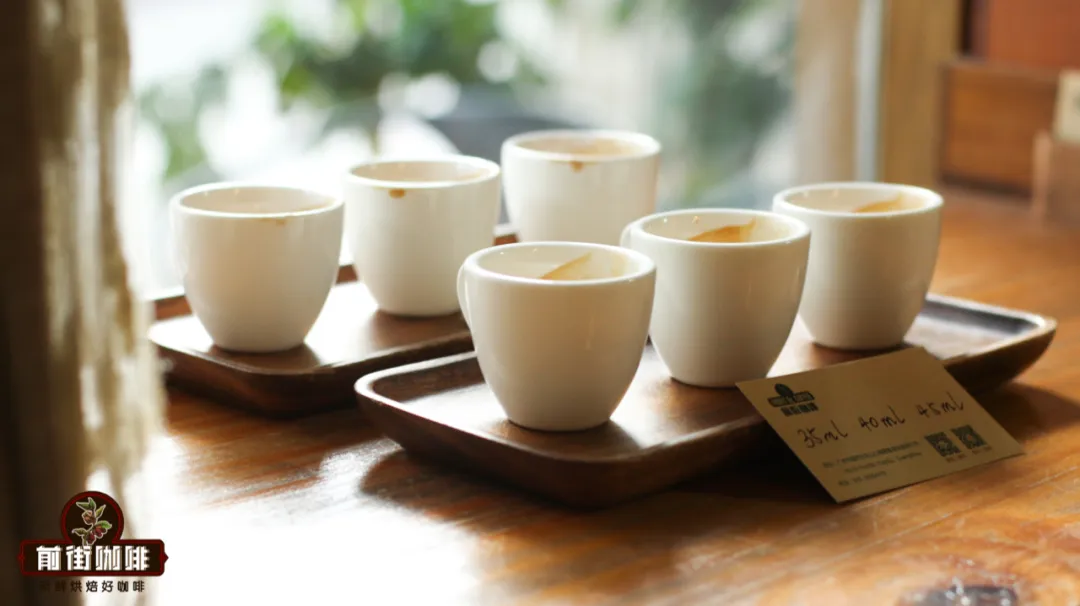
Next, Front Street Coffee tasted the three espressos one by one. The first one tasted was the 40ml espresso extracted from the standard 20g dose. The overall impression on entry was quite balanced and comfortable, with clear flavors, coordinated acidity and bitterness, and a full mouthfeel, and one could pick up whiskey aroma, butter cookie, and the sweet-tart notes of berries. The cup with 0.5g more coffee, however, was not as impressive. Compared with the previous cup, its overall performance was less pleasing, with bitterness occupying a more prominent position while acidity was suppressed. In terms of flavor, it was mainly whiskey aroma and butter cookie, plus dark chocolate with obvious bitter tones. Finally, the espresso with 0.5g less coffee also showed a decline in pleasantness compared with the first cup, with a mouthfeel that was not thick enough and a finish that was much shorter. Relatively speaking, however, the sweet-tart notes of berries were more prominent, but as the temperature dropped, the sourness also became increasingly sharp.
The above content is compiled by CoffeeHunters, a coffee news website.


