







Why Is Arabica Coffee Production in Brazil Missing Forecasts?
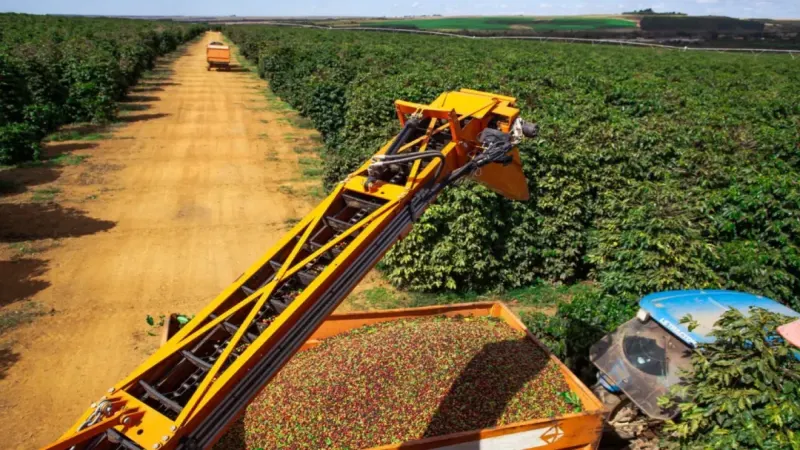
Brazil's arabica coffee harvest is running ahead of schedule but delivering less than the market expected. By June 25, half the national crop was picked, above the five-year average of 45 percent, with arabica at 35 percent and robusta at 62 percent. Smaller bean size and uneven ripening have appeared, and institutions cut Brazil's total forecast from 68.5 million to 67 million bags.
El Nino kept Brazil's coffee belt dry, especially Minas Gerais, which went three straight weeks without rain. Dry weather speeds harvesting but can spread pests and disease. Robusta output may drop 8 to 14 percent, and drought in Vietnam tightened supply, holding international robusta futures above $4,000 per ton while the spot index rose more than 4 percent month on month.
Recently, Brazilian coffee-producing regions have continued to be affected by El Niño weather. Although dry conditions have accelerated the harvest pace—by June 25, half of the coffee had been harvested, exceeding the average for the same period over the past five years—actual production has fallen short of market expectations. Issues such as smaller bean size and uneven ripening have gradually emerged. Meanwhile, Robusta production may decline by 8% to 14%, and combined with tightened supply caused by drought in Vietnam, international Robusta futures prices have firmly held above $4,000 per ton, with the spot index also rising more than 4% month-on-month. An impending strong cold wave adds further uncertainty to the production outlook, and several institutions have already lowered their forecast for Brazil's total production from 68.5 million bags to 67 million bags.
Recently, Brazil's coffee-growing belt has remained under the influence of El Niño, with generally dry weather. Such conditions have actually been relatively favorable for field harvesting operations. However, according to a report released by Safras & Mercado, the harvest pace is accelerating. As of June 25, 50% of the country's coffee had been harvested, higher than the five-year average of 45% for the same period.
By variety, Arabica coffee harvest progress stood at 35%, while Robusta reached 62%, both faster than the five-year average for the same period. Although the picking speed is encouraging, the actual harvest is not ideal, mainly reflected in real output falling below earlier market estimates, while the problem of smaller coffee bean size is also quite prominent.
Brazilian meteorological agency Somar Meteorologia pointed out that some states saw rainfall, but the amount was quite limited. Other states remained dry, especially Minas Gerais, which has gone three consecutive weeks without precipitation, and the weather is expected to remain dry for some time to come.
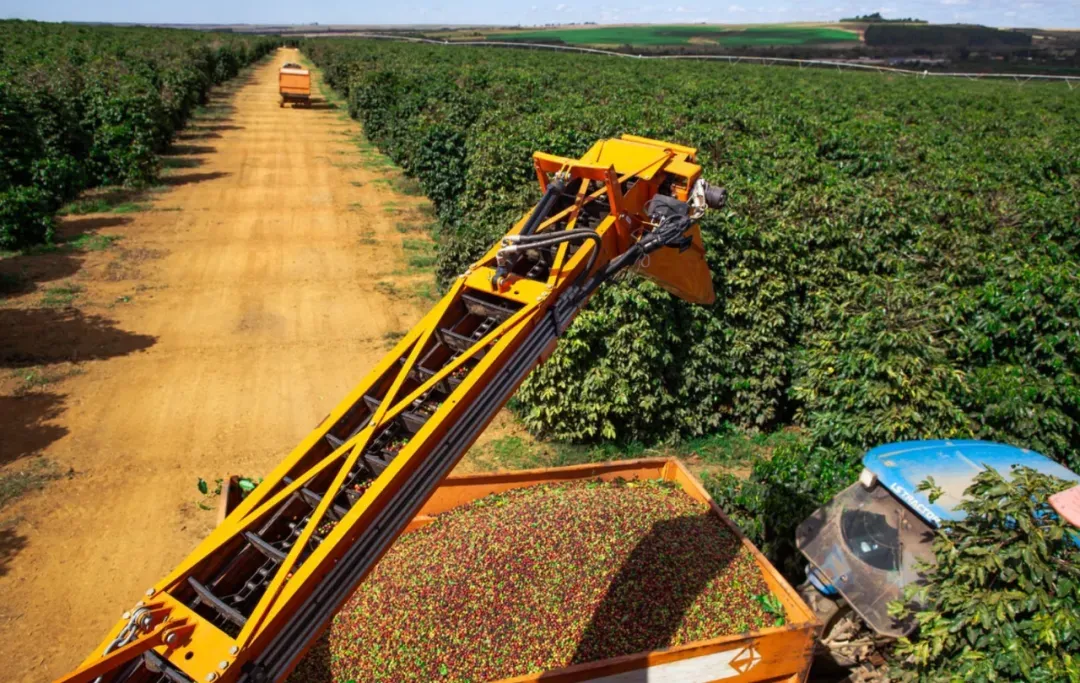
At the same time, the industry is also worried that drier-than-usual climate conditions may have a negative impact on Brazil's coffee crop. Hot and rain-deficient conditions can easily breed pests and diseases and accelerate their spread, thereby threatening yield and quality, which is also one reason the harvest progress has been pushed faster. However, dry weather is beneficial for the subsequent processing of coffee cherries. With good drying, processing, and storage procedures, coffee bean quality is expected to improve.
On the Robusta side, judging from actual harvesting conditions, production is clearly below previous market expectations, with total output expected to decline by about 8% to 14%. Some Robusta-producing areas have even reported production cuts of as much as 20%.
Currently, Robusta futures prices are broadly maintained around $4,000 per ton, mainly due to the production hit caused by drought weather in Vietnam. If Brazil's Robusta also declines in tandem, Robusta futures prices are expected to continue climbing in the future. The Robusta coffee spot price index closed at 1,195.94 reais per bag (60 kg per bag), up 4.07% from the end of May.
However, after a period of high temperatures, Brazil will welcome a strong cold wave, and temperatures in São Paulo and Rio de Janeiro may set cold records. Meteorological bureau data show that parts of Rio Grande do Sul, Santa Catarina, and Paraná are most severely affected, with local temperatures possibly dropping as low as -8ºC, while temperatures in other regions will also be below normal. Such a strong cold air mass crossing the country's central region is not unusual before, but it may have a certain impact on some coffee-producing areas.
For this reason, many experts' preliminary assessments earlier estimated Brazil's total coffee production at about 68.5 million bags. However, as harvesting progresses, factors such as smaller beans, uneven ripening, and the arrival of a strong cold wave have combined, and the current forecast for Brazil's total coffee production has been lowered to 67 million bags.
The above content is compiled by CoffeeHunters, a coffee news website.


