







How did coffee cultivation take root in Mbeya, Tanzania?
Tanzania's coffee cultivation began as a cash crop under German colonial rule, when coffee trees of the Arabica variety were planted mainly around Bukoba. After independence in 1961 the industry gained attention, and reforms followed in the 1990s. A coffee wilt disease outbreak in the late 1990s cut northern production, shifting the main growing areas south and to the Kilimanjaro zone.
Mbeya, in the country's southwest, has cool highlands suited to coffee and is becoming a notable region, home to the democratically managed Iyenga Agricultural Marketing Cooperative. The southern shift helped coffee remain an important cash crop for Tanzania, whose high altitudes, volcanic soils and abundant water support distinctive regional profiles despite the country drawing less attention than neighboring Kenya.
Although Tanzania is not as renowned as its neighbor Kenya, it also produces coffee of considerable quality. From the introduction of coffee trees during the German colonial period to the southward shift of the industry's focus after independence, this East African nation—with its high altitudes, volcanic soils, and abundant water sources—has nurtured several distinctive production regions. Among them, Mbeya in the southwest is gradually gaining attention. Not only does it have cool highlands suitable for coffee cultivation, but it is also home to the Iyenga Agricultural Marketing Cooperative, known for its democratic management. This article will guide you through the evolution of Tanzanian coffee and take a deeper look at the Mbeya region to see how it became the agricultural trade center of the country's southwest.
There are quite a few well-known coffee-producing countries on the African continent, including Ethiopia, Kenya, Rwanda, and Tanzania. Tanzania may not be as famous as its neighbor Kenya, but it possesses equal potential for producing specialty coffee.
Coffee became a cash crop in Tanzania (then known as Tanganyika) as far back as the German colonial period. At that time, coffee trees were mainly planted in the Bukoba region, of the Arabica variety. However, the local Haya people's farming practices differed from those of the colonizers—they were unwilling to replace food crops with coffee trees, so the promotion of coffee progressed slowly.
After World War I ended, control of the region fell into British hands. They planted over ten million coffee seedlings in Bukoba, but conflicts with the Haya people persisted, and cases of seedlings being uprooted occurred frequently. For this reason, the local coffee industry failed to make significant progress as it did in Tanzania's Chagga region.
After Tanzania gained independence in 1961, the coffee industry began to receive attention. By the 1990s, a series of reform measures were gradually implemented. Unfortunately, in the late 1990s, a widespread coffee wilt disease outbreak caused a sharp decline in coffee numbers in the north, after which the main growing areas shifted to the south and the Kilimanjaro area. Thanks to favorable terrain and climate, coffee ultimately became an important agricultural cash crop for Tanzania.
Tanzania is located in East Africa, south of the equator, bordering several African countries, with both ocean and land territory. The country's terrain is high in the northwest and low in the southeast, with lowlands along the eastern coast, while the western highlands account for half of the nation's total area. The East African Rift Valley splits into eastern and western branches from Lake Malawi, running north to south through the country. Africa's highest peak, Mount Kilimanjaro, is also located here.
Due to its proximity to the equator, the eastern coastal and inland lowland areas have a tropical savanna climate, while the western inland highlands have a tropical mountain climate, with average annual temperatures ranging between 21°C and 26°C. Although rainfall is relatively low—with annual precipitation of less than 1000 mm in eighty percent of the country—there are numerous rivers and lakes, making water resources quite abundant.
Tanzania's coffee cultivation is currently divided into nine production regions, among which the better-known ones include Kilimanjaro, Arusha, Ruvuma, Mbeya, Tarime, and Kigoma. Ninety percent of the country's coffee comes from 450,000 smallholder farmers, while the remaining ten percent comes from larger estates, so the cooperative model dominates.
The Kilimanjaro region is the most well-known; "Kilima" means mountain, and "Njaro" refers to shining. Kilimanjaro is the highest peak on the African continent, mainly composed of three dormant volcanoes—Kibo, Mawenzi, and Shira—reaching a maximum height of 5895 meters, with coffee cultivation at elevations between 1050 and 2500 meters.
High altitude, volcanic soil, and pure meltwater from snow create ideal conditions for growing coffee. Front Street Coffee has a washed Typica from the Kilimanjaro region, with a gentle acidity on the palate, accompanied by flavors of citrus, berries, honey, and nuts, a soft mouthfeel leaning toward tea-like, and an overall very balanced profile.
Besides Kilimanjaro, Tanzania has several other regions with notable quality, and Mbeya is one of them. It is located around Mbeya city in southwestern Tanzania and serves as the main agricultural capital and trade center of the country's southwestern region.
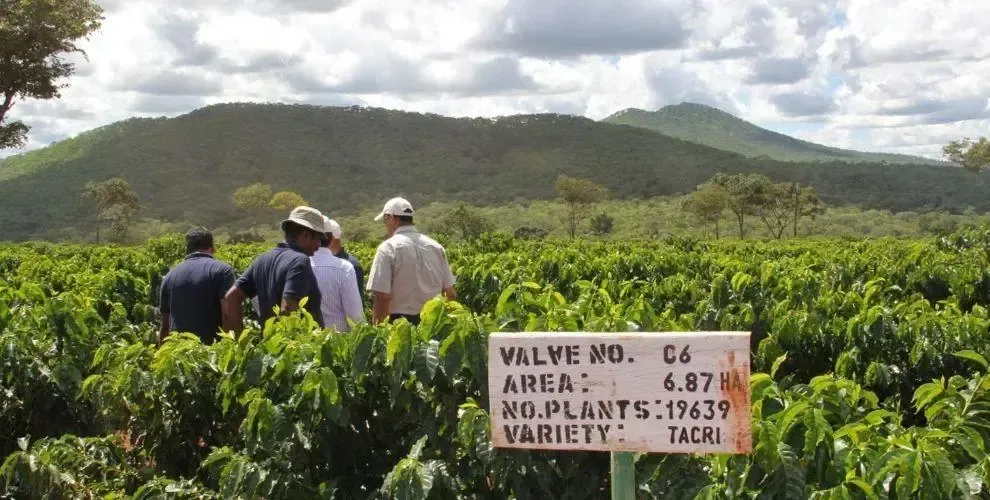
The Mbeya area consists mostly of highlands and basins, with volcanoes such as the Rungwe Mountains distributed throughout. The low-lying areas are hot and arid, but the coffee-growing highlands are cool and humid, at an elevation of about 1660 meters, with volcanic ash providing fertile soil. There are lakes to the west and southeast, ensuring ample water resources, which enables the production of high-quality coffee. The area is also home to several well-known cooperatives, such as the Iyenga Agricultural Marketing Cooperative (Iyenga AMCOS).
The Iyenga Agricultural Marketing Cooperative (Iyenga AMCOS) was established in 2003, primarily purchasing coffee in the Mbeya region and working with over five hundred local coffee farmers. It has considerable local influence, largely because it greatly values democracy. All leaders are elected democratically, young people and women are encouraged to participate in coffee activities and cooperative affairs, and dedicated teams are assigned to oversee cultivation and processing to ensure quality.
The above content is compiled by CoffeeHunters, a coffee news website.


