








What does the China-Peru FTA mean for global coffee exports?
China and Peru have substantially concluded negotiations to upgrade their free trade agreement, a step both sides say will unlock more trade and investment. Peru's coffee shipments grew 69 percent in the first quarter of 2024, and the upcoming Chancay Port is positioned as South America's gateway to Asia. President Boluarte promoted investment during a five-day state visit to China.
China's expanding coffee consumption is expected to widen Peru's export scale and raise its standing among coffee producing countries. The risk sits on the weather side: with El Niño gone, La Niña may return, and low temperatures would hit the May-to-September harvest. Peru's economy has been steady in recent years, with exports reaching new highs in early 2024.
China and Peru have substantially concluded negotiations to upgrade their free trade agreement, opening a new chapter in bilateral trade and investment cooperation. During her visit to China, Peruvian President Boluarte actively promoted investment opportunities, while China's growing coffee consumption market has also injected momentum into Peru's coffee exports. In the first quarter of 2024, Peru's coffee export growth rate reached as high as 69%, and the soon-to-be-completed Chancay Port is regarded as South America's gateway to Asia. However, just as El Niño has retreated, La Niña may make a comeback, and low temperatures will directly impact the coffee harvest season from May to September. With opportunities and challenges coexisting, Peru's coffee industry stands at a critical crossroads.
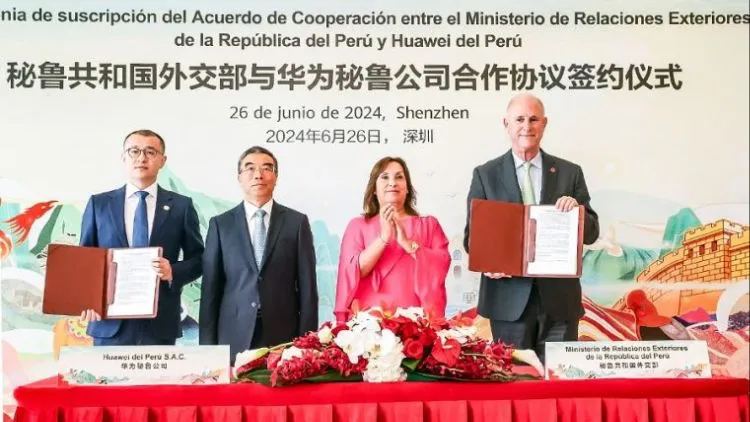
Recently, China and Peru jointly announced the signing of the Memorandum of Understanding between the Ministry of Commerce of the People's Republic of China and the Ministry of Foreign Trade and Tourism of the Republic of Peru on the Substantial Conclusion of Negotiations on Upgrading the China-Peru Free Trade Agreement.
The memorandum makes clear that the two sides have substantially concluded negotiations on upgrading the China-Peru FTA. Next, they will accelerate legal review and domestic procedures, among other steps, and strive for the formal signing of the upgraded protocol as soon as possible. Both sides agree that this move will help further unlock the two countries' trade and investment potential.
At the same time, Peruvian President Boluarte is on a five-day state visit to China. At the "Invest in Peru" event held in Shanghai, she extended an invitation to capable Chinese enterprises, hoping they will cross the Pacific to invest in Peru. She stated that investment by Chinese companies can help Peru improve its national productivity and competitiveness and better integrate into global value chains, which benefits both the Peruvian people and the development of bilateral trade.
As far as Peru's coffee industry is concerned, China's coffee consumption market continues to expand, and the deepening of China-Peru trade relations is expected to expand the scale of Peru's coffee exports and further enhance its influence in the international market.
It is understood that Peru's economy has performed steadily in recent years. In the first quarter of 2024, exports reached US$16.384 billion, an increase of US$150 million over the same period in 2023. This growth was mainly driven by higher mining output, while rising prices for exports such as coffee, fruits and other agricultural products, as well as gold, also played a supporting role, with the coffee export growth rate reaching as high as 69%.
In addition, Chinese companies had previously invested in and built the Chancay Port project in Peru, covering a container terminal and related infrastructure, which is expected to be completed and put into operation in November this year.
Peru's Minister of Foreign Trade and Tourism pointed out that Chancay Port will handle 25% of Peru's total agricultural exports, helping reduce transportation costs for various goods and enhancing the international competitiveness of Peruvian products. Leveraging its advantages in geographical location and cargo capacity, Chancay Port will become "an important gateway from South America to Asia." Neighboring countries such as Brazil can also use the port for international transport, and shipping time from the port to Asia will be shortened by 12 days.
According to an earlier coffee industry report, in the 2023/24 fiscal year Peru was hit by El Niño, with rising temperatures and insufficient rainfall, compounded by the continued spread of coffee leaf rust, which significantly affected the growth of coffee plants. However, in the following quarters Peru gradually shook off the grip of El Niño, coffee production began to recover, and output in the 2024/25 marketing year is expected to recover to 4.22 million bags (69 kg per bag).
Although Peru's coffee industry now appears to be ushering in major development opportunities, the climate crisis is also closing in step by step. According to forecasts by Peru's National Meteorological and Hydrological Service (Senamhi), Peru will enter winter starting in July, and this year's winter, due to unusually cold sea conditions, will bring temperatures along the coastal areas below normal levels for the season.
Most of Peru's coffee-producing areas are located in the Andes and close to the coast, with coffee cultivation concentrated at elevations between 1,000 and 1,800 meters. High-altitude mountainous areas will be the first to bear the brunt of colder weather.
More worrying still, the return of La Niña in the second half of the year is highly likely, which may further intensify the cold weather, with temperatures continuing to decline and falling below historical averages, and this trend may persist until September. May to September happens to be Peru's coffee harvest season, and low temperatures will inevitably slow the harvest progress. Local conditions are already fragile, and sustained low temperatures are undoubtedly a cause for concern.
The above content is compiled by CoffeeHunters, a coffee news website.


