







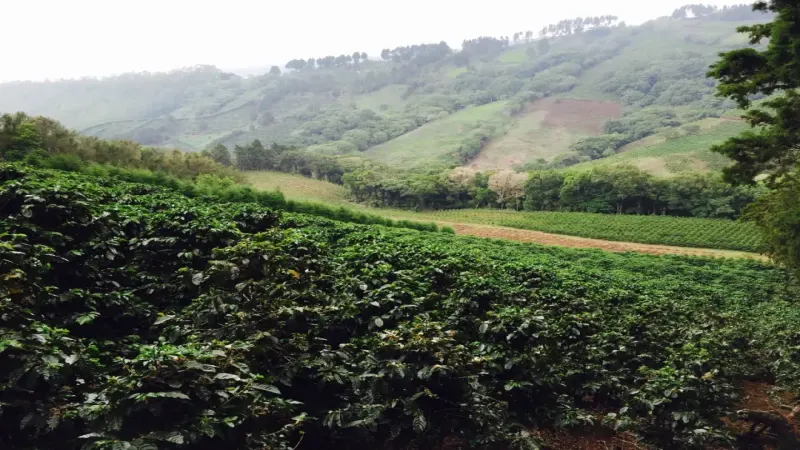
How does coffee cultivation work in Costa Rica's Tarrazu highlands?
Costa Rica was the first Central American country to cultivate coffee and now ranks as the world's fourteenth-largest producer. More than 200 volcanoes, a mild tropical climate and mineral-rich volcanic ash create strong growing conditions. Coffee cultivation is spread across seven regions along the central mountain range, and Tarrazu is the largest and most recognized, known for high altitude and Cup of Excellence results.
Finca Voo, in the Copey de Dota area of Tarrazu at 1,960 meters, belongs to Café Solís & Cordero S.A. and has placed well in COE competitions in recent years. The country holds more than 400 million coffee trees. Tarrazu, once called Los Santos, was registered by the Costa Rican government with the European Union and WIPO in 2019 as a protected coffee designation.
Costa Rica is a pioneer of coffee cultivation in Central America and has now ranked as the world's fourteenth-largest coffee producer. Surrounded by volcanoes and with a mild climate, it provides ideal conditions for coffee growth. Among its seven major production regions, Tarrazu is the most renowned, drawing attention for its high altitude and outstanding performance in the Cup of Excellence (COE). Located in the Copey de Dota area of Tarrazu, Finca Voo sits at an altitude of 1,960 meters and belongs to Café Solís & Cordero S.A. In recent years, it has repeatedly achieved excellent results in COE competitions. Front Street Coffee will take you deeper into the terroir of this highland region and the story of Finca Voo's rise.
Thanks to its exceptional geographical and climatic conditions, Central America has become fertile ground for crops such as coffee. Within this region, Costa Rica was the first country to begin cultivating coffee and has now developed into the world's fourteenth-largest coffee producer.
Costa Rica
Costa Rica is located on the Central American isthmus, bordering the Atlantic Ocean to the east and the Pacific Ocean to the west, with Nicaragua to the north and Panama to the southeast. The country is dominated by mountains and plateaus, with more than 200 volcanoes, and the Cordillera mountain system runs through the entire territory.
The country has a tropical and subtropical climate, with the year divided into a rainy season (April to December) and a dry season (late December to April of the following year). Pleasant temperatures, abundant rainfall, and volcanic ash that enriches the soil with minerals create superior conditions for cultivating crops such as coffee.
Coffee Production Regions
Though not large in area, Costa Rica now has more than 400 million coffee trees and is divided into 7 coffee production regions—Valley Central Occidental, Valley Central, Tarrazu, Tres Rios, Orosi, Brunca, and Turrialba. These regions are almost all concentrated along the central mountain range.
Tarrazu : Tarrazu is the country's largest and most famous production region, located within San José Province. It was originally called Los Santos.
However, because Tarrazu within the region became famous earlier, in 2019 the Costa Rican government applied to the European Union and the World Intellectual Property Organization (WIPO) to register the coffee designation of origin "Café de Tarrazú." As a result, people gradually became accustomed to using "Tarrazu" to refer to this large production region. In addition, the region's fame also benefits from Costa Rica's Cup of Excellence COE—most of the winning estates come from Tarrazu.
Influenced by warm, moist Pacific air currents, the region receives annual rainfall of up to 2,400 millimeters, with an average temperature of about 19°C. Coffee is grown at altitudes between 1,500 and 2,100 meters, making this the highest-altitude coffee production region in Costa Rica.
Finca Voo
Finca Voo is located in the Copey de Dota area of the Tarrazu production region, on a hillside at an altitude of 1,960 meters. This terrain allows the crops to bathe in Pacific sea breezes, receive ample sunlight during the day, and remain protected from Atlantic weather disturbances.
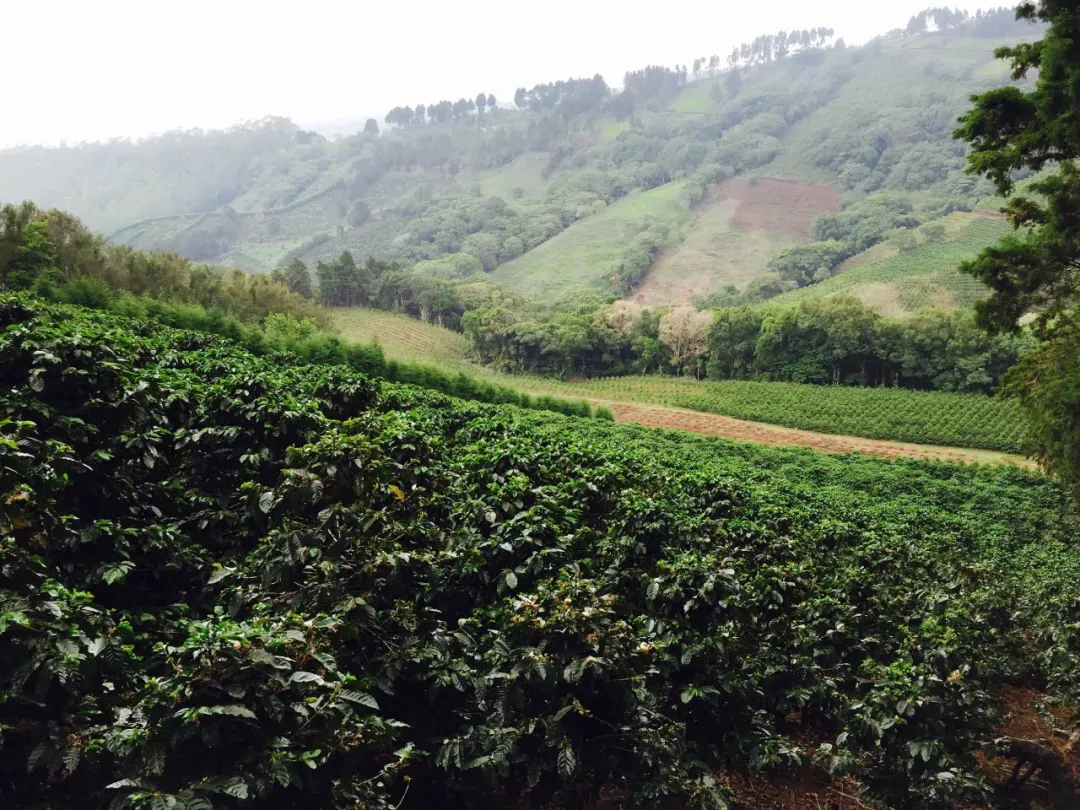
Finca Voo is currently owned by Café Solís & Cordero S.A., a company founded in 2018 by the Solís Cordero family with the original intention of providing fair and stable business support to local coffee producers. One of the company's partners, Iván Solís, has more than 22 years of experience in coffee processing and commercialization.
Finca Voo is an estate recently acquired by the Solís family, and all family members are actively involved. By planting avocados, developing livestock farming, and cultivating a variety of crops, they have created an environment more conducive to producing high-quality coffee. For this reason, the estate won second place in the 2023 Costa Rica COE competition with the Catuai variety, scoring 91 points; and in this year's COE competition, also using the Catuai variety, it took first place in the Experimental processing category with 91.19 points.
The above content is compiled by CoffeeHunters, a coffee news website.


