







How Did Mandheling Coffee Shape the History of Traditional Coffee?
Mandheling coffee is an Indonesian coffee whose mellow, woody aroma stands as a counterpoint to the bright fruit acidity that defines much of today's specialty scene. Its story runs across three centuries: Dutch East India Company plantations in Indonesia, Nanyang Chinese traders, post-war Japanese appreciation, and the naming of Golden Mandheling. Each stage left a layer in the cup.
The flavor itself explains the endurance. Where Yirgacheffe built its reputation on recognizable fruit acidity, traditional coffee like Mandheling keeps a low, earthy profile that many seasoned drinkers return to after years of floral and fruity lots. That contrast, rather than novelty, is what gives Mandheling its place in coffee history.
When Yirgacheffe swept through the specialty coffee scene with its bright fruit acidity, the mellow woody aroma of Mandheling still lingered in the memories of many seasoned connoisseurs. This article starts from flavor and traces the three-hundred-year history of coffee circulation behind Mandheling: from the Dutch East India Company establishing coffee plantations in Indonesia, to Nanyang Chinese running the coffee trade, to post-war Japan's admiration for Mandheling, and the origin of the name Golden Mandheling. Front Street Coffee's perspective runs throughout, showing you how a cup of Mandheling carries half of coffee history, and helping you understand the depth of traditional coffee taste memory.
In the eyes of many, Mandheling coffee is hardly delicious, so what is there worth discussing?
But if we approach it from the angle of flavor, the most popular narrative in today's specialty coffee often cannot avoid Yirgacheffe—its bright fruit acidity, so different from traditional coffee, is highly recognizable and unforgettable after one sip. And the rise of this trend actually only happened in recent years. When Front Street Coffee started in 2013, there were only a handful of coffee sellers in a city, and at that time Yirgacheffe was still quite a novelty.
If Yirgacheffe's fruit acidity broke the framework of traditional coffee, then the representative of that tradition is Indonesian Mandheling. After you have tasted too many floral and fruity notes, you will inevitably want to找回 the mellow woody aroma of Mandheling and relive it.
As an internationally traded commodity, coffee first flowed from Africa to Europe. But its true large-scale departure from Africa began in Indonesia.
Everyone knows from middle school history textbooks that the Netherlands was the "sea coachman" of the Age of Discovery. When history advances to a more detailed level, the Dutch established the East India Company to open up the new Eastern world—this East India was not the British East India; the British East India Company was merely a later imitation of the Dutch East India joint-stock operating model. The "Eastern East Indies" here refers to today's Indonesia. One of the Dutch East India's core businesses was opening coffee plantations in Indonesia. This is the origin of what I said: "Leaving Africa began in Indonesia."
The Dutch East India Company's development in Indonesia succeeded after decades. To what extent? The Dutch even showed off to France, specially gifting a coffee tree to the French king. Perhaps it was precisely this shameless display of wealth that led to the later Bourbon, and to all the subsequent developments of expanding plantations to South America. Two hundred years later, coffee trees were brought north into Yunnan by the French missionary Tian Deneng or others via Vietnam; or eastward, when Fujian governor Ding Richang issued the "Regulations on Pacifying the Aborigines and Opening Mountains" and called on Taiwanese people to grow coffee; and even when Nanyang mechanics brought it into Hainan farms—all of these left important marks.
A small step for the company, a giant step for coffee, across more than three hundred years. Old-school merchants passed it down in one line: Mandheling, Brazil, Colombia, and later Blue Mountain all adopted size-based grading, and the mellow flavor also shaped, over this long period, our fixed impression of traditional coffee taste.
Central Plains people went west, Shandong people went to Manchuria, and Guangdong and Fujian people went to Nanyang. Therefore, for Indonesian coffee, in the south we used to call it Nanyang coffee, and many Chinese in Southeast Asia also made this their profession—of course, Nanyang coffee at that time was not yet three-in-one instant coffee. The Nanyang coffee industry then was perhaps not as difficult as it is now. For example, more than a hundred years ago, Huang Yizhu, head of Rixing Grocery in Semarang, sold sugar and also coffee, and later became a major property owner on Gulangyu as well as the owner of one of the four banks in Shanghai's Sihang Warehouse. He probably could not have guessed that his Sihang Warehouse would later become a symbol of resistance against Japan, and even less could he have imagined that the Nanyang coffee Mandheling he once sold would become popular in Japan.
After the Meiji Restoration, Japan moved closer to the West in both institutions and lifestyle, and coffee was a conspicuous symbol. In the Korean film "Assassination," Jeon Ji-hyun receives an assassination mission and comes to the Mirabeau Cafe in Shanghai to make contact; before embarking on the path of An Jung-geun's righteous deed, one private thing she does is order a cup of coffee. Many revolutionaries who had studied and worked in France in their early years also retained this living habit in a way more fashionable than people imagine.
As is well known, the violent confidence produced by the Meiji Restoration ultimately ended in World War II, and the Allied forces shattered Japan's militarist fantasy. When everything was awaiting reconstruction, the Japanese did not forget coffee. Indonesia was the coffee bean origin closest to Japan after the war, and the port of departure for shipping coffee was Medan, Sumatra—Indonesia's third-largest city and the port with the most Chinese. Sumatra Mandheling was originally just a small place name, and later evolved into the name of an ethnic group. Wang Gungwu, born in Nanyang in the 1930s and later a former vice-chancellor of the University of Hong Kong, once mentioned in his memoirs in passing a Mandheling classmate of his.
So what is Golden Mandheling? PAWANI was, against such a grand historical backdrop, a trading company run in Medan by Chinese from Quanzhou. In 1957, it began export operations, including exporting rubber, cassia seed, cloves, and patchouli oil to Japan, among which were also Sumatra coffee beans. As for whether it was the first to call Sumatra coffee beans Mandheling, I am not entirely sure, but in order to show that it was selected Mandheling, PAWANI registered the name "Golden Mandheling" to distinguish itself from other exporters.
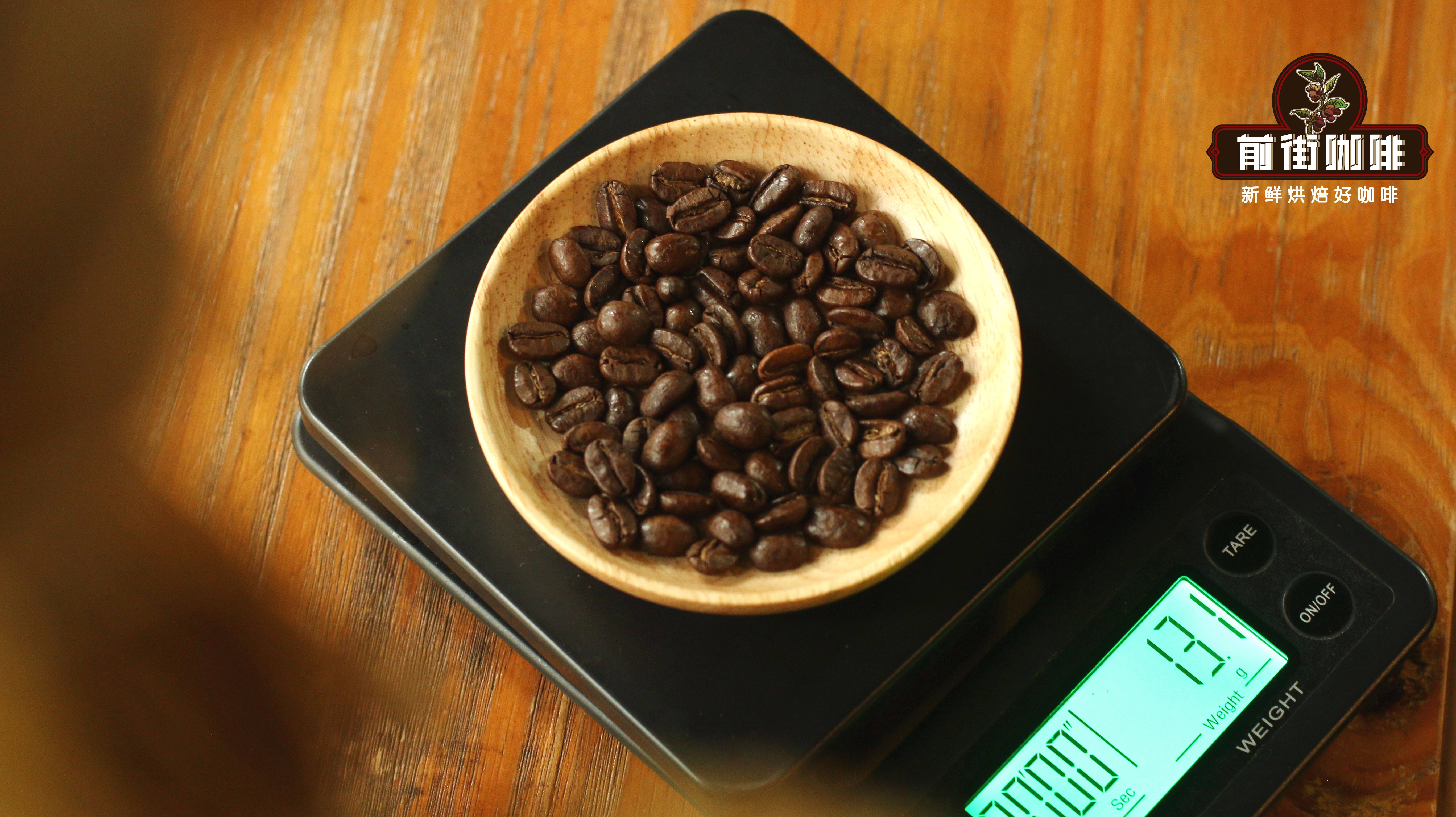
The reason Golden Mandheling is widely known may be related to its selected origin, triple hand sorting, and emphasis on quality specifications. Of course, it is much more expensive than other Mandheling, mainly exported to Japan and the United States, and not commonly seen domestically. Earlier, even information about it was rare, and as a result Front Street's only image was repeatedly forwarded and became blurry.
Golden Mandheling—aren't there plenty on Taobao now? There are indeed more than before, but if you look carefully, many are really not it; most just use a very similar name to create an illusion. Of course, Front Street PWN Golden Mandheling and ordinary Mandheling do not differ very greatly in flavor; the difference is limited to a little more layered aroma and the price of green beans, and more than anything it is a kind of sentiment.
Indonesia started coffee cultivation overseas, started grading, and also brought three hundred years of mellow coffee flavor. Sometimes that is how it is: true quality is seen in the inconspicuous places. Mandheling is just like this—unassuming, yet heavy in flavor.
As for Japan, once it had money, buying up the world and boosting Blue Mountain is another story of the nouveau riche type, which I will discuss another time when I have the chance.
The above content is compiled by CoffeeHunters, a coffee news website.


