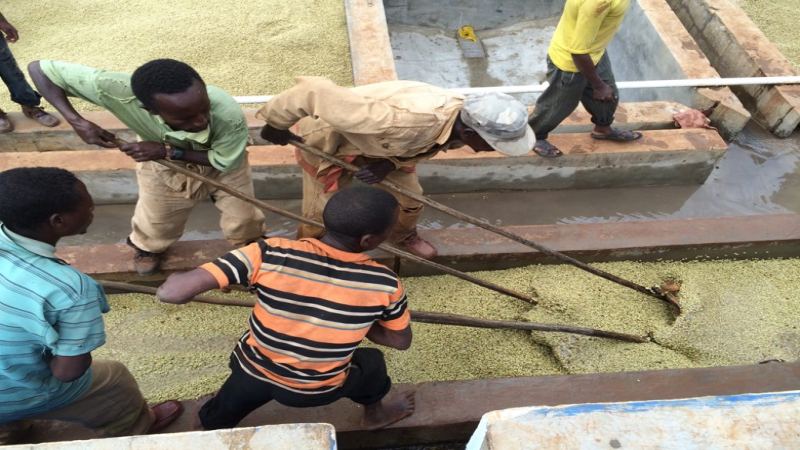
If we were to trace the "Kenyan taste" back to its processing origin, the answer would most likely point to double fermentation. This method, known locally as K72, polishes Kenyan coffee's fruit acidity into something bright, solid, and still clean. Understand double fermentation, and you understand where Kenyan beans get their signature juicy quality.
The Complete Double Fermentation Process
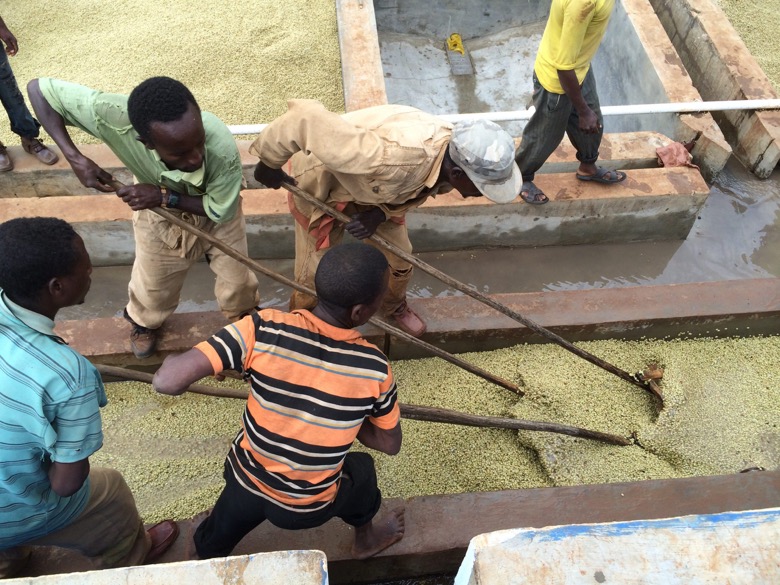
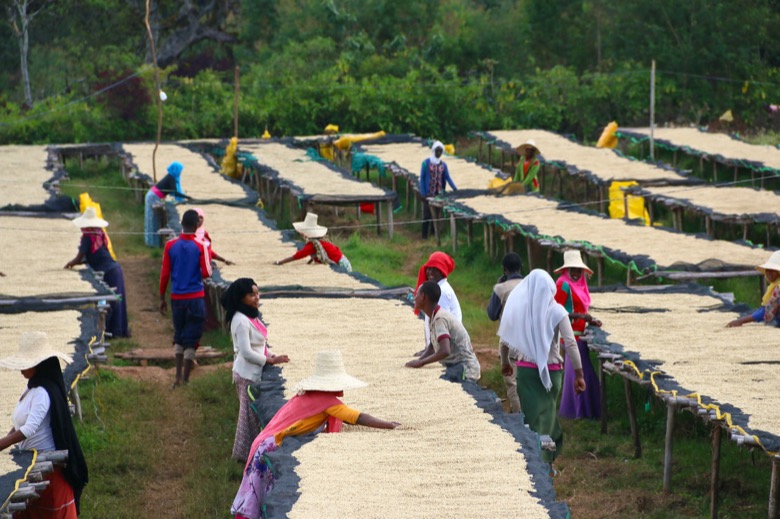
The process begins the same way as ordinary washed coffee: after the coffee cherries are depulped and the fruit flesh removed, the parchment beans with mucilage still attached go into fermentation tanks and soak-ferment for about twenty-four hours, during which the mucilage breaks down under microbial action. The key step that follows: the fermentation water is drained, the beans are rinsed, and the tanks are refilled with fresh water for a twelve-to-twenty-four-hour soak; then the beans are rinsed again and the water is changed for another soak of the same duration, bringing the entire process to roughly seventy-two hours. Multiple water changes make fermentation more uniform and controllable, and during the clean-water soaking stages the beans undergo a mild secondary fermentation, so acidity and cleanliness improve together. The beans are then moved to raised beds for slow drying.
How It Differs from Ordinary Washed Processing
Ordinary washed coffee usually ferments for only one round, with the fermentation pace relying on experience, and the risk lies in uneven or excessive fermentation—the former producing bland flavors, the latter producing off-fermentation notes. Double fermentation uses staged fermentation and water changes to break one long fermentation into several short phases, each of which can be observed and adjusted, greatly improving consistency. Compared with Front Street Yirgacheffe Gudingding's citrus florals and green tea sweetness, Kenyan beans have a noticeably stronger acidity, with dark fruit flavors like berries and smoked plum concentrated and solid, and a thicker sweetness.
How Processing Shapes Flavor
The long clean-water soak is the essence of double fermentation. During the soaking stage, the beans' acidity continues to develop, yet there is no murky sensation from residual mucilage, allowing the seemingly contradictory qualities of "bright and clean" to appear at the same time. Front Street Kenya Small Tomato is made using this seventy-two-hour double fermentation, and the SL28 and SL34 varieties from the Thika region have their fruit aromatics fully activated during processing: cherry tomato and smoked plum flavors are clear on entry, the acidity is bright and solid, snow pear and black plum notes interweave in the mid-palate, and the finish carries yellow sugar sweetness and green tea aroma, fully demonstrating the interplay of processing, variety, and terroir.
Brewing Suggestions for Double Fermented Beans
Double fermented beans have prominent acidity, so when brewing you can focus on "balancing sweetness and acidity": start with water around ninety degrees, a medium-fine grind, and a one-to-fifteen coffee-to-water ratio, then after a thirty-second bloom, pour in two to three stages. If the acidity feels too strong, coarsen the grind by half a step or lower the water temperature by one degree; if you want to amplify the juicy quality, raise the water temperature slightly or extend the final pour. Iced pour-over also works very well, as ice locks in the acidity while preserving sweetness, tasting like chilled juice on entry.
Beside one fermentation tank after another, Kenyans trade seventy-two hours of patience for that signature brightness in the cup. The next time you drink a Kenyan coffee so acidic it tastes like freshly squeezed juice, you will know where that vitality comes from.
The above content is compiled by CoffeeHunters, a coffee news website.