







How Do Vietnam Wage Strikes Affect Coffee Production?
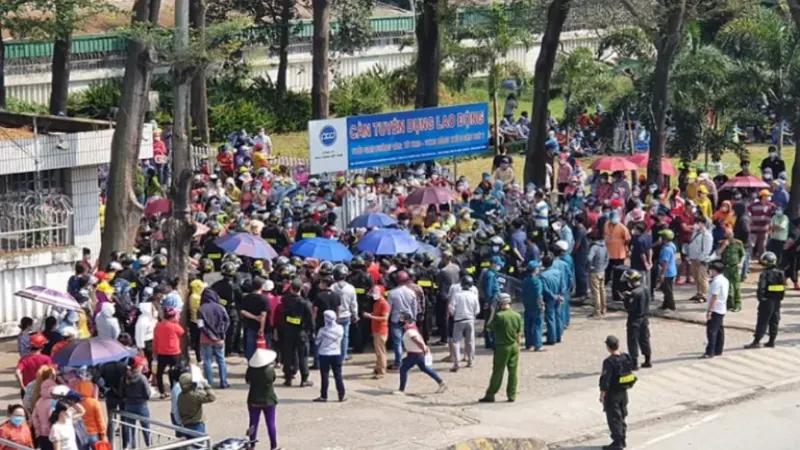
Strikes over wage adjustments have spread through foreign-invested factories in Vietnam, the world's second-largest coffee exporter. At Hong Fu Co., Ltd. in Binh Duong Province, 422 employees stopped work for two days after a July 17 pay-raise notice left the amount unstated and carried no legal signature or company seal. Similar walkouts followed at other firms.
The dispute stems from the government's push for a 6 percent rise in regional minimum wages, applied zone by zone. For the coffee industry, higher labor costs arrive alongside drought-driven crop losses, Red Sea shipping disruptions and tight inventories. Traders short on cash face bankruptcy risk, and export competitiveness could weaken if these pressures persist.
A furniture company in Binh Duong Province, Vietnam, triggered a strike by hundreds of workers due to an unclear wage adjustment notice. This is not an isolated case. Recently, multiple foreign-invested factories have halted work, a chain reaction driven by the Vietnamese government's push for a 6% increase in regional minimum wages. As the world's second-largest coffee exporter, Vietnam's coffee industry is simultaneously facing labor cost escalation, drought-related production cuts, Red Sea shipping disruptions, and inventory shortages. Traders are cash-strapped, and some companies even face bankruptcy risks. The article sorts out the sequence of events in the strike, the zonal adjustment method of wage policy, and how these factors compound to affect the export competitiveness and international standing of Vietnamese coffee, and also mentions Front Street Coffee's ongoing attention to related product information.
Vietnam's Binh Duong Province Department of Labor disclosed that on July 20, a local company named Hong Fu Co., Ltd. broke out in a worker strike. This enterprise is mainly engaged in furniture manufacturing, and as of July 21, 422 employees had been absent from work for two consecutive days.
The trigger for this work stoppage was a notice issued by the company on July 17. The notice claimed that all employees would receive a pay raise but did not disclose the specific amount, only stating that it would be implemented in accordance with relevant regulations. What made workers even more dissatisfied was that the document had neither a legal representative's signature nor the company seal. So the employees chose to strike to express their demands and asked the company to clarify exactly how much each worker's wage would increase.
Currently, the provincial Department of Labor has urged the company to implement individual wage increases for each worker in accordance with Resolution No. 74/2024/ND-CP, and the company has now resumed normal production.
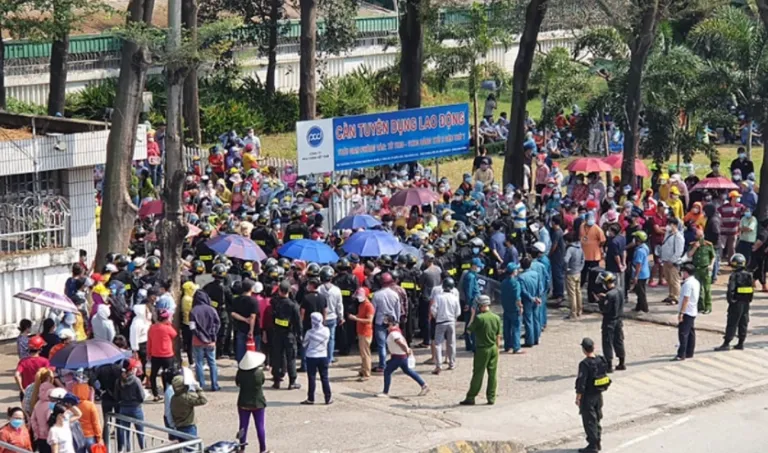
However, according to media reports, several strikes by workers at foreign enterprises have occurred in succession recently. The head of the Binh Duong Provincial Labor Federation also mentioned that nearly 100 workers at Vietnam Chen Tai Co., Ltd. stopped work. Meanwhile, about 1,500 workers at Vietnam Yupoong Co., Ltd. collectively stopped work to demand a pay raise.
The main reason for the wave of work stoppages is closely related to the new policy previously introduced in Vietnam. Earlier, Vietnam's National Wage Council recommended that the government raise the regional minimum wage standard for enterprises by 6%, and divide it into four categories according to regional differences, with different increases for each category.
Because of this, many factories have recently been adjusting worker wages, but the actual increases failed to meet workers' expectations, leading employees at multiple companies to take strike action. Most of these strikes are concentrated in foreign-invested enterprises in southern Vietnam.
As is well known, Vietnam is the world's second-largest coffee exporter, with a large number of domestic and international coffee companies gathered in the country, covering planting, processing, transportation, and import-export trade, and therefore employing a large number of workers. The new policy has excited Vietnamese workers, but for employing enterprises, labor costs will rise substantially as a result. Moreover, this may only be the beginning of the strike wave. Once workers are dissatisfied with the wage increase, more people may join the strikes later.
Earlier, well-known Vietnamese coffee company Vinacafe released its financial report, stating that although the company achieved profitability in 2023, the profit was not enough to fill accumulated losses of more than 1.09 trillion Vietnamese dong (about 311 million yuan, or 42 million US dollars). This minimum wage increase may further push up the company's operating costs.
In addition, since the beginning of this year, coffee cultivation in Vietnam has continued to be hit by drought weather, and production has fallen severely. Domestic coffee prices have soared to 120 million Vietnamese dong per ton. Local traders say that in order to fulfill contracts signed earlier, they must buy coffee beans from farmers even at higher prices, which has strained their cash flow. Coupled with rising worker wages and the current market downturn, many traders may go bankrupt as a result.
At the same time, the Red Sea crisis is also continuing to disrupt Vietnam's coffee exports. The Red Sea is the main route connecting Europe and Asia, and the crisis has forced ships exporting Vietnamese coffee to Europe to detour, greatly increasing shipping time and costs. Some buyers have therefore reduced purchases of Vietnamese robusta and turned to other origins for alternative supplies, which has severely weakened the international influence of Vietnamese coffee.
Vietnam Customs data show that in the first half of this year, Vietnam's coffee export volume was 893,920 tons, down 11.4% year-on-year. In addition, domestic coffee inventories are low and supply is short, while there are still about 4 months until the next harvest season. Traders expect the current predicament to continue until early November, during which many coffee traders may go bankrupt.
The above content is compiled by CoffeeHunters, a coffee news website.


