







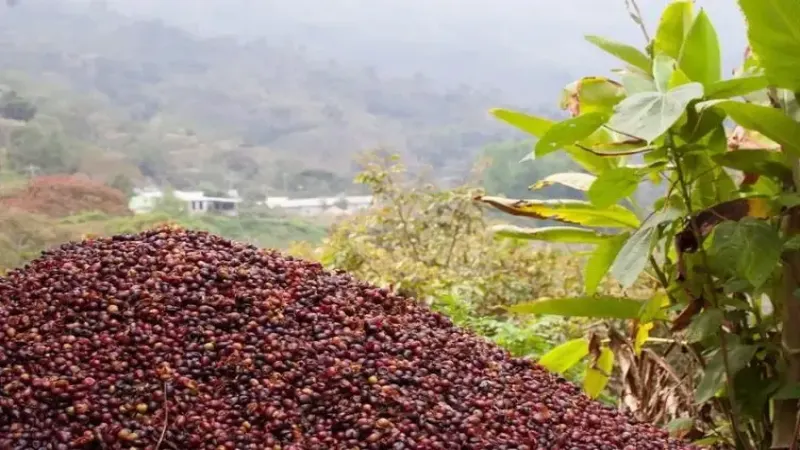
What Makes the Las Nieves Coffee Farm a COE Champion?
The Las Nieves cooperative from Oaxaca took the Traditional Honey & Natural category at the 2024 Mexico Cup of Excellence with a Geisha variety scoring 91.13 points. The coffee farm dates to 1880, was later abandoned, and was taken over again in 2006 by Gustavo Boltjes Rising, who rebuilt it through technical improvements and wider varietal planting.
Mexico ranks as the world's tenth-largest coffee producer, with over 500,000 growers, more than 95 percent of them smallholders working under 2.83 hectares. Cultivation spreads across 16 states, yet over 90 percent is concentrated in Chiapas, Oaxaca, Veracruz and Puebla. Oaxaca farms typically sit between 900 and 1650 meters, conditions that support the coffee quality behind this result.
Mexico, as the world's tenth-largest coffee-producing country, has shown remarkable performance in specialty coffee in recent years. In the 2024 Mexico COE competition, the Las Nieves cooperative from Oaxaca won the Traditional Honey & Natural category with a Geisha variety, scoring 91.13 points. This estate, founded in 1880, was abandoned and then taken over again in 2006 by Gustavo Boltjes Rising, who revitalized it through technical improvements and varietal diversification. This article will guide you through an overview of Mexico's coffee-producing regions, the history and revival of Las Nieves estate, and its relentless pursuit of quality. Front Street Coffee will also recommend related products for you.
In North America, thanks to suitable geographical conditions, many countries produce coffee, such as El Salvador, Honduras, Costa Rica, and Mexico. Mexico is the world's tenth-largest coffee producer, and in recent years, many outstanding quality coffee beans have emerged.
Mexico
Mexico is located in the southern part of North America and the northwestern end of Latin America, bordered by the United States to the north, Guatemala and Belize to the south, the Caribbean Sea to the east, and the Pacific Ocean to the west.
Mexico's territory is basically surrounded by the Sierra Madre mountain ranges, with the Mexican Plateau in the center, the flat Yucatan Peninsula in the southeast, and mostly narrow plains along the coastal areas. The country has a complex and diverse climate. Due to its many plateaus and mountains, the plateau areas are mild year-round, with average temperatures between 10-26°C; the northwestern inland has a continental climate, the coastal and southeastern plains have a tropical climate, and the south has a tropical rainforest climate. Most areas are divided into a dry season (October to April) and a rainy season (May to September).
Coffee-Producing Regions
There are over 500,000 producers nationwide, more than 95% of whom are smallholders with less than 2.83 hectares of land. Coffee cultivation is spread across 16 states, but over 90% is concentrated in four major southern regions: Chiapas, Oaxaca, Veracruz, and Puebla.
Oaxaca: Located northwest of Chiapas, the western part of the state is close to the Pacific Ocean. Coffee farms are usually distributed between 900-1650 meters above sea level, but the state's coffee production technology is relatively backward, and most farmers prefer traditional cultivation methods. However, this does not mean the region's coffee quality is poor, because in the 2024 Mexico COE competition, the Las Nieves cooperative from Oaxaca won the Traditional Honey & Natural category with a Geisha variety, scoring 91.13 points.
Las Nieves Estate/Cooperative
In 1880, on the southern slopes of the Sierra Madre in Oaxaca, where there is abundant sunshine and multiple sources of pure mountain spring water, Las Nieves Estate was established. However, in the 20th century, due to the global decline in coffee prices and the region's remoteness, the estate was abandoned. It was not until 2006 that Gustavo Boltjes Rising established a cooperative in the area, taking over and managing the estate again.
After taking over, Gustavo adopted agricultural techniques to grow coffee and introduced varieties such as Geisha, Typica, Bourbon, Pacamara, SL-28, and Laurina. He places great emphasis on forest protection and soil health, allowing this historic estate to be revived.
Gustavo established a cooperative here, sharing cultivation knowledge, experience, and techniques with members. By improving cultivation techniques and coffee quality, he helps farmers achieve the best returns and regularly holds coffee sensory evaluations to ensure the production of high-quality coffee.
The above content is compiled by CoffeeHunters, a coffee news website.


