








What water temperature should pour-over coffee use?
Pour-over coffee needs different water temperatures by roast level. Light-roasted beans are dense and extract better with hotter water, typically 91–93°C, while dark-roasted beans have a looser structure and work better at 86–89°C. Fine adjustments follow the bean's condition and grind size, and preheating the kettle spout and dripper helps hold the target temperature.
Water temperature sets how efficiently the water dissolves compounds, so even correct water quality, technique, and timing can still leave a cup under-extracted if the temperature is off. Pouring height and whether the dripper has been preheated also shift the actual temperature at the coffee bed, which is why when to grind coffee beans and how coarsely matters alongside heat of coffee boiling.
When brewing pour-over coffee, even if the water quality, technique, and timing are all normal, sometimes the extraction is still insufficient—and the problem often lies with the water temperature. Beans of different roast levels have different water temperature requirements: light-roasted beans are dense and need higher water temperatures; dark-roasted beans have a loose structure and are better suited to lower water temperatures. Front Street Coffee typically uses 91~93°C for light-roasted beans and 86~89°C for dark-roasted beans, making fine adjustments based on the beans' condition and grind size. In addition, details such as the pouring height and whether the kettle spout and dripper have been preheated can also affect the actual water temperature, thereby changing the extraction result. This article will explain the logic of water temperature selection in detail and share how to maximize the efficiency of hot water through preheating and other steps, making the coffee flavor more enjoyable.
I believe all of you have more or less encountered this situation when brewing pour-over: although all the parameters are normal—water quality, technique, and timing are all fine—the coffee still comes out somewhat under-extracted.
In yesterday's article, Front Street Coffee mentioned this: if all extraction parameters are trending normal and the extraction is still insufficient, then the problem very likely lies with the water temperature used for extraction! Coffee beans of different roast levels have different water temperature requirements due to their own structure, so we assign them suitable water temperature ranges. But you should know that even if you use the corresponding water temperature, ignoring some details during brewing may lower the water temperature and cause differences in extraction. So it's not just the temperature shown on the thermometer—the details during brewing are also something to watch out for.

That said, a suitable starting water temperature is still very important! So let's first look at what water temperatures suit coffee beans of different roast levels! What water temperatures suit coffee beans of different roast levels? The water temperature determines how high the dissolving efficiency of this "solvent" can be. The higher the water temperature, the higher the dissolving efficiency, and vice versa. The roast level of coffee beans determines their density. The lighter the roast, the higher the relative density, and the higher the density, the higher the extraction efficiency needed for hot water to dissolve the flavor compounds in the coffee. Therefore, we can conclude that the lighter the roast, the higher the extraction water temperature required. And the darker the roast, the higher the expansion rate and naturally the lower the density. Low density means what we often call a loose structure, allowing hot water to dissolve the coffee's flavor compounds more easily, so we don't need to use overly high water temperatures for extraction!
Generally speaking, Front Street Coffee determines the grind, water temperature, and suitable dripper based on the beans' roast level. For high-density, light-roasted coffee beans, Front Street Coffee uses a water temperature of around 91~93°C for extraction; if the extraction target is dark-roasted coffee beans, a water temperature of around 86~89°C is used. The specific water temperature is determined by the beans' condition and grind size. The fresher the beans or the coarser the grind, the higher the temperature we use for extraction, because they need higher dissolving efficiency to extract flavor compounds; the finer the grind and the less fresh the beans, the opposite applies.
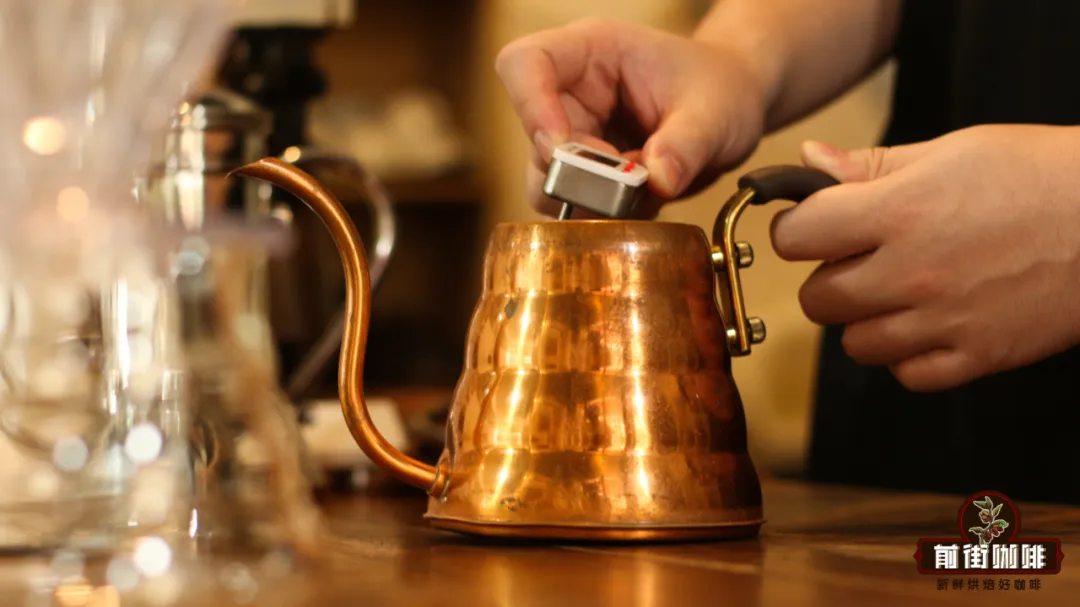
Now that we've covered the suitable water temperature for each roast level, let's talk about how to unleash the "maximum power" of this hot water! How to unleash the "maximum power" of hot water? I wonder if you remember—during the cold winter, Front Street Coffee shared an article about raising water temperature, and the content was actually very simple! After hot water is poured from the kettle, it comes into contact with a large amount of fresh air, and this air absorbs part of the hot water's heat, so water that should be 92°C is no longer 92°C. The famous Matsuya-style brewing uses this principle, lowering boiling hot water to the ideal temperature.
This phenomenon is even more obvious in winter! So we can see that the pouring height affects the water temperature. The higher the height, the more heat the hot water loses, and the extraction efficiency decreases accordingly. Therefore, Front Street Coffee suggests that during regular brewing, you control the pouring height to about one fist's distance from the coffee bed! Besides the pouring height, a spout that hasn't been preheated will also draw away the hot water's heat!
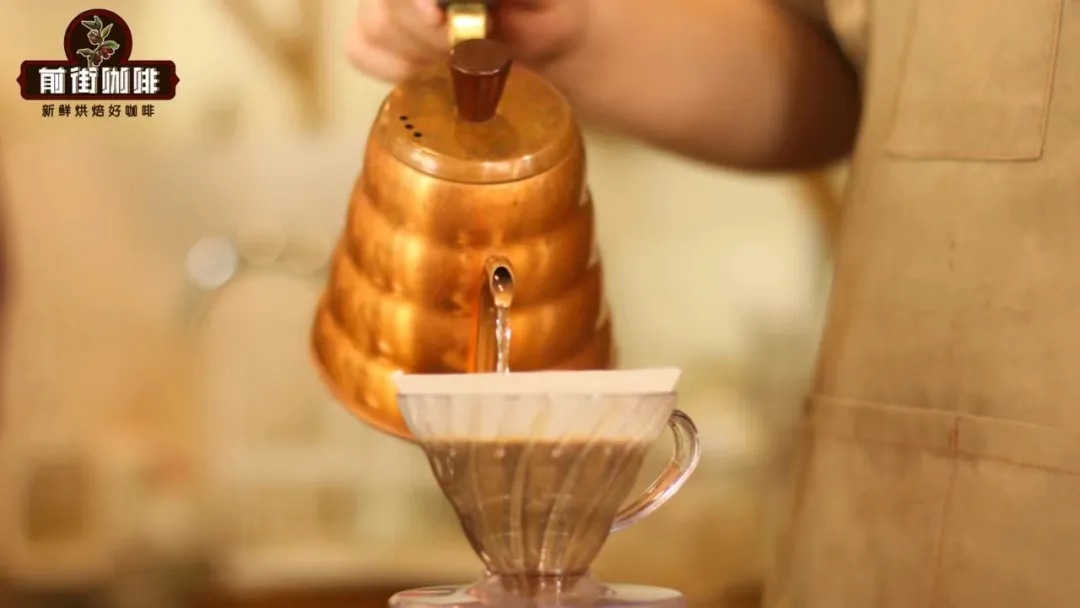
To give brewers better control over the water flow, most pour-over kettles use a slender gooseneck for guidance! Just like the dripper, without preheating, they will first absorb part of the hot water's heat to "heat themselves up," which also causes the hot water to lose temperature.
So often, without preheating, the hot water used for blooming is not the target temperature we set! This prevents the coffee grounds from fully releasing their carbon dioxide during the blooming stage, and the hot water poured afterward won't have as good extraction conditions! Although the impact is very slight (there is some, but not much) , many times it's just that little bit of difference that makes the whole cup of coffee a less enjoyable experience! So Front Street Coffee suggests that before brewing, you can first pour out a small amount of hot water for preheating! It happens that the filter paper needs to fit the dripper, so this small amount of hot water can be used to wet the filter paper! Not only does it successfully preheat the spout and dripper, it also makes the filter paper sit snugly in the dripper—killing two birds with one stone~ - END -
The above content is compiled by CoffeeHunters, a coffee news website.


