








Why do coffee particles clog a cold brew filter?
Cold brew filters slowly because fine coffee particles clump together and block the pores of the filter paper. The same grind size that drains quickly in pour-over can take more than ten minutes to drip through in cold brew. Three fixes work well: brew directly in a non-woven filter bag, stir the grounds before straining, and lay coarse grounds as a base layer to intercept the fines.
Cold water immersion is forgiving, so small grind differences change the final cup far less than they would in hot extraction. A grind close to pour-over, medium-fine, is a reasonable starting point. The coffee process still matters, though, because the amount of fine material produced during grinding decides how quickly the bed clogs, so consider a coarser setting when drip time keeps running long.
When making cold brew at home, the most frustrating part is filtering—the coffee liquid drips slower and slower, taking over ten minutes to finish filtering, with the filter paper completely clogged by fine particles. Why is the filtering speed of cold brew so much slower than pour-over with the same grind size? Fine particles clumping together and blocking the pores of the filter paper are the main reasons. Front Street Coffee, through comparative experiments, has summarized three efficient and practical cold brew filtering techniques: using non-woven filter bags for direct cold brewing, insisting on stirring before straining, and using coarse coffee grounds as a base layer to intercept fine particles. This article breaks down the principles and operational details of each method one by one, helping coffee enthusiasts quickly enjoy a full-flavored homemade iced coffee even on busy mornings.

Brewing cold brew is quite enjoyable, but when it comes to filtering, it drives you crazy.
Friends who love making cold brew coffee at home have probably encountered this dilemma: originally planning to brew it the night before and enjoy it directly the next day, but when straining, the coffee liquid drips slower and slower, and after waiting over ten minutes, the pot still isn't empty. No need to guess—the filter paper is almost certainly clogged with fine particles again... What should be done?
The slow filtering speed of cold brew is indeed frustrating for many. Office workers rushing to get to work see themselves about to be late, but the liquid level just won't go down, and in the end, they have to use more filter papers and set up multiple filter cups to save the situation, spending a lot of effort just to barely filter the whole pot of cold brew.
Same grind size
Why is the filtering speed of cold brew so much slower than pour-over?
Unlike the parameters that need strict control during high-temperature hot water extraction, cold water immersion has a very high tolerance. In a low-temperature static environment, unless the adjustment is particularly large, the coffee concentration will change significantly; otherwise, subtle grind differences do not have a notable impact on the final flavor.
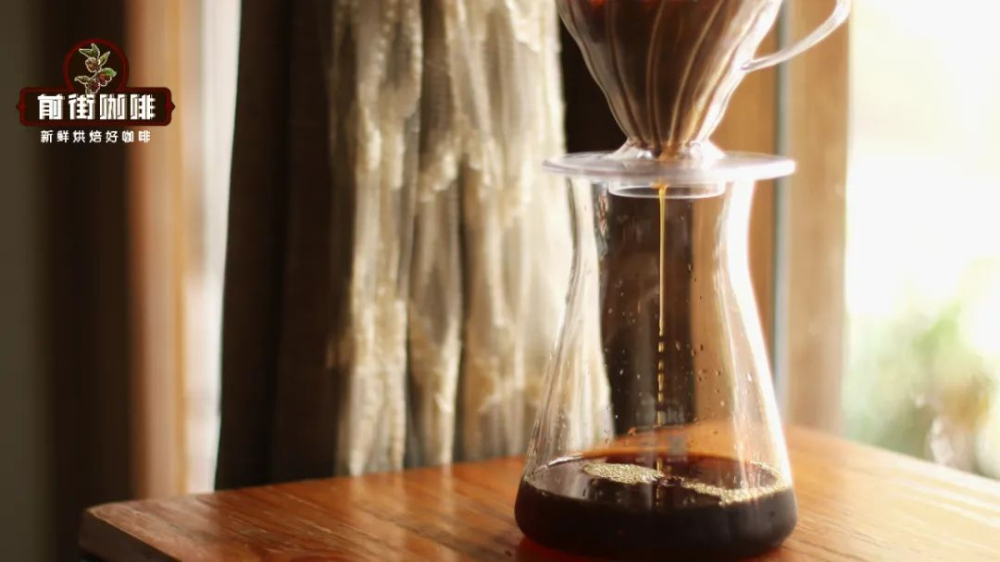
Generally speaking, regarding the coarseness of coffee grounds used for cold brew, Front Street recommends choosing a setting close to pour-over grind, that is, a medium-fine range (sifting rate through a No. 20 sieve is about 70-85%, EK43s grinder setting 9-10.5, hand grinder C40 setting about 20-22).
Under such coarseness conditions, if extracted using the pour-over method, the drip time is often easy to control. For example, with 15 grams of coffee, a 1:15 coffee-to-water ratio, and three-stage pouring, the coffee liquid can basically finish dripping within 2 minutes and 20 seconds. But with the same grind size in the cold brew filtering stage, the time taken is far more than this. Why?
I wonder if everyone remembers a set of comparative experiments Front Street did before: at that time, coffee grounds of two different grind settings were cold-water immersed separately, with all other parameters kept consistent, and in the end, the coffee concentration of the finer grind group was actually lower.
The reason is that the lighter fine particles absorb water first, then stick together and clump. As a result, extraction efficiency is first reduced, making the coffee taste weaker; during the straining and filtering stage, the clumped fine particles also block the pores of the filter paper first, causing the flow rate to become slower and slower.
Is there any way to deal with this?
1. Use non-woven filter bags for cold brewing
Making cold brew is nothing more than grinding coffee, adding water, stirring, sealing, refrigerating, and straining. If you want to drink iced coffee easily after waking up without waiting, then you need to skip the straining step that requires patient waiting. According to Front Street's cold brew experience, putting coffee grounds into a non-woven filter bag and then immersing it is a quite convenient choice.
Compared with the method of waiting slowly for filtration after brewing, using filter bags for cold brew can indeed save a lot of effort. Front Street has done comparative experiments, and coffee brewed with filter bags can also present a full flavor profile, with fruity acidity even better than direct immersion. However, note that the amount of powder for a single immersion in a tea-bag style should not be too much, preferably controlled within 30 grams; otherwise, water cannot fully contact the inner particles, and the coffee will end up bland.
2. Can you skip stirring and directly filter the upper layer of coffee liquid?
Since the culprit causing slow cold brew filtration is fine particles, some might think: before filtering, don't stir the grounds, just pour out the lighter-colored upper liquid—wouldn't that solve the problem? To verify this claim, Front Street brewed two more pots of coffee to see whether "no stirring" really works.
Coffee beans: 25 grams Santa Vini Water: 250 grams room-temperature water (Nongfu Spring) Grind size: EK43s grinder setting 9.5 Immersion time: 8 hours Before immersion: both stirred After immersion: one pot stirred a few times before straining / one pot not stirred, directly strained
Directly comparing the two cups of cold brew, you can see that the one not stirred and directly strained is noticeably lighter in color, and the measured concentration results also confirm this (stirred group: 2.07%, unstirred group: 1.75%).
Left is the stirred group, right is the unstirred group
In terms of taste, the unstirred Santa Vini cold brew has an overall flat aroma, a watery body, and almost no coffee flavor; while the stirred and then filtered version has a noticeably fuller mouthfeel, with intertwined sweet and sour notes of passion fruit, grape, starfruit, and lemon, as well as a rounded tea-like sensation. After drinking it with ice, the refreshing fruity acidity becomes even more prominent. Thus, to make cold brew taste excellent, the action of "stirring" cannot be omitted.
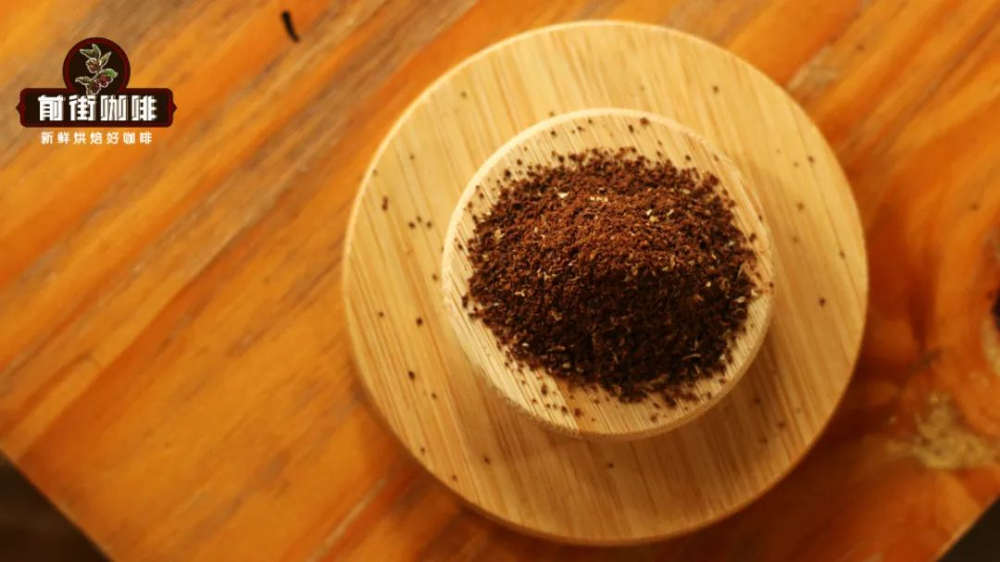
3. First spread coffee grounds at the bottom, then filter
This is a little trick Front Street discovered while looking through materials, from a netizen with rich cold brew experience. The principle is to use larger coffee particles as a medium to intercept fine particles, keeping the gaps in the filter paper open, thereby avoiding severe clogging.
The steps are not complicated: after brewing the cold brew, still stir it thoroughly first, then let it sit briefly until most of the grounds settle at the bottom, then pour the upper liquid into a clean container, exposing the coffee grounds at the bottom. Next, scoop out 2-3 spoonfuls of grounds and spread a layer inside the filter paper, then pour all the liquid into the filter cup and wait for it to filter.
After actual testing, Front Street found that this method is indeed much faster than directly pouring the coffee slurry to filter. A pot of cold brew with a grind size close to fine sugar and a volume of about 250ml can be completely filtered in about one minute.
- END - Front Street Coffee
No. 10, Bao'an Qian Street, Yandun Road, Dongshankou, Yuexiu District, Guangzhou City, Guangdong Province
The above content is compiled by CoffeeHunters, a coffee news website.


