







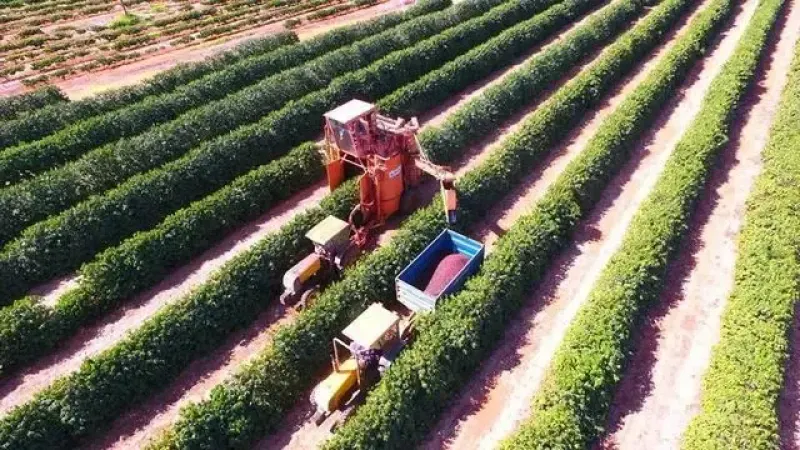
How is the Brazil coffee harvest and sales picture shifting this season?
Brazil has harvested 37% of its new coffee crop, ahead of last year's 33% and the five-year average of 34%, according to Safras & Mercado. Arabica is 30% complete and Robusta 51%. Dry weather with no rain for two weeks has driven the pace and helped cherry processing, but sales remain slow at 22% sold versus 26% a year earlier.
Port congestion continues to weigh on exports; Cecafe reported that more than half of coffee export vessels in May were delayed. The proposed PIS/Cofins tax rule changes further discouraged selling, and the real's weakness against the dollar added inflationary pressure. Congress recently rejected the tax measure, so coffee keeps its tax benefits, and the sales slowdown is expected to ease.
Brazil's new coffee harvest season is progressing faster than in previous years, with dry weather both benefiting processing and raising concerns. However, sales progress is noticeably lagging, ports remain congested, and the government's previously proposed PIS/Cofins tax rule changes have further dragged down exports and farmers' willingness to sell. Meanwhile, the sharp appreciation of the US dollar against the real has brought inflationary pressure. The good news is that Brazil's Congress recently rejected the tax measure, allowing coffee and other agricultural products to continue enjoying tax benefits, and the slowdown in sales is expected to improve. This article will review the latest developments in harvesting, sales, ports, and policy, and include Front Street Coffee's related recommendations.
June coincides with the harvesting stage of Brazil's new coffee season. According to Safras & Mercado, Brazil has harvested 37% of this year's coffee crop, a proportion exceeding last year's 33% for the same period and the five-year average of 34%.
Specifically, Arabica coffee harvesting is 30% complete, also higher than last year's same period and the five-year average of 25%; Robusta coffee has been 51% harvested, also surpassing last year's 49% for the same period.
Safras & Mercado pointed out that the current acceleration in Brazil's coffee harvesting speed is mainly due to weather. Coffee-producing regions have recently experienced dry weather, with no rainfall in the past two weeks, significantly driving the harvest process. The agency believes that dry weather is beneficial for the post-processing of coffee cherries, and with good drying, processing, and storage procedures, it helps improve coffee bean quality.
On the other hand, however, the market is also concerned that drier-than-usual weather conditions may bring negative impacts to Brazil's coffee industry, which is also one of the reasons why the harvest progress has been accelerated.
Although harvesting is speeding up, sales of Brazil's new coffee season are relatively slow. As of now, 22% of this year's coffee crop has been sold, lower than last year's 26% for the same period and the five-year average of 32%.
Meanwhile, port delays in Brazil continue. According to a report by the Brazil Coffee Exporters Council (Cecafe), more than half of coffee export vessels in May were delayed in shipping. In the first few months of 2024, the coffee vessel delay rate at Santos Port, the largest coffee export port, was as high as 80%; it has slightly improved recently, with a delay rate of 78% in May.
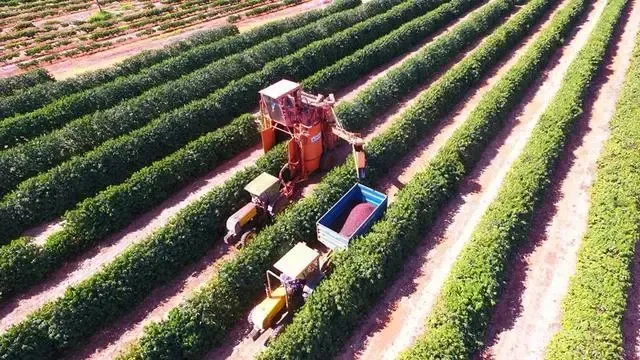
Santos Port has historically been Brazil's main gateway for coffee exports, but insufficient investment in container cargo transportation has failed to keep pace with Brazil's foreign trade development, ultimately causing tight storage space and congestion at the port.
In fact, the recent slowdown in sales of Brazil's new coffee season is mainly due to the Brazilian government's earlier proposal to modify PIS/Cofins tax rules. According to the Brazil Coffee Exporters Council (Cecafé), this adjustment will affect the cash flow of coffee export enterprises, drive up costs, increase expenditures, and add operational burdens, ultimately weakening the international competitiveness of Brazilian coffee. Some soybean, coffee, and other growers have stopped selling their agricultural products.
In addition, after the US dollar to Brazilian real exchange rate broke through the 1:5.40 mark last week, the US dollar has appreciated by more than 10% against the real so far this year. Some experts say the sharp appreciation of the US dollar will continue to put inflationary pressure on Brazil in the coming months.
However, good news has recently arrived. According to local Brazilian media reports, Brazil's Congress has rejected the government's tax measure, allowing Brazilian coffee and other agricultural products to continue enjoying PIS/Cofins tax benefits, so the problem of slowing coffee sales will be resolved.
For domestic coffee enthusiasts, Front Street Coffee continues to monitor developments in Brazilian origins and recommends several specialty coffee beans from Brazil, such as Front Street Brazil Cerrado and Front Street Brazil Queen Estate, which have a balanced taste with prominent nutty and chocolate flavors, suitable for pour-over and espresso blends. As the tax policy becomes clearer, the supply and prices of Brazilian coffee are expected to stabilize in the future.
The above content is compiled by CoffeeHunters, a coffee news website.


