







Why Is Vietnam's Coffee Industry Growing Yet Losing Money?
Vietnam exported US$3.22 billion of coffee in the first half of 2024, up 34.6 percent year on year, even though volume fell 10.5 percent to 902,000 tons. The gain came entirely from price: average export price rose 50.4 percent. At the same time Vinacafe, the country's largest coffee company, still carries cumulative losses above 1.09 trillion Vietnamese dong.
Vinacafe, founded in 1995, runs 65 subsidiaries and 50 coffee-growing farms and produces roughly 20 to 25 percent of national output. It posted its first profit in 2023 on revenue of 2.1 trillion dong, but that was not enough to clear the shortfall. Aging plantations, severe weather, higher fertilizer prices and the Red Sea crisis keep pressure on the coffee industry and on coffee quality.
In the first half of 2024, Vietnam's exports of agricultural, forestry, and aquatic products reached approximately US$29.2 billion, up 19% year-on-year. Coffee stood out with exports of US$3.22 billion; although export volume fell 10.5%, a 50.4% rise in average price drove the growth. However, Vietnam's largest coffee company, Vinacafe, has reported losses. Although it achieved its first profit in 2023, its cumulative losses still exceed 1.09 trillion Vietnamese dong. Factors such as aging coffee plantations, severe weather, rising fertilizer prices, and the Red Sea crisis have put Vietnam's coffee industry under pressure. This article takes you behind the joys and worries of Vietnam's coffee exports.
Recently, Vietnam's Ministry of Agriculture and Rural Development released data: in the first six months of 2024, the country's total exports of agricultural, forestry, and aquatic products reached about US$29.2 billion, up 19% from the same period last year. Seven categories exceeded US$1 billion in export value: coffee, rubber, rice, fruits and vegetables, cashew nuts, shrimp, and wood products.
In coffee, although export volume fell to 902,000 tons, a decline of 10.5%, the average export price surged 50.4%, pushing export value to US$3.22 billion, up 34.6% year-on-year.
However, financial statements released by the well-known Vietnamese coffee company Vinacafe show that although the company turned a profit in 2023, the profit was far from enough to fill a cumulative loss of more than 1.09 trillion Vietnamese dong (about RMB 311 million, or US$42 million).
Public information shows that Vinacafe was established in 1995 and is known as Vietnam's national coffee corporation and the country's largest coffee company. It has 65 subsidiaries and 50 coffee-growing farms across Vietnam, with operations covering cultivation, processing, transportation, and import-export trade. Vinacafe produces about 20% to 25% of Vietnam's total coffee output each year.
According to Vinacafe's audited consolidated financial statements, the company's revenue reached 2.1 trillion Vietnamese dong in 2023, up 18% year-on-year, with the main income coming from coffee, rice, and rubber, of which coffee contributed the most.
The report also mentioned that in 2023 Vinacafe expanded its total crop planting area by 9% to about 12,458 hectares, and output edged up to more than 29,600 tons. But the report also noted that despite the increase in output, the company did not sign new export contracts for the whole of 2023, instead focusing on delivering goods under contracts from previous years.
Vinacafe's full-year profit exceeded 9 billion Vietnamese dong, the first profit since it began disclosing information in 2021. In the previous two years, its profits were negative by several hundred billion dong. However, because cumulative losses still exceed 109 trillion Vietnamese dong, this profit is only a drop in the bucket.
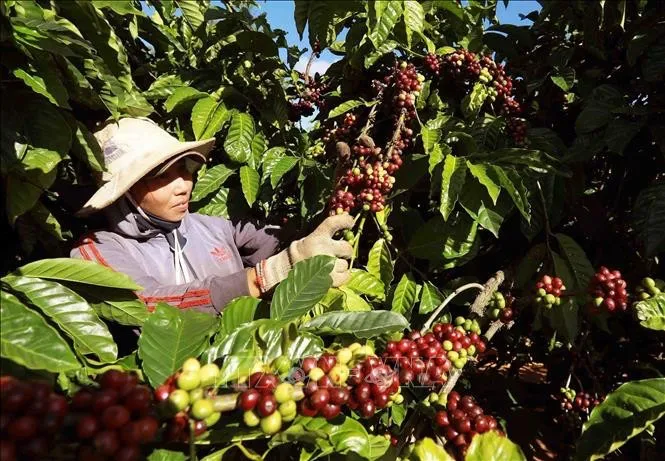
Vinacafe admits it is currently in economic difficulty. The company's coffee plantations have been operating for more than 25 years, and aging trees have led to declines in both productivity and coffee quality. In addition, severe weather last year and this year has pushed up production costs, while prices of fertilizer, gasoline, and other inputs have risen due to geopolitical factors, a problem also faced by many Vietnamese traders. At the same time, high international robusta coffee prices and the ongoing Red Sea crisis have led many overseas buyers to reduce purchases of Vietnamese robusta coffee beans.
At the beginning of this year, Vietnam suffered its worst drought in nearly a decade, dealing a heavy blow to the coffee industry, causing serious production losses, and domestic expectations for the next harvest are not optimistic. Vietnam's Ministry of Agriculture and Rural Development says domestic coffee inventories are now almost depleted.
For this reason, Vinacafe is calling on the government to solve climate problems as soon as possible to safeguard coffee output and quality. However, the government is currently planning to invest in ports, with a proposed port project in Ba Ria-Vung Tau Province in southern Vietnam costing 50.82 trillion Vietnamese dong and covering 50 hectares.
The first phase of the project will start in 2024 and end in 2030, investing in the construction of two berths capable of accommodating 250,000-ton vessels. Ba Ria-Vung Tau Province lies on international shipping routes connecting Europe, the Middle East, North Asia, and the Americas, and hopes to use this to build a logistics center and international transshipment port and drive the development of multiple industries in Vietnam.
The above content is compiled by CoffeeHunters, a coffee news website.


